Most commercial borrowers understand that amortization length affects the monthly payment. Fewer understand how dramatically it affects the Debt Service Coverage Ratio — and how that single underwriting metric can be the difference between a loan approval and a decline. This is the story of a real-world self-storage refinance where a borrower owned a stabilized facility appraised at $2.4 million, carried a $1.3 million loan balance, and needed at least $500,000 in cash-out proceeds to fund construction of additional storage units on adjacent land they already owned. On paper, the equity was there. The property had appreciated from its $1.8 million purchase price. The borrower had strong credit, a clean operating history, and a clear business plan. But the deal almost didn’t happen — because the lender’s standard 20-year amortization schedule created a monthly payment so high that the DSCR fell below the minimum threshold. The fix was simple, powerful, and something every commercial borrower should understand: extending to a 30-year amortization. Here is exactly how the numbers worked, why the DSCR math matters so much in commercial lending, and what self-storage operators can learn from this deal.
The Deal: $2.4M Self-Storage Facility, $1.3M Balance, $500K Expansion Plan
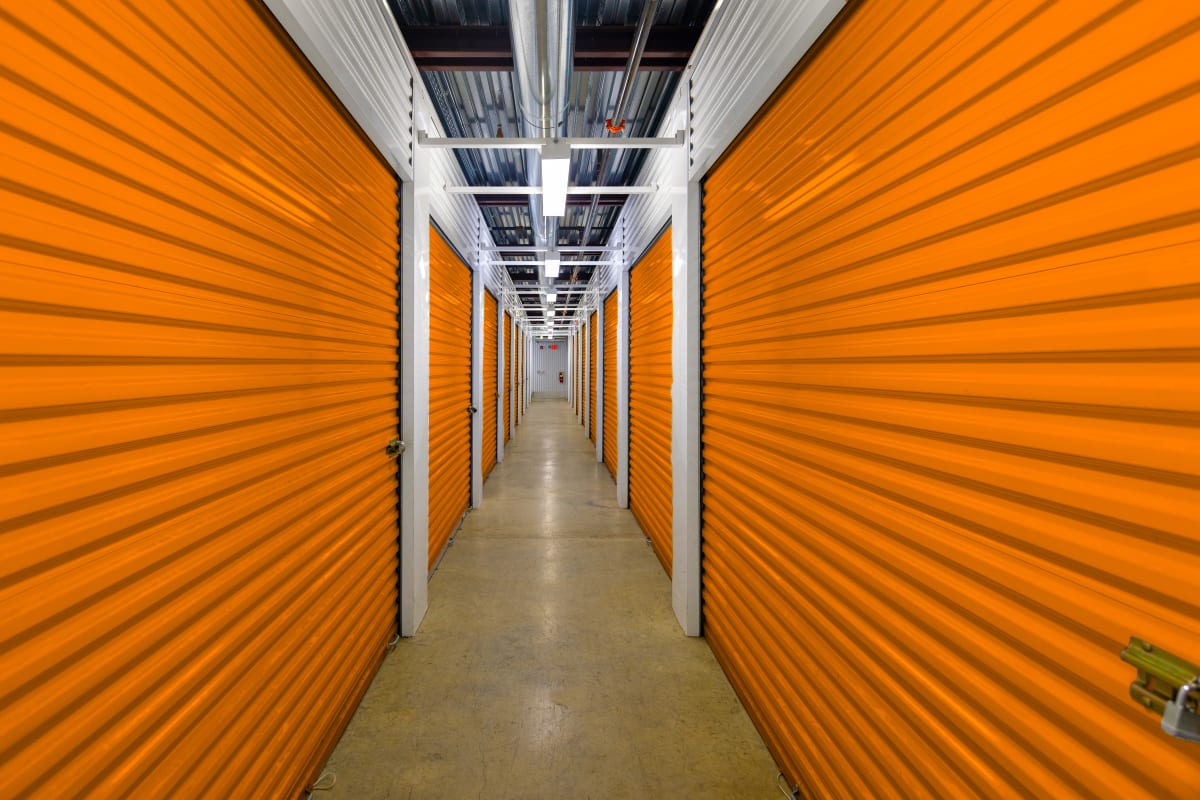
The borrower operated a 42,000-square-foot self-storage facility with a mix of climate-controlled and drive-up units. The property was purchased three years earlier for $1.8 million with a $1.44 million loan. Through principal paydown and strong operations, the balance had amortized to $1.3 million. The facility was performing well: 91% physical occupancy, average rental rates slightly above market, and a clean operating history with professional management software tracking every unit, payment, and vacancy. A recent appraisal came back at $2.4 million — reflecting the income growth the borrower had achieved through disciplined rate increases, reduced concessions, and improved curb appeal since acquisition. The borrower owned an adjacent parcel and wanted to build 80 additional drive-up units to capture unmet demand in the trade area. The construction budget was $500,000 — modest for self-storage, where per-unit build costs for drive-up units are significantly lower than climate-controlled. The plan was straightforward: cash-out refinance the existing facility, use the proceeds to fund construction, and lease up the new units to increase NOI and property value even further. The borrower needed a new loan of at least $1.8 million — enough to pay off the existing $1.3 million balance and generate $500,000 in net cash-out proceeds. At 75% LTV on the $2.4 million appraisal, the maximum loan amount was exactly $1.8 million. The LTV worked. The equity was there. The problem was the payment.
Why the 20-Year Amortization Killed the Deal
The borrower’s existing loan carried a 20-year amortization at 7.50%. On the current $1.3 million balance, the monthly principal and interest payment was $10,467 — producing annual debt service of $125,604. The property’s net operating income was $185,000 per year, giving a healthy DSCR of 1.47x ($185,000 ÷ $125,604). Excellent. No issues there. But when the lender modeled the new $1.8 million loan at the same 20-year amortization and a 7.50% rate, the numbers changed dramatically. A $1.8 million loan at 7.50% over 20 years produces a monthly P&I payment of $14,489, or $173,868 per year in total debt service. The DSCR on the new loan: $185,000 ÷ $173,868 = 1.06x. That is below every commercial lender’s minimum DSCR threshold. Most require 1.20x to 1.25x for self-storage and other commercial property types. At 1.06x, the property’s income barely covers the proposed debt service — leaving almost no margin for vacancy, rate declines, maintenance surprises, or any other income disruption. No responsible lender will approve that loan, regardless of the borrower’s credit score or experience. The deal, as structured with a 20-year amortization, was dead. The borrower had the equity, the income, the credit, and the business plan — but the amortization schedule created a monthly payment that consumed too much of the property’s cash flow. This is the scenario where most borrowers either reduce their cash-out request (defeating the purpose of the refinance) or walk away from the expansion entirely.
The 30-Year Amortization Solution: Same Loan, Different Math
The solution was not a different property, a different borrower, or a different lender. It was a different amortization schedule. By extending from a 20-year amortization to a 30-year amortization, the same $1.8 million loan at a slightly improved rate of 7.25% (reflecting the refinance market) produced dramatically different numbers. A $1.8 million loan at 7.25% over 30 years carries a monthly P&I payment of $12,278 — compared to $14,489 on the 20-year schedule. That is $2,211 less per month, or $26,532 less per year in debt service. Annual debt service on the 30-year schedule: $147,336. The new DSCR: $185,000 ÷ $147,336 = 1.26x. That clears the 1.25x minimum threshold that most commercial lenders require for self-storage properties. The deal went from a decline at 1.06x to an approval at 1.26x — without changing the loan amount, the property, the borrower, or the business plan. The only variable that changed was the length of time over which principal is repaid. Here is the side-by-side comparison that tells the entire story: • 20-Year Amortization: $1.8M loan, 7.50%, monthly P&I $14,489, annual debt service $173,868, DSCR 1.06x — DECLINED • 30-Year Amortization: $1.8M loan, 7.25%, monthly P&I $12,278, annual debt service $147,336, DSCR 1.26x — APPROVED The 30-year amortization reduced annual debt service by $26,532 and swung the DSCR from a hard decline to a comfortable approval. The borrower received the full $500,000 in cash-out proceeds at 75% LTV and immediately broke ground on the expansion.
Understanding DSCR: Why Lenders Care More About Coverage Than Equity
Borrowers coming from the residential mortgage world are often surprised by how much weight commercial lenders place on DSCR — and how little weight they place on the borrower’s personal income or even their total net worth. In residential lending, underwriting is borrower-centric: your income, your credit score, your debt-to-income ratio. If you make enough money and have a good enough score, you get the loan. In commercial lending, underwriting is property-centric: the property’s NOI, its debt service obligations, and the ratio between them. A borrower with a $5 million net worth and an 800 credit score will still be declined on a commercial loan if the property’s DSCR falls below the minimum threshold. This is not a quirk — it is the foundation of sound commercial lending. The logic is simple: a commercial property’s ability to service its own debt determines the loan’s performance. If the property cannot cover its mortgage from its own income, the borrower must feed it from other sources — which is exactly the scenario that leads to defaults in commercial real estate. Most commercial lenders require a minimum DSCR of 1.20x to 1.25x, meaning the property generates 20–25% more income than needed to cover debt service. Stronger properties with higher DSCRs receive better rates and terms. Properties below the threshold — even by a small margin — face hard declines regardless of the borrower’s personal financials. This is why amortization length is such a powerful lever. It directly controls the denominator of the DSCR equation. Longer amortization = lower annual debt service = higher DSCR — with no change to the property’s income or the loan amount.
The Tradeoff: Total Interest Cost vs. Cash Flow and Expansion Capital
The obvious question: doesn’t a 30-year amortization cost more in total interest over the life of the loan? Yes, it does. A $1.8 million loan at 7.25% amortized over 30 years will pay approximately $2,620,000 in total interest if held to maturity. The same loan at 7.50% over 20 years would pay approximately $1,677,000 in total interest. That is a difference of approximately $943,000 in cumulative interest. In isolation, that number sounds alarming. But commercial real estate loans are rarely held to maturity. Most commercial borrowers refinance, sell, or recapitalize within 5–10 years. The fixed-rate period on most commercial loans is 5, 7, or 10 years regardless of the amortization schedule, with a balloon payment at the end of the fixed period. Over a 7-year hold, the total interest paid on the 30-year am loan is approximately $873,000, compared to approximately $801,000 on the 20-year am — a difference of about $72,000. For $72,000 more in interest over seven years, the borrower received $500,000 in immediate expansion capital that generated new units, new revenue, and a higher property valuation upon exit. The return on that $72,000 in incremental interest cost is measured in hundreds of thousands of dollars of additional NOI and equity creation from the expansion. This is the calculus that experienced commercial investors make routinely: the marginal cost of a longer amortization is a small price to pay for the liquidity, flexibility, and growth capital it provides. The 30-year am is not wasteful — it is strategic.
Post-Refinance: 80 New Units, Higher NOI, and a Better Exit
With $500,000 in cash-out proceeds, the borrower broke ground on 80 new drive-up storage units on the adjacent parcel. Drive-up units are among the lowest-cost self-storage construction types — metal building systems on a concrete slab with roll-up doors, requiring minimal HVAC, plumbing, or interior buildout. The borrower completed construction in approximately five months and began leasing units immediately, aided by strong demand in a trade area that was underserved relative to population density. Within 12 months of completing construction, the 80 new units reached 85% occupancy at an average rate of $125 per unit per month. The incremental revenue: approximately $102,000 per year, with operating expenses of roughly $25,000 (primarily property taxes, insurance, and minor maintenance). Net incremental NOI: $77,000 per year. Adding that $77,000 to the existing $185,000 NOI brought the property’s total NOI to $262,000. At a 6.5% cap rate, the expanded facility’s estimated value: approximately $4.03 million — up from the $2.4 million appraisal before the expansion. The borrower turned $500,000 in cash-out proceeds into approximately $1.63 million in new property value. The DSCR on the existing $1.8 million loan with the expanded NOI: $262,000 ÷ $147,336 = 1.78x — well above any lender’s minimum threshold and positioning the borrower for another cash-out refinance cycle if desired. This is the compounding mechanism at the heart of self-storage investing: use equity from a stabilized facility to fund expansion, increase NOI, increase value, and build equity that can be recycled again.
Lessons for Self-Storage Operators and Commercial Borrowers
This deal illustrates several principles that apply broadly across commercial real estate financing, not just self-storage. First, amortization length is one of the most powerful and underutilized levers in commercial lending. Most borrowers focus on the interest rate — and while rate matters, the amortization schedule has an equal or greater impact on monthly cash flow and DSCR. A 25-basis-point rate reduction on a 20-year am produces less monthly savings than extending the same loan to 30-year am at the same rate. Second, DSCR is the gatekeeper in commercial lending. You can have perfect credit, abundant equity, and a strong business plan — but if the property’s DSCR falls below the lender’s minimum, the loan will not be approved. Understanding how to model DSCR at different amortization schedules, rates, and loan amounts is essential for structuring deals that actually close. Third, cash-out proceeds deployed into expansion or value-add improvements are not just capital — they are a return multiplier. The borrower in this deal spent $500,000 and created approximately $1.63 million in new value. That return on invested capital far exceeds the incremental interest cost of the 30-year amortization that made the cash-out possible. Fourth, self-storage remains one of the strongest commercial asset classes for this type of capital recycling strategy. Low construction costs, short lease-up timelines, and strong operating margins mean that expansion capital generates returns quickly — often within 12–18 months. Finally, having a lender who understands both the property type and the loan structure makes these deals possible. A lender unfamiliar with self-storage may not offer a 30-year amortization option, may not understand how to underwrite per-square-foot revenue and occupancy trends, or may apply industrial or office underwriting standards that don’t reflect how self-storage actually operates.
Model Your Commercial Deal
Commercial Loan Calculator
Commercial underwriting is fundamentally different from residential — the property's NOI, DSCR, cap rate, and LTV drive every decision. Before you submit a loan request, knowing your projected debt service, DSCR, and cash-on-cash return gives you the confidence to negotiate from a position of strength.
Our commercial loan calculator lets you model purchase price against typical 65-80% LTV parameters, compare 20-, 25-, and 30-year amortization schedules, and instantly see how each combination affects your DSCR and monthly carrying cost. For value-add deals, model the post-renovation NOI to see your exit financing picture.
DSCR at any loan amount
Enter your NOI and see your DSCR at different loan amounts and rates — the metric that determines approval or decline.
Amortization impact
Compare 20-yr vs. 25-yr vs. 30-yr am on the same loan — see how extending am improves DSCR and unlocks more proceeds.
Cash flow analysis
Net annual cash flow after debt service — the number that tells you whether the deal actually makes money.
Free · No login · No credit pull required
Real Estate Attorney Referral
Self-storage expansion = lien priority and lease-form battles.
Adding 80 units to a stabilized facility means new construction liens, possible easement adjustments, and updated tenant lease forms that protect against new state self-storage statutes. We can introduce you to OR/CA commercial real estate attorneys who handle self-storage operators specifically — the cost of one consult dwarfs the cost of one bad lien-priority decision.
No directory. No paid placements. No RESPA-restricted referral fees. We've worked alongside these pros on real Oregon and California deals — we'll make a personal email introduction so you can interview them yourself.
Or email us directly:
How does amortization length affect DSCR on a commercial loan?
Amortization length directly controls the denominator of the DSCR equation. On a $1.8M self-storage loan, extending from a 20-year to a 30-year amortization reduced annual debt service by $26,532 — swinging the DSCR from 1.06x (hard decline) to 1.26x (comfortable approval). The property, loan amount, and borrower were unchanged. Only the repayment schedule changed. This single variable unlocked $500,000 in cash-out proceeds that funded 80 new units and $1.63M in new property value.
Best for: Self-storage operators and commercial borrowers whose deals are constrained by DSCR rather than LTV — where the property has equity but the payment is too high to approve.
20-Year vs. 30-Year Amortization: The DSCR Impact
$1.8M self-storage loan with $185,000 NOI
| 20-Year Am | 30-Year Am | |
|---|---|---|
| Rate | 7.50% | 7.25% |
| Monthly P&I | $14,489 | $12,278 |
| Annual Debt Service | $173,868 | $147,336 |
| DSCR | 1.06x — DECLINED | 1.26x — APPROVED |
| Cash-Out Proceeds | $0 (declined) | $500,000 |
| Monthly Savings | — | $2,211/mo |
| 7-Year Interest Cost | ~$801K | ~$873K |
| Incremental 7-yr Cost | — | ~$72K |
$500K
Cash-Out Proceeds
80
New Units Built
$77K/yr
New NOI
~$4.03M
Post-Expansion Value
$1.63M
Value Created
1.78x
Post-Expansion DSCR
Need Commercial Financing?
Owner-occupied, investment, bridge, construction, and specialty CRE — term sheets in 24 hours across 40 states.
Bottom Line
A 30-year amortization is not a concession — it is a strategic financing tool that experienced commercial borrowers use to optimize DSCR, unlock cash-out proceeds, and deploy capital into high-return expansion projects. In this deal, the difference between a 20-year and a 30-year amortization was the difference between a hard decline at 1.06x DSCR and a comfortable approval at 1.26x — with $500,000 in cash-out proceeds that funded 80 new storage units, $77,000 in incremental annual NOI, and approximately $1.63 million in new property value. The numbers are not hypothetical. They are the kind of outcomes that disciplined self-storage operators achieve when they combine strong property fundamentals with the right loan structure. At Lumen Mortgage, we finance self-storage facilities, commercial properties, and investment real estate across 40 states. We issue preliminary term sheets within 24 hours and structure loans around how commercial real estate actually operates — including 30-year amortization options that maximize DSCR and cash flow. If you own a self-storage facility and you are considering a cash-out refinance to fund expansion, a rate-and-term refinance to improve your debt structure, or an acquisition loan for a new facility, call us at 503-966-9255 or email info@lumenmortgage.com. We will model your DSCR at multiple amortization schedules and show you exactly what is possible.