
Clear Answers to Common
Mortgage Questions
Short, focused guides that explain exactly what you need to know — no jargon, no fluff. Each page answers one specific question.
Residential Home Loans
View Residential Learning Center
How Do Bank Statement Loans Work?
A bank statement loan qualifies self-employed borrowers on deposits instead of tax returns. The lender averages 12 or 24 months of your bank statements to calculate qualifying income — personal-account deposits are generally used as-is, while business-account deposits are reduced by an expense factor (typically 50%). No W-2s, tax returns, or pay stubs are required, which makes bank statement loans the standard tool for business owners, 1099 contractors, and the self-employed whose tax write-offs understate their true income.

What Is a No-Doc (No-Ratio) Loan?
A no-doc home loan — also called a no-ratio or no-income-verification loan — is a non-QM mortgage that qualifies you on your credit and the equity in the home instead of your income. There are no tax returns, no W-2s, no pay stubs, and no employment verification, and no debt-to-income ratio is calculated — which is why it's called "no-ratio." It's not the old "stated income" loan: the file is still fully underwritten for ability to repay through your credit profile, cash reserves, and a clean recent mortgage history. It's built for self-employed owners, retirees, and investors whose tax returns don't reflect their real ability to buy.

How Much House Can I Afford?
How much house you can afford depends on your income, debts, down payment, interest rate, and the debt-to-income (DTI) ratio your loan program allows. A common guideline is the 28/36 rule: spend no more than 28% of gross monthly income on housing costs and no more than 36% on total debt. For a household earning $100,000/year with $500/month in existing debt and a 7% mortgage rate, the affordable purchase price ranges from approximately $330,000 (conservative) to $420,000 (aggressive DTI). FHA allows DTI up to 57%, while conventional programs typically cap at 43-50%.

What Should First-Time Homebuyers Know in Oregon and California?
First-time homebuyers in Oregon and California have access to multiple low-down-payment programs: FHA (3.5% down, 580+ credit), Conventional 97 (3% down, 620+ credit), VA (0% down for veterans), USDA (0% down in eligible rural areas), and state-specific assistance like CalHFA MyHome (up to 3.5% of purchase price for down payment assistance). Oregon offers OHCS down payment assistance programs through approved lenders. The key to a successful first purchase is getting pre-approved before shopping, understanding total monthly costs (not just the mortgage payment), and working with a lender who explains every option — not just the one that's easiest to close.

How Do Construction Loans Work?
A construction loan is short-term financing that funds the building of a new home in stages (draws) as construction progresses. Once the home is complete, the construction loan converts to a permanent mortgage — either automatically (construction-to-permanent or 'one-time close') or through a separate refinance. Construction loans typically require 10-20% down payment, have higher interest rates than permanent mortgages (often 1-2% above conventional rates), and charge interest only on the amount drawn during construction. The build phase usually lasts 6-12 months, during which the lender disburses funds based on inspections confirming completed milestones.

How Do You Finance an ADU (Accessory Dwelling Unit)?
An Accessory Dwelling Unit (ADU) — backyard cottage, garage conversion, or basement suite — can be financed several ways: a cash-out refinance using your home's existing equity (most common), a renovation loan (FHA 203k or HomeStyle) that rolls ADU construction costs into your mortgage, a HELOC or home equity loan, or a construction loan for ground-up builds. A key financing advantage: Fannie Mae allows lenders to count up to 75% of projected ADU rental income toward qualifying income, significantly expanding borrowing power. ADU construction costs in Oregon and California typically range from $150,000-$350,000 for a detached unit.

Second Home vs. Investment Property: How Do Lenders Classify It?
A second home is a one-unit property you occupy part of the year and control personally — it can't sit in a rental pool or under a management agreement. An investment property is held to produce income, carries no occupancy obligation, and can be two to four units. The distinction is a lender occupancy designation you set on the application, and that single box decides your down payment, your rate, your reserves, and which programs you qualify for. The one that decides most approvals: rental income can help you qualify on an investment property, but never on a second home.





VA Loans

Who Is Eligible for a VA Loan?
VA loan eligibility is based on military service. You may qualify if you served 90+ consecutive days of active duty during wartime, 181+ days during peacetime, 6+ years in the National Guard or Reserves, or are a surviving spouse of a veteran who died in service or from a service-connected disability. A Certificate of Eligibility (COE) from the VA confirms your status.

What Is a VA Loan?
A VA loan is a mortgage backed by the U.S. Department of Veterans Affairs, available to eligible active-duty service members, veterans, National Guard, Reservists, and qualifying surviving spouses. VA loans offer 100% financing (no down payment), no private mortgage insurance, competitive interest rates, and flexible credit requirements. The program is funded by a one-time VA funding fee (typically 1.4-3.6% of the loan amount, financeable) — which is waived entirely for veterans with a service-connected disability rating.

Agricultural Lending
View Ag Learning Center
How Do You Finance a Vineyard Property?
Vineyard financing splits across the same three-product framework that handles other working ag estates: Conforming Conventional below the local conforming limit ($832,750 in most California Sierra Foothills wine counties for 2026 — usually too small for a working vineyard), our Ranch Home Loans jumbo at 75% LTV with up to 80% CLTV (the right fit for owner-occupant buyers running hobby- to mid-scale wine production with Schedule F income), and our true Ag loan options at up to 70% LTV (the right fit for commercial wine producers, investor-buyers, and use-permit-driven venue and event operations). Standard residential jumbo programs almost never close on a working vineyard — acreage caps, ag-zoning overlays, and Schedule F disqualifiers collapse the LTV math.

What Is an Agricultural Loan?
An agricultural loan is a mortgage specifically designed to finance farm, ranch, timberland, and other agricultural properties. Unlike residential mortgages, ag loans are underwritten against farm income (Schedule F with depreciation add-backs), require 25–35% down payments, use specialized agricultural appraisers, and can be structured with seasonal payment schedules aligned to harvest cycles. Lumen Mortgage offers ag loans from $250,000 to over $10 million through Farmer Mac-approved programs with fixed-rate terms up to 30 years.

How Do You Finance Farmland in Oregon and California?
Financing farmland in Oregon and California requires an agricultural lender experienced with the unique regulatory complexity of both states. Oregon's EFU zoning and prior appropriation water rights, and California's SGMA groundwater restrictions, Prop 13 reassessment rules, and specialty crop volatility all create underwriting layers that don't exist in other states. Expect 25–35% down, specialized agricultural appraisals ($5,000–$15,000+), and 4–6 week appraisal timelines. Lumen Mortgage finances farm and ranch properties in both states through Farmer Mac-approved programs.

What Are Farm Loan Down Payment Requirements?
Farm loan down payments typically range from 25% to 40% depending on the property type and program. Working farmland with demonstrated income generally requires 25–30% down. Raw agricultural land with no improvements may require 35–40%. USDA Farm Service Agency (FSA) guaranteed loans offer as low as 5% down for qualifying beginning farmers, but come with strict eligibility requirements and longer processing timelines. Some portfolio agricultural lenders offer 20% down for strong borrowers with proven farming experience and robust cash flow.

How Do Water Rights Affect Farm Mortgages?
Water rights are one of the most consequential factors in agricultural lending — particularly in Oregon and California. A farm with senior water rights and reliable irrigation may be worth $8,000+/acre, while the same land without water rights might appraise at $3,000/acre. Lenders verify the water right type (surface or groundwater), priority date, authorized quantity, and whether any forfeiture or curtailment proceedings are pending before approving an ag loan. In California, SGMA groundwater restrictions add another layer — potentially reducing pumping allocations by 20–40% in overdrafted basins by 2040.

How Do Agricultural Loans Work in the Sierra Foothills (Placer, Nevada & El Dorado Counties)?
The California Sierra Foothills — anchored by Placer, Nevada, and El Dorado counties — is one of the densest concentrations of working ag land within commuting distance of a major metro in the western United States. Financing it correctly means matching the property to one of three products: Conforming Conventional below the local loan limit ($832,750 in all three counties for 2026, but rarely sufficient for a working ag estate), our Ranch Home Loans portfolio jumbo at 75% LTV / 80% CLTV up to $2,000,000 (the right fit for owner-occupant buyers on equestrian, vineyard, orchard, and small-cattle properties), and our true Ag loan options at up to 70% LTV (the right fit for commercial-scale wine, cattle, orchard, or multi-residence ranches, investor-buyers, and properties with material event/venue revenue). Williamson Act contracts, AE/AG/FR zoning overlays, NID/PCWA/EID water rights, and Cal Fire SRA defensible-space requirements all materially shape which product underwrites the deal.
Commercial Real Estate
View CRE Learning Center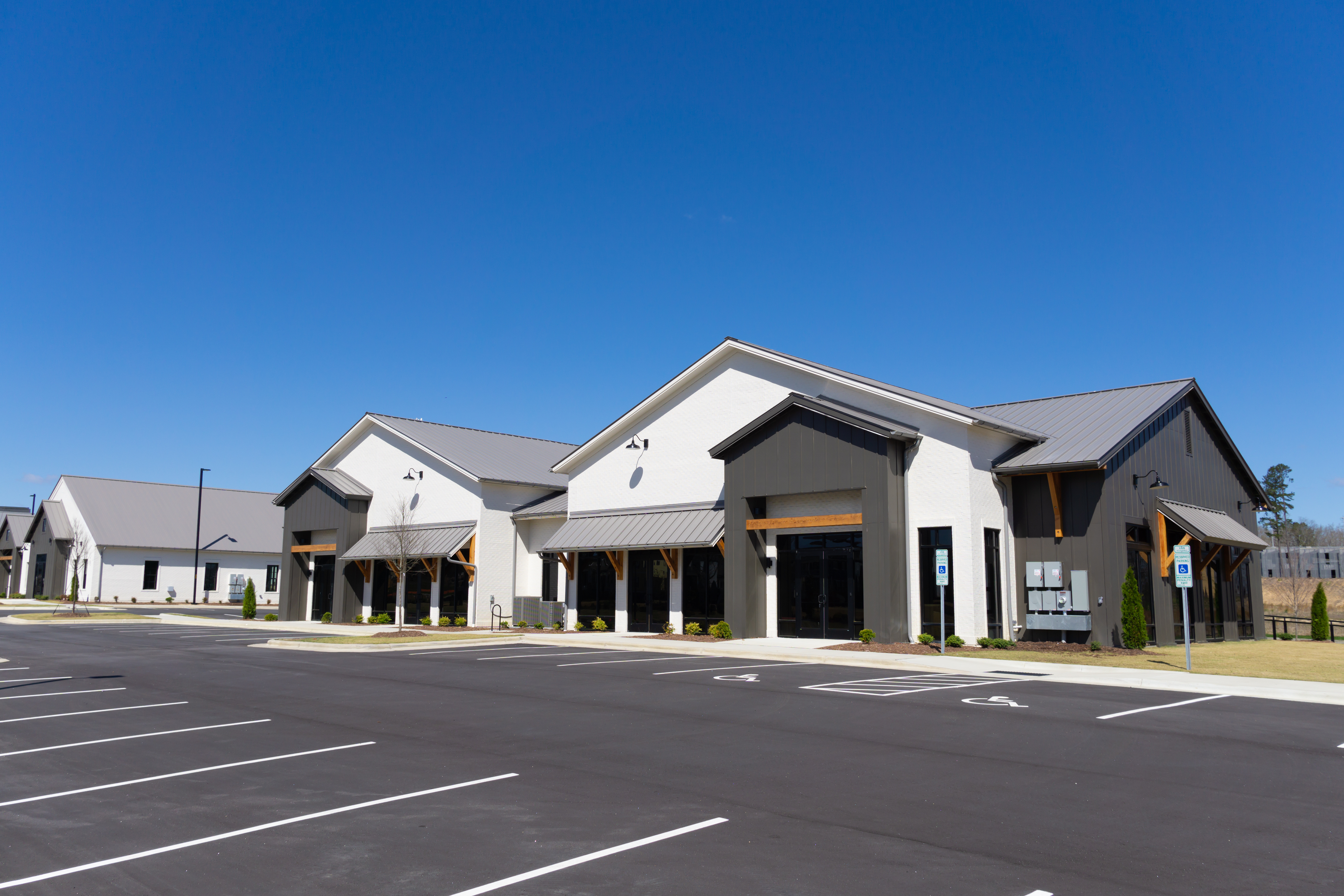
What Is a Commercial Mortgage?
A commercial mortgage is a loan secured by income-producing real estate — office buildings, retail centers, industrial warehouses, multifamily apartments (5+ units), mixed-use properties, self-storage facilities, and hotels. Unlike residential mortgages that underwrite the borrower's personal income, commercial loans are underwritten primarily on the property's Net Operating Income (NOI) and Debt Service Coverage Ratio (DSCR). Typical terms include 5-10 year fixed-rate periods, 20-30 year amortization, 65-80% LTV, and minimum DSCR of 1.20-1.25x.

How Do Commercial Loan Prepayment Penalties Work?
Commercial loan prepayment penalties protect lenders from lost interest income when borrowers pay off loans early. The three main types are yield maintenance (compensates the lender for the full rate differential — most expensive when rates decline), defeasance (borrower purchases Treasury securities to replace the loan's cash flows — complex and costly), and step-down (a declining percentage of the balance — simplest and most predictable). In a declining-rate environment, yield maintenance and defeasance can cost $200,000-$400,000+ on a $2-5M loan, making refinancing uneconomic even when rates drop significantly.
What Is a Life Company Loan?
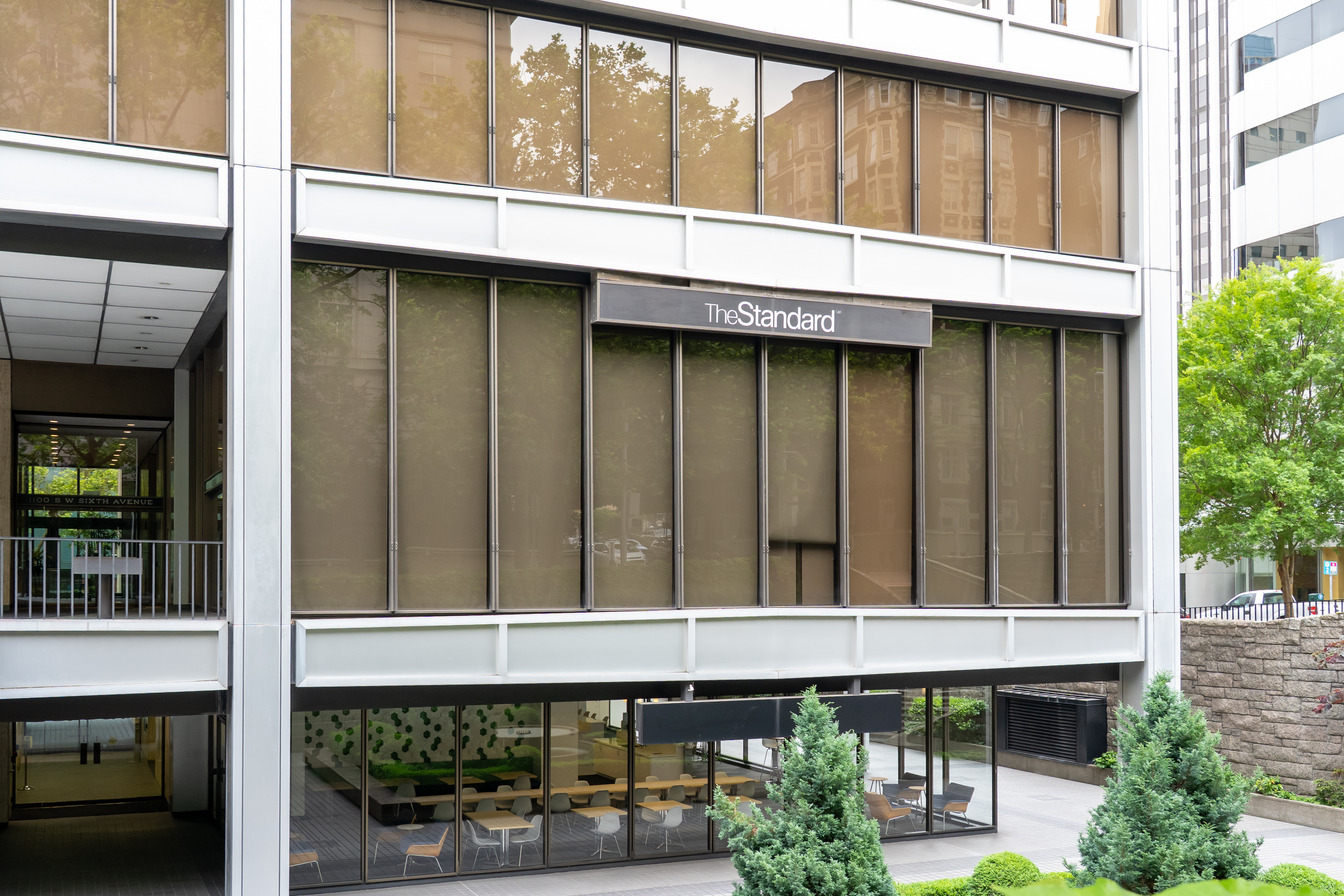
A life company loan is a commercial mortgage originated by a life insurance company (MetLife, Prudential, New York Life, TIAA, Northwestern Mutual, etc.) that typically offers the lowest fixed rates in CRE — often 20-50 basis points below banks and CMBS. Life cos match long-duration insurance liabilities against long-term real estate assets, allowing them to price loans off Treasuries with tight spreads and offer 10-25 year fixed terms. The trade-offs: conservative leverage (55-65% LTV), strict prepayment penalties (yield maintenance or defeasance), highly selective property standards (Class A/B stabilized), and 60-90 day close timelines.

How Do You Refinance a Commercial Property?
Refinancing a commercial property involves replacing your existing mortgage with a new loan — either to lower your rate (rate-and-term), pull cash from equity (cash-out), or transition from bridge/construction financing to permanent debt. The process takes 45-90 days and requires current rent rolls, 2-3 years of operating statements, a commercial appraisal ($3,000-$8,000+), Phase I environmental assessment, and DSCR of 1.20-1.25x minimum. Timing depends on your existing prepayment penalty structure, current rate environment, and hold period strategy.
Multifamily Lending
View Multifamily Learning Center
What Is a Value-Add Apartment Deal?
A value-add apartment deal is a multifamily investment strategy where the buyer acquires an underperforming property at a below-market price, executes targeted capital improvements and operational changes to increase rents and reduce vacancy, then refinances at a higher appraised value or sells to a buyer underwriting stabilized income. Value is created through renovation and management improvement — not market appreciation. Light value-add deals require $5K–$15K/unit in improvements; heavy rehab deals require $20K–$60K+/unit. The strategy is financed with a short-term bridge loan (12–36 months) for acquisition and renovation, followed by permanent financing (agency, HUD, or DSCR) once stabilized at 90%+ occupancy.

How Does a Bridge-to-Agency Refinance Work for Apartments?
A [bridge-to-agency refinance](/loans/multifamily) is the standard two-stage financing strategy for value-add apartment deals: a short-term bridge loan (12–36 months, floating rate) funds the acquisition and renovation, then permanent agency debt from Fannie Mae (DUS) or Freddie Mac (Optigo) replaces the bridge once the property is stabilized at 90%+ occupancy for 90+ consecutive days. The agency loan is sized to the higher stabilized value, often returning 50–100% of the investor's original equity contribution while locking in a 10–30 year fixed rate at the lowest spreads in multifamily lending.
How Do DSCR Loans Work for Small Multifamily Properties?
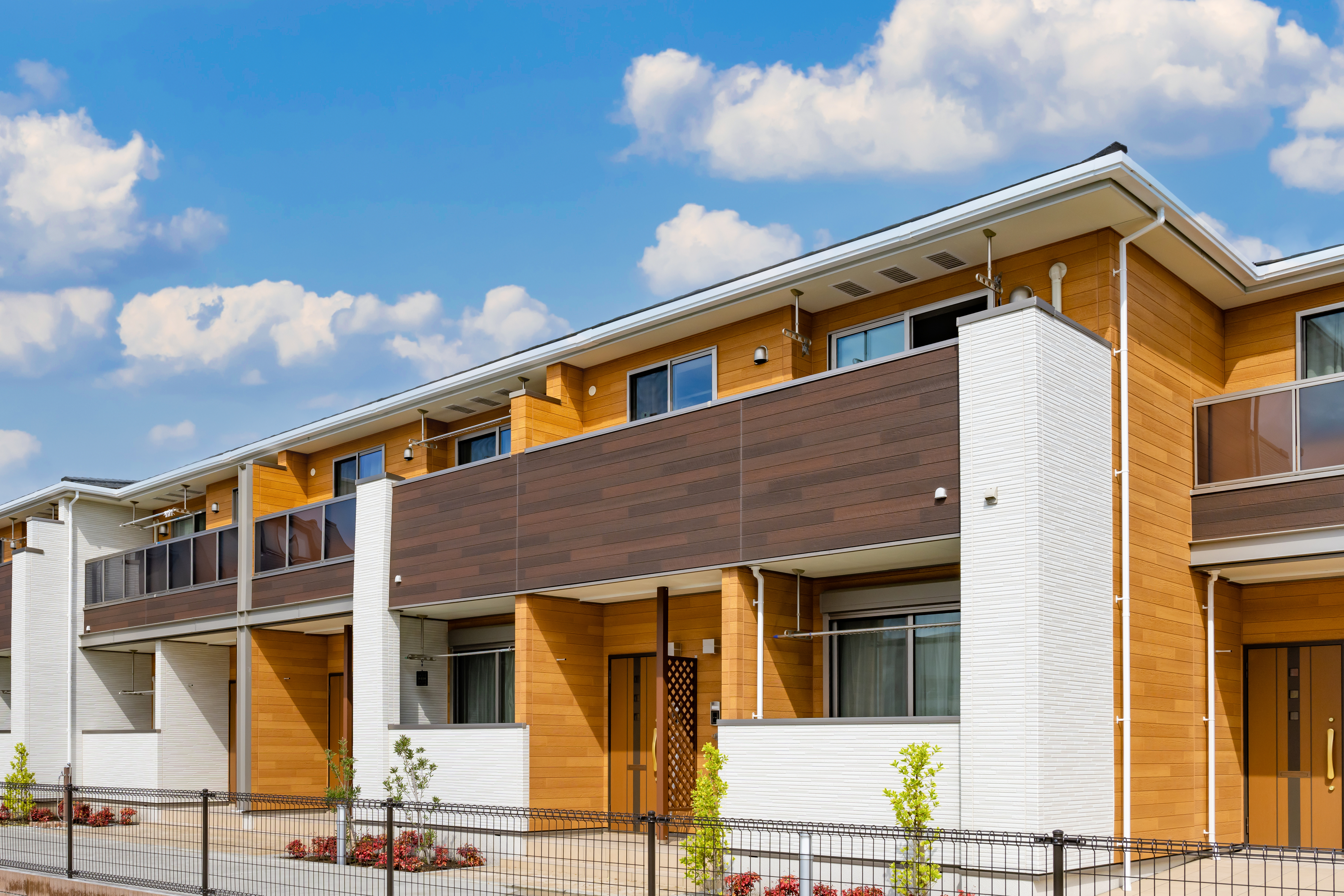
[DSCR loans](/loans/multifamily/dscr-investor) for small multifamily (2–8 units) qualify based on the property's rental income relative to its debt service — with no personal income documentation, tax returns, or W-2s required. The Debt Service Coverage Ratio is calculated as gross monthly rent divided by monthly PITIA. Most lenders require 1.0–1.25x DSCR for purchases and 1.15–1.25x for cash-out refinances. Loan amounts range from $150K to $3.5M+ with 15–25% down, 30- or 40-year fixed terms, and LLC/entity vesting. A critical advantage for value-add buyers: most DSCR lenders use appraiser-established market rent — not in-place lease rents — to calculate the qualifying DSCR.

How Does Oregon's Rent Stabilization Affect Apartment Investors?
Oregon's statewide rent stabilization (SB 608 / 2019) caps annual rent increases at 7% plus the Portland Consumer Price Index (CPI), with the combined cap not exceeding 10% per year. It applies to all residential rental units in Oregon that are more than 15 years old — new construction is exempt for 15 years. For value-add apartment investors, the key impact is that above-cap rent increases can only be implemented upon unit turnover (vacancy), not while a tenant is in place. This means the value-add timeline depends on natural tenant turnover rather than the investor's renovation calendar, extending the bridge-to-stabilization period to 24–36 months in many cases.
Don't See Your Question?
Our loan specialists can answer any mortgage question — no pressure, no obligation.