Multifamily & Apartment
Lending Education Center
Everything you need to know about financing apartment buildings — from value-add strategies and bridge loans to agency debt, DSCR qualification, Oregon rent stabilization, and the BRRR cycle. Oregon & California multifamily lending.
Quick Answer Guides
Common Multifamily Lending Questions
Each page answers one specific question with a direct answer, key facts, and detailed sections — optimized for fast comprehension and AI search citation.
What Is a Value-Add Apartment Deal?
A value-add apartment deal is a multifamily investment strategy where the buyer acquires an underperforming property at a below-market price, executes targeted capital improvements and operational changes to increase rents and reduce vacancy, then refinances at a higher appraised value or sells to a buyer underwriting stabilized income. Value is created through renovation and management improvement — not market appreciation. Light value-add deals require $5K–$15K/unit in improvements; heavy rehab deals require $20K–$60K+/unit. The strategy is financed with a short-term bridge loan (12–36 months) for acquisition and renovation, followed by permanent financing (agency, HUD, or DSCR) once stabilized at 90%+ occupancy.
How Does a Bridge-to-Agency Refinance Work for Apartments?
A [bridge-to-agency refinance](/loans/multifamily) is the standard two-stage financing strategy for value-add apartment deals: a short-term bridge loan (12–36 months, floating rate) funds the acquisition and renovation, then permanent agency debt from Fannie Mae (DUS) or Freddie Mac (Optigo) replaces the bridge once the property is stabilized at 90%+ occupancy for 90+ consecutive days. The agency loan is sized to the higher stabilized value, often returning 50–100% of the investor's original equity contribution while locking in a 10–30 year fixed rate at the lowest spreads in multifamily lending.
How Do DSCR Loans Work for Small Multifamily Properties?
[DSCR loans](/loans/multifamily/dscr-investor) for small multifamily (2–8 units) qualify based on the property's rental income relative to its debt service — with no personal income documentation, tax returns, or W-2s required. The Debt Service Coverage Ratio is calculated as gross monthly rent divided by monthly PITIA. Most lenders require 1.0–1.25x DSCR for purchases and 1.15–1.25x for cash-out refinances. Loan amounts range from $150K to $3.5M+ with 15–25% down, 30- or 40-year fixed terms, and LLC/entity vesting. A critical advantage for value-add buyers: most DSCR lenders use appraiser-established market rent — not in-place lease rents — to calculate the qualifying DSCR.
How Does Oregon's Rent Stabilization Affect Apartment Investors?
Oregon's statewide rent stabilization (SB 608 / 2019) caps annual rent increases at 7% plus the Portland Consumer Price Index (CPI), with the combined cap not exceeding 10% per year. It applies to all residential rental units in Oregon that are more than 15 years old — new construction is exempt for 15 years. For value-add apartment investors, the key impact is that above-cap rent increases can only be implemented upon unit turnover (vacancy), not while a tenant is in place. This means the value-add timeline depends on natural tenant turnover rather than the investor's renovation calendar, extending the bridge-to-stabilization period to 24–36 months in many cases.
Key Topics
What Every Apartment Investor Should Understand
Value-Add Strategy
Acquire underperforming apartments, execute capital improvements, increase rents, and refinance at a higher value. Light value-add ($5K–$15K/unit) vs. heavy rehab ($20K–$60K+/unit) require fundamentally different capital stacks and lender profiles.
Bridge-to-Agency Exit
The standard two-stage financing play: bridge loan for acquisition and renovation, then permanent agency debt (Fannie/Freddie) once stabilized at 90%+ occupancy. Agency rates run 20–100 bps below comparable bank quotes.
DSCR for Small Multifamily
No income docs, no tax returns, no W-2s. DSCR loans qualify 2–8 unit properties on rental income alone. Market-rent underwriting gives value-add buyers a critical qualification advantage on below-market properties.
Oregon Rent Stabilization
Oregon's 7% + CPI cap (max 10%) on units 15+ years old affects every value-add timeline in the state. Above-cap increases only occur on vacancy — extending stabilization to 24–36 months on many deals.
HUD Multifamily Programs
HUD 221(d)(4) for heavy rehab: 40-year fixed, 83.3% LTC, non-recourse. HUD 223(f) for stabilized refinance: 35-year fixed, 83.3% LTV. The most aggressive permanent terms available — if the timeline and complexity are justified.
Underwriting & Cap Rates
Multifamily value = NOI ÷ Cap Rate. Bridge lenders evaluate borrower experience, renovation budget credibility, rent comp data, and capitalization adequacy. Getting the underwriting right is the foundation of every deal.
Multifamily Glossary
Key Apartment Lending Terms Every Investor Should Know
All terms are defined in detail in our Mortgage Glossary under the Multifamily category.
From the Blog
Multifamily Lending Articles
In-depth guides on value-add apartment financing, BRRR strategies, DSCR loans, bridge-to-agency execution, and Oregon market dynamics.
From the Blog
Further Reading
 Commercial
Life Company Loans for Commercial Refinance: The Gold Standard That Isn't Right for Everyone
Life company loans offer the lowest fixed rates in commercial real estate — often beating banks, CMBS, and credit unions by 20-50 basis points. But ultra-conservative leverage, strict prepayment penalties, and highly selective underwriting mean they're a perfect fit for some deals and completely wrong for others. Here's how to know whether a life co refinance belongs in your capital stack.
 Multifamily
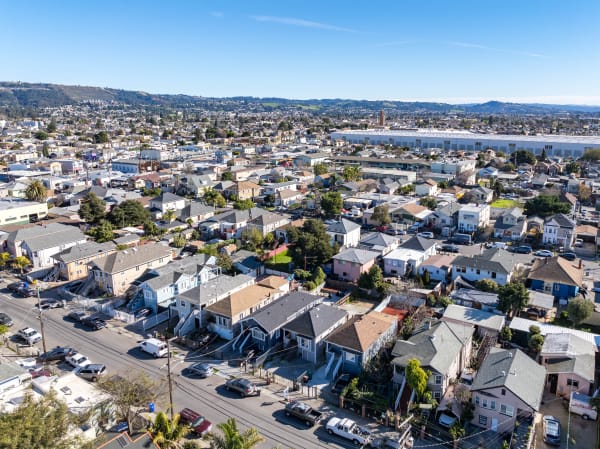
How a DSCR Loan Helped an Investor Buy a Below-Market Oakland 4-Plex, Renovate Two Vacant Units, and Stabilize at Market Rents — With Interest-Only Payments and a 40-Year Fixed Rate
Two of the four units were rented well below market. Two were vacant and needed renovation. A conventional lender would have used the actual rents and killed the deal. A DSCR loan qualified on market rent, and interest-only payments gave the buyer the monthly cash flow to renovate, lease up, and stabilize — all on a 40-year fixed term that eliminates refinance risk forever.
 Multifamily
Value-Add & Rehab Loans for Multifamily Apartments: The Complete Financing Guide for Investors
Buying a tired apartment building, forcing appreciation through strategic renovations, and refinancing at a higher value is one of the most proven wealth-building strategies in real estate — but the financing is more complex than a standard rental loan. Here's how value-add multifamily deals actually get funded.
Have a Multifamily Financing Question?
Whether you're evaluating your first fourplex or structuring a 40-unit value-add acquisition, our team can help you identify the right capital structure and get it financed correctly from the start.
Licensed in Oregon & California · NMLS #1498678