
What Is a Value-Add Apartment Deal?
A value-add apartment deal is a multifamily investment strategy where the buyer acquires an underperforming property at a below-market price, executes targeted capital improvements and operational changes to increase rents and reduce vacancy, then refinances at a higher appraised value or sells to a buyer underwriting stabilized income. Value is created through renovation and management improvement — not market appreciation. Light value-add deals require $5K–$15K/unit in improvements; heavy rehab deals require $20K–$60K+/unit. The strategy is financed with a short-term bridge loan (12–36 months) for acquisition and renovation, followed by permanent financing (agency, HUD, or DSCR) once stabilized at 90%+ occupancy.
Key Facts
How Value-Add Creates Wealth in Apartment Investing
Multifamily property values are a direct function of Net Operating Income (NOI) divided by the market cap rate. A 20-unit building producing $96,000 in annual NOI is worth $1.37M at a 7.0% cap rate. If renovations push NOI to $150,000 — through higher rents, lower vacancy, and better management — the value rises to $2.14M at the same cap rate. That $770,000 increase in value from an investment of $700,000 in acquisition and improvements is forced appreciation: equity created through operational improvement rather than waiting for the market to move. This math is the foundation of every value-add apartment deal.
Light Value-Add vs. Heavy Rehab
Light value-add properties are operationally functional with rents 10–20% below market — needing cosmetic work like new flooring, appliances, paint, and landscaping at $5K–$15K per unit. The timeline is 12–18 months and the renovation risk is low. Heavy rehab properties have significant deferred maintenance, structural issues, or mechanical obsolescence requiring $20K–$60K+ per unit over 18–30 months. Heavy deals require more sophisticated capital stacks (often including mezzanine debt or preferred equity), higher borrower equity (25–35% of total cost), and demonstrable prior renovation experience.
The Financing Stack: Bridge → Stabilize → Permanent
The standard value-add financing structure is a two-stage process. Stage one is a bridge loan: 12–36 month term, floating rate (SOFR + 275–500 bps), sized to 65–80% of total project cost, with an interest-only payment structure and a renovation draw account that disburses funds as work is completed. Stage two is permanent financing: once the property is stabilized (90%+ occupancy for 90+ days), the bridge is replaced by agency debt (Fannie Mae or Freddie Mac), HUD financing, or a DSCR loan — locking in long-term fixed rates at the higher stabilized value. The value created during renovation is monetized through this refinance.
What Lenders Evaluate on Value-Add Deals
Bridge lenders underwrite four pillars: borrower experience (prior completed projects of similar scope), renovation budget credibility (line-item detail supported by contractor bids, not round numbers), market rent achievability (comparable lease data from the immediate submarket), and capitalization adequacy (enough equity and liquidity to carry the project through cost overruns, timeline extensions, and lease-up delays). First-time value-add investors face higher equity requirements and lower leverage — partnering with an experienced operator is often the path to institutional bridge capital on better terms.
Light Value-Add vs. Heavy Rehab: Capital Stack Comparison
How renovation scope drives the financing structure
| Light Value-Add | Heavy Rehab | |
|---|---|---|
| Renovation Cost/Unit | $5K–$15K | $20K–$60K+ |
| Timeline | 12–18 months | 18–30 months |
| Borrower Equity | 20–30% of total cost | 25–35% of total cost |
| Bridge LTC | 70–80% | 65–75% |
| Mezzanine/Pref Equity | Rarely needed | Often 10–15% of stack |
| Experience Required | 1–2 prior projects | 3–5+ prior projects |
| Vacancy During Rehab | Minimal (in-place tenants) | Significant (unit offline) |
Real Estate Attorney Referral
Multifamily compliance is a 50-state problem in just two states.
Oregon's statewide rent cap, California's AB 1482, plus city-level just-cause regimes in Portland, Eugene, LA, SF, Berkeley, Oakland, and others — value-add multifamily is a legal-strategy question as much as a renovation one. We can introduce you to OR/CA multifamily attorneys before you put a property under contract.
No directory. No paid placements. No RESPA-restricted referral fees. We've worked alongside these pros on real Oregon and California deals — we'll make a personal email introduction so you can interview them yourself.
Or email us directly:
Licensed in Oregon & California · NMLS #1498678
From the Blog
Further Reading
 Multifamily
Value-Add & Rehab Loans for Multifamily Apartments: The Complete Financing Guide for Investors
Buying a tired apartment building, forcing appreciation through strategic renovations, and refinancing at a higher value is one of the most proven wealth-building strategies in real estate — but the financing is more complex than a standard rental loan. Here's how value-add multifamily deals actually get funded.
 Multifamily
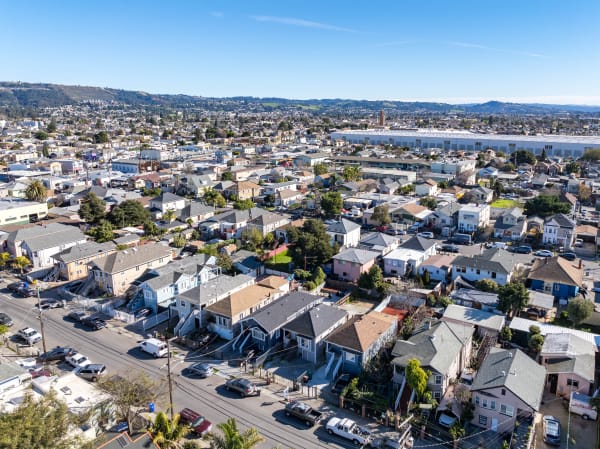
How a DSCR Loan Helped an Investor Buy a Below-Market Oakland 4-Plex, Renovate Two Vacant Units, and Stabilize at Market Rents — With Interest-Only Payments and a 40-Year Fixed Rate
Two of the four units were rented well below market. Two were vacant and needed renovation. A conventional lender would have used the actual rents and killed the deal. A DSCR loan qualified on market rent, and interest-only payments gave the buyer the monthly cash flow to renovate, lease up, and stabilize — all on a 40-year fixed term that eliminates refinance risk forever.