
How Do You Finance a Horse Property?
Horse property financing splits across three products that handle the same buyer at different price points and use levels: Conforming Conventional below the local conforming loan limit ($832,750 in most California Sierra Foothills counties for 2026), our Ranch Home Loans jumbo above that limit at 75% LTV with up to 80% CLTV, and our true Ag loan options at up to 70% LTV for investor-owned or commercial-scale operations. The right product depends on loan size, owner-occupancy, ag/income use, and the borrower's documentation profile — not on a single rule of thumb.
Key Facts
Why Standard Residential Jumbo Often Fails on Horse Property
Most national residential jumbo programs cap creditable acreage at 10–20 acres, exclude commercial-grade outbuildings (heated wash bays, working arenas, dairy barns) from appraised value, and disqualify properties with active Schedule F ag operations. The result on a $1.5M, 19-acre Lincoln/Placer County equestrian estate: the appraisal comes back $200K–$300K under list because the appraiser pro-rates against undersized residential comps and the lender writes off half the outbuildings. The product that publishes the highest headline LTV often closes at the lowest realized loan amount on a working horse property.
Conforming Conventional: The First Option to Check
Below your county's conforming loan limit ($832,750 in most California Sierra Foothills counties for 2026; varies in Oregon), Fannie Mae / Freddie Mac conforming Conventional is surprisingly accommodating on rural and ag-zoned property — far more than residential jumbo overlays one tier above it. If the loan amount fits under the limit (often the case at lower price points or with substantial down payment), this is the cheapest financing available. The product gap shows up the moment you cross into jumbo territory, which is why our Ranch Home Loans product was built.
Ranch Home Loans: Our Jumbo for Equestrian Estates
Ranch Home Loans is our portfolio jumbo built for residences on rural and ag-zoned acreage. Three borrower tiers handle most of the buyer profiles: Hobby Farm ($500+ annual ag income, no acreage cap, full residence with outbuildings — the typical horse property), Rural Resident (no ag income required, generally under 5 acres, single-family primary or secondary residence), and Bare Land ($500+ ag income, 20+ acres of recreational or ag land). The product runs to $2,000,000 loan amount at 75% LTV / 85% CLTV, with higher LTV/CLTV tiers at smaller loan sizes (85%/95% to $806,500; 80%/90% to $1,200,050). Both 15- and 30-year fixed fully amortized terms; no balloons. Self-employed buyers qualify on a tax-return analysis sheet plus 2 years of business history.
When a True Ag Loan Beats Ranch Home Loans
Two scenarios where our Ag loan options outperform Ranch Home Loans even at lower LTV: (1) the buyer is acquiring the property as an investment to rent out rather than owner-occupy — Ranch Home Loans is built around the residence; our Ag loans underwrite the asset; (2) the operation has scaled past hobby-farm levels into commercial-grade boarding, training, breeding, or hay/forage production — Ag underwriting captures the operating components in the financed package. The tradeoff is LTV: 70% on Ag vs. 75% / 80% CLTV on Ranch Home Loans. We keep these loans in-house rather than referring buyers out to Farm Credit West or similar — same lender relationship, same close team.
What Equestrian Appraisers Need to Credit
Three line items that decide whether a horse property appraises at list or 10–20% below: (1) outbuildings — barns, arenas, round pens, wash bays, hay storage need to be valued, not pro-rated against generic shop comps; (2) water rights — NID (Nevada Irrigation District), PCWA (Placer County Water Agency), and similar gravity-fed irrigation rights add material value when the appraiser knows how to credit them; (3) creditable acreage — the full parcel needs to count, not just the first 10–20 acres. Ranch Home Loans and our Ag loan options both use appraisers who actually understand Sierra Foothills equestrian property; standard jumbo desks routinely don't.
Decision Tree: Which Product Fits Which Buyer
Walk these in order: (1) Loan-size check — under your county's conforming limit? Conforming Conventional first. (2) Acreage and improvements — under 5 acres no ag use? Rural Resident tier of Ranch Home Loans. 5+ acres with working barns or arenas? Hobby Farm tier (no acreage cap, $500+ ag income required). 20+ acres bare land? Bare Land tier. (3) Occupancy — owner-occupied or second home? Ranch Home Loans. Investor renting it out? Our Ag loan options. (4) Operation scale — hobby/personal use? Ranch Home Loans. Commercial boarding, training, or breeding past hobby-farm levels? Our Ag loans underwrite the operating asset holistically. For a worked example on a $1.5M, 19-acre Placer County estate, see our Lincoln/Placer County equestrian case study.
Three Loan Products for a Horse Property — Side by Side
Structural comparison across loan size, LTV, owner-occupancy, and how each product treats acreage, ag use, and outbuildings on a typical equestrian estate.
| Conforming Conventional | Ranch Home Loans (Ours) | Our True Ag Loan Options | |
|---|---|---|---|
| Max Loan Amount | $832,750 (most CA Sierra Foothills counties, 2026) | Up to $2,000,000 at 75% LTV | Underwritten as operating asset |
| Max LTV / CLTV | 97% LTV (program-dependent) | 75% LTV / 80% CLTV | Up to 70% LTV |
| Acreage Allowed | Generally allowed | No acreage cap (Hobby Farm tier) | No cap; ag-underwritten |
| Ag Zoning / Hobby-Farm Income | Allowed | Allowed (≥$500/yr) | Built for commercial-scale ag |
| Owner-Occupied vs. Investor | Owner-occupied or 2nd home | Owner-occupied or 2nd home | Investor / rental use allowed |
| Outbuilding & Barn Value | Generally credited | Full value credit | Full value credit |
| Self-Employed Documentation | Tax returns required | Tax-return analysis + 2 yrs business history | Holistic ag P&L review |
| Term Options | 15 / 30 yr fixed | 15 / 30 yr fixed, fully amortized | Structured to operation |
| Best For | Loan amounts under conforming limit | Owner-occupied equestrian / hobby-farm estates over conforming limit | Investors renting the property out, or commercial-scale operations past hobby-farm levels |
Realtor Referral
A realtor who actually understands equestrian property.
Most agents miss the financing implications of acreage, ag zoning, water rights, and barn improvements — and a misread listing can kill your deal at appraisal. We work alongside a small bench of OR/CA realtors who specialize in horse properties. Tell us your market and we'll make the introduction.
No directory. No paid placements. No RESPA-restricted referral fees. We've worked alongside these pros on real Oregon and California deals — we'll make a personal email introduction so you can interview them yourself.
Or email us directly:
Licensed in Oregon & California · NMLS #1498678
From the Blog
Further Reading
 Equestrian
Financing a 19-Acre Equestrian Estate in Lincoln, California: Conventional vs. Ranch Home Loans vs. Ag Loans on a $1.5M Sierra Foothills Horse Property
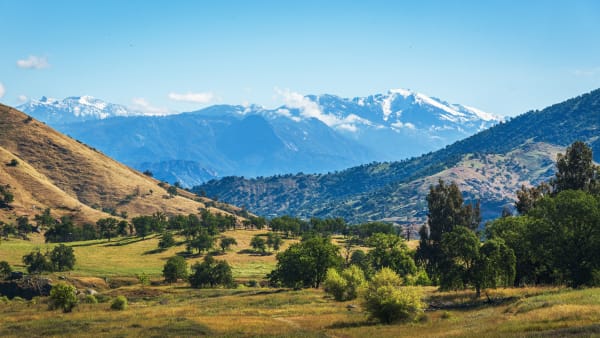
A real-world walkthrough of how to finance a 19.34-acre luxury equestrian estate in Lincoln, Placer County — five-stall barn, arena, round pen, NID-irrigated hay production, two wells, two septics, and barn-loft ADU potential. We compare the viable loan products on the same property: Conforming Conventional vs. standard residential Jumbo, our Ranch Home Loans jumbo, and our true Ag loan options. The 'right' answer isn't the cheapest rate — it's the structure that respects the acreage, the hay income, the improvements, and the buyer's plans for the loft above the barn. Here's how Sierra Foothills equestrian buyers actually navigate the financing decision.
 Vineyard
Financing a 30-Acre Vineyard Estate in Grass Valley, California: Conventional vs. Ranch Home Loans vs. Ag Loans on a $2.29M Nevada County Wine Property
A real-world walkthrough of how to finance a 30-acre established vineyard estate in Grass Valley, Nevada County — 18 acres of producing vines planted in 2002, a Craftsman home, a six-suite office building, a 1,500 sq ft barn, a separately-metered tent building generating rental income, a 20,000-gallon Gunite pool with studio pool house, NID irrigation water, and AG zoning across three parcels. We compare the three viable loan products on the same property: Conforming Conventional vs. standard residential Jumbo, our Ranch Home Loans jumbo, and our true Ag loan options. The decision depends on whether the buyer is occupying the residence and farming at hobby scale, scaling commercial wine production under a use-permit-driven venue plan, or buying the property as an investment to rent out — each path leads to a different product.
 Equestrian
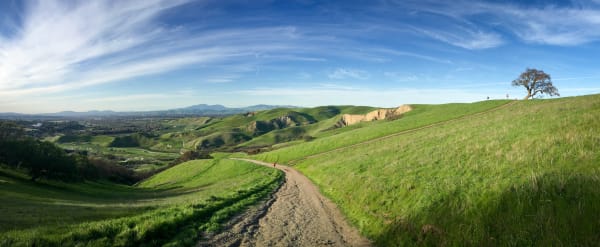
Walnut Creek's Equestrian Community: Why This Bay Area City Is One of America's Most Unique Horse Towns — and How to Finance Property There
Walnut Creek is rare because it manages to be both a prosperous suburban city and a genuine horse community — with a century of history, public arenas in a city park, and back-gate access to nearly 1,000 miles of trails. Here's what makes it special and how to finance every type of equestrian property there.