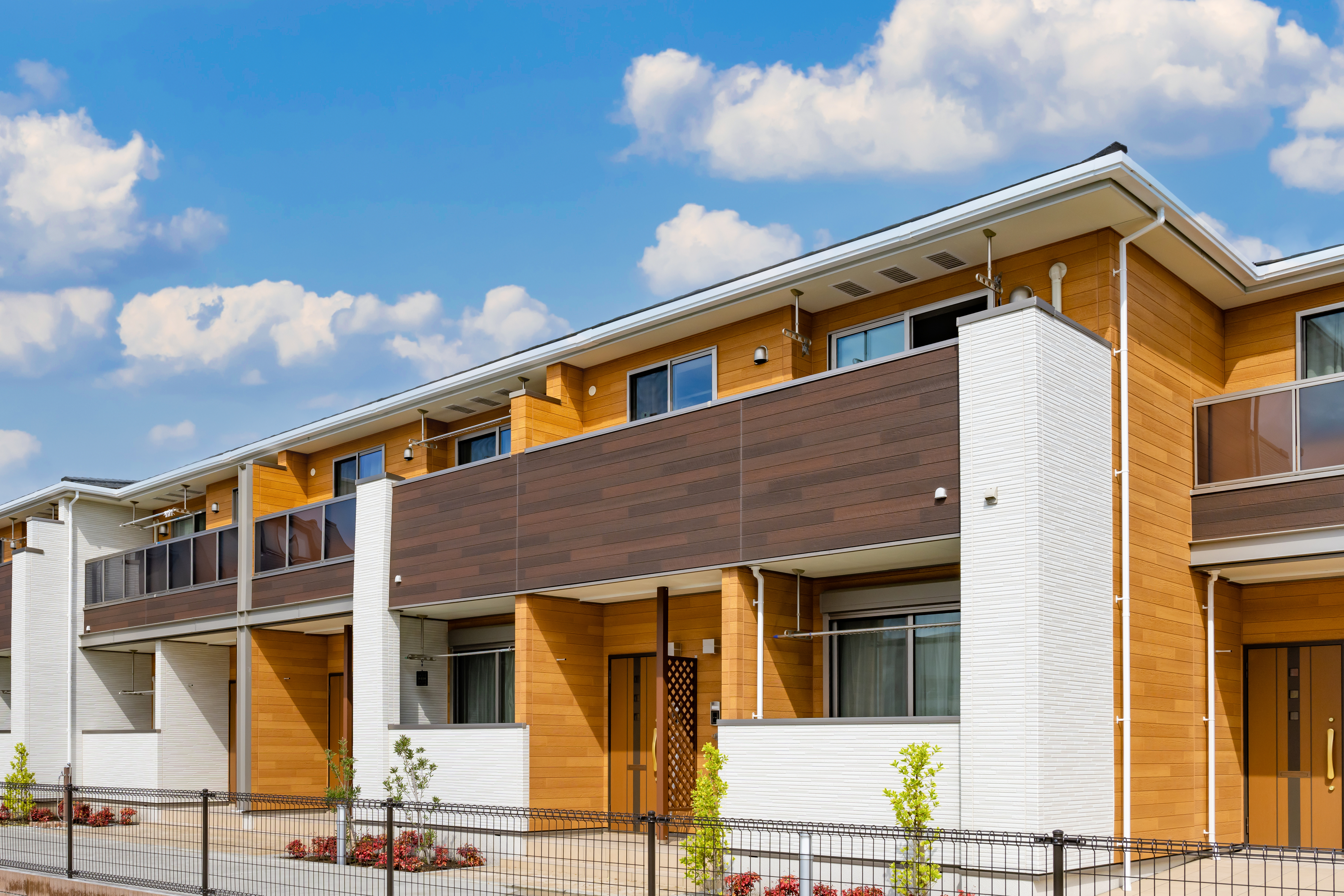
How Do DSCR Loans Work for Small Multifamily Properties?
[DSCR loans](/loans/multifamily/dscr-investor) for small multifamily (2–8 units) qualify based on the property's rental income relative to its debt service — with no personal income documentation, tax returns, or W-2s required. The Debt Service Coverage Ratio is calculated as gross monthly rent divided by monthly PITIA. Most lenders require 1.0–1.25x DSCR for purchases and 1.15–1.25x for cash-out refinances. Loan amounts range from $150K to $3.5M+ with 15–25% down, 30- or 40-year fixed terms, and LLC/entity vesting. A critical advantage for value-add buyers: most DSCR lenders use appraiser-established market rent — not in-place lease rents — to calculate the qualifying DSCR.
Key Facts
Why DSCR Loans Are Ideal for Small Apartment Investors
Conventional multifamily loans require full income documentation — tax returns, W-2s, profit-and-loss statements — and limit most borrowers to 10 financed properties. DSCR loans eliminate both constraints: qualification is based entirely on the property's rental income, and there's no limit on the number of DSCR loans an investor can hold simultaneously. For self-employed investors with significant write-offs, portfolio builders who've hit conventional loan limits, or LLC-based operators who can't use traditional financing, DSCR is often the only practical path to financing small apartment buildings.
Market-Rent Underwriting: The Value-Add Advantage
Most DSCR lenders use the appraiser's market rent determination — not the actual in-place lease rents — to calculate the qualifying DSCR. This is a critical advantage for value-add buyers acquiring properties with below-market rents. If you're purchasing a 6-unit property where current rents average $1,200/month but the appraiser establishes market rent at $1,550/month, the DSCR is calculated on $1,550 × 6 = $9,300/month — not the in-place $7,200. This can make the difference between qualifying and being declined. Confirm your specific lender's rent-treatment methodology before proceeding — it varies significantly.
2–4 Units vs. 5–8 Units: Key Differences
Properties with 2–4 units are classified as residential and follow residential lending guidelines: typical down payment of 15–25%, loan amounts up to $2.5–3.5M, and underwriting that's closer to conventional mortgage analysis. Properties with 5–8 units cross into commercial/residential hybrid territory: 20–30% down payment, loan amounts capped at $1.5–4M depending on the lender, and underwriting that incorporates more commercial analysis including rent rolls and operating statements. Both categories allow LLC vesting, interest-only options, and no personal income documentation.
DSCR as the Permanent Loan for Small Value-Add Deals
For value-add deals under 8 units, DSCR loans can serve as both the acquisition tool and the permanent financing — eliminating the bridge-to-agency two-stage structure that larger deals require. An investor purchasing a 6-unit property at below-market rents can close with a DSCR purchase loan (qualified on market-rent DSCR), execute renovations from personal capital or a HELOC, push rents to market, then cash-out refinance into a new DSCR loan at the higher appraised value to recover renovation costs. The DSCR refinance doesn't require stabilization periods or agency-level third-party reports — just an appraisal confirming the higher value and market rents.
Real Estate Attorney Referral
Multifamily compliance is a 50-state problem in just two states.
Oregon's statewide rent cap, California's AB 1482, plus city-level just-cause regimes in Portland, Eugene, LA, SF, Berkeley, Oakland, and others — value-add multifamily is a legal-strategy question as much as a renovation one. We can introduce you to OR/CA multifamily attorneys before you put a property under contract.
No directory. No paid placements. No RESPA-restricted referral fees. We've worked alongside these pros on real Oregon and California deals — we'll make a personal email introduction so you can interview them yourself.
Or email us directly:
Licensed in Oregon & California · NMLS #1498678
From the Blog
Further Reading
 Multifamily
How a DSCR Loan Helped an Investor Buy a Below-Market Oakland 4-Plex, Renovate Two Vacant Units, and Stabilize at Market Rents — With Interest-Only Payments and a 40-Year Fixed Rate
Two of the four units were rented well below market. Two were vacant and needed renovation. A conventional lender would have used the actual rents and killed the deal. A DSCR loan qualified on market rent, and interest-only payments gave the buyer the monthly cash flow to renovate, lease up, and stabilize — all on a 40-year fixed term that eliminates refinance risk forever.
 Multifamily
Value-Add & Rehab Loans for Multifamily Apartments: The Complete Financing Guide for Investors
Buying a tired apartment building, forcing appreciation through strategic renovations, and refinancing at a higher value is one of the most proven wealth-building strategies in real estate — but the financing is more complex than a standard rental loan. Here's how value-add multifamily deals actually get funded.
 Investment Loans
Conventional vs. DSCR vs. DSCR Interest-Only: How a Brookings Oregon STR Borrower Picked the Right Investment-Property Loan
A high-performing short-term rental near Brookings, Oregon. $500K loan on a property valued north of $1.5M. Vested individually — not in an LLC — with rental income flowing straight to Schedule E. We walked the borrower through four side-by-side options: a Conventional 30-year fixed, a DSCR 30-year fixed, a DSCR 10-year interest-only with a 40-year term, and ultimately a Conventional 15-year fixed. Same rate range across the three 30-year options, similar closing costs, but the right answer wasn't the cheapest payment — it was the loan that aligned with how this borrower actually plans to operate the property. Here's the full deep-dive analysis, the math at Freddie Mac PMMS averages, and exactly why a Conventional 15-year fixed won.