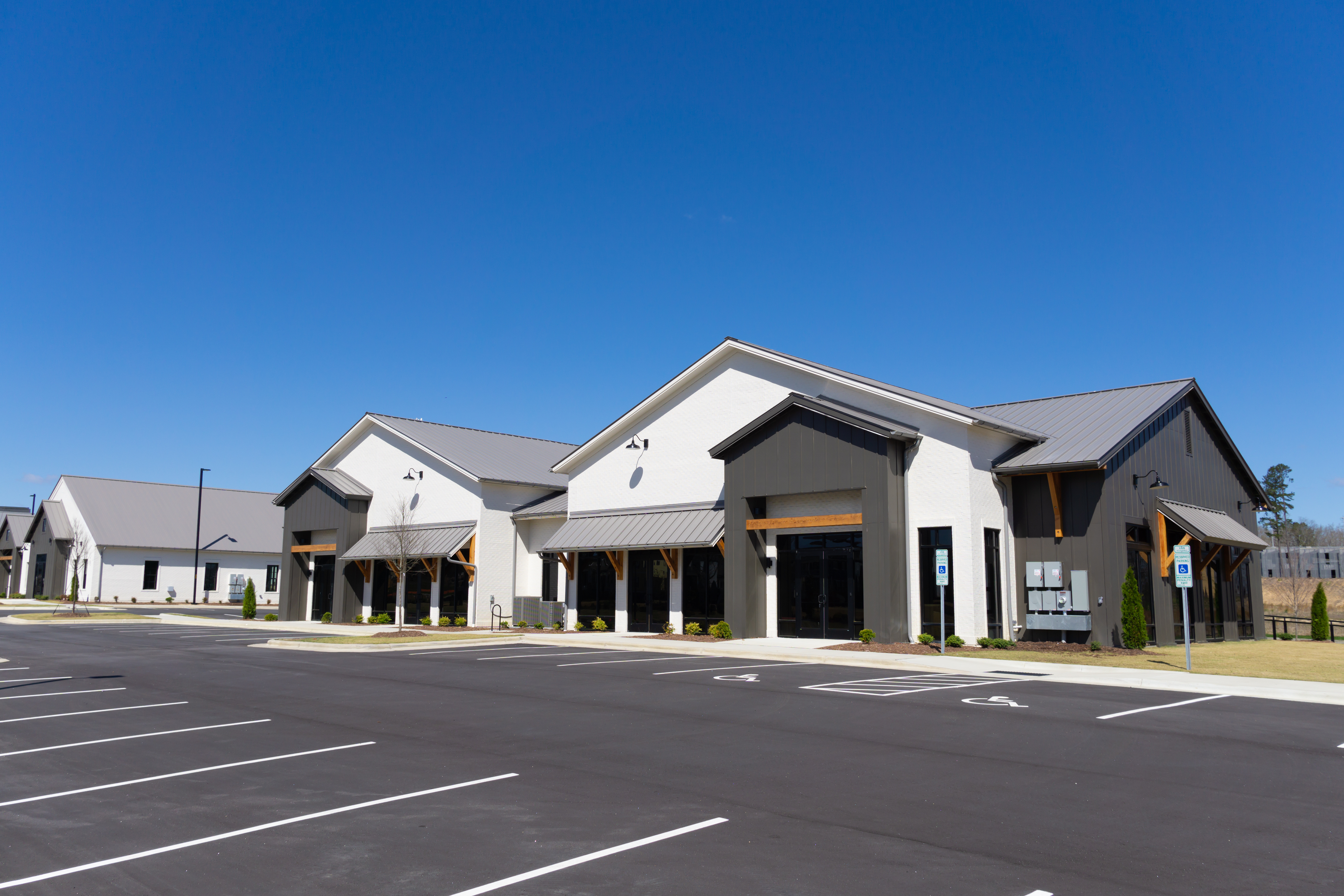
What Is a Commercial Mortgage?
A commercial mortgage is a loan secured by income-producing real estate — office buildings, retail centers, industrial warehouses, multifamily apartments (5+ units), mixed-use properties, self-storage facilities, and hotels. Unlike residential mortgages that underwrite the borrower's personal income, commercial loans are underwritten primarily on the property's Net Operating Income (NOI) and Debt Service Coverage Ratio (DSCR). Typical terms include 5-10 year fixed-rate periods, 20-30 year amortization, 65-80% LTV, and minimum DSCR of 1.20-1.25x.
Key Facts
How Is a Commercial Mortgage Different from Residential?
The fundamental difference is the underwriting focus. Residential mortgages evaluate the borrower — their W-2 income, credit score, debt-to-income ratio, and employment history. Commercial mortgages evaluate the property — its rental income, operating expenses, net operating income, tenant quality, lease terms, and the resulting Debt Service Coverage Ratio. A borrower with a $10 million net worth will still be declined if the property's DSCR falls below 1.20x. A borrower with modest personal finances can qualify for a large commercial loan if the property generates strong, stable income.
Key Metrics: DSCR, NOI, Cap Rate, and LTV
Four metrics drive every commercial loan decision. DSCR (Debt Service Coverage Ratio) = NOI ÷ Annual Debt Service — must exceed 1.20-1.25x minimum. NOI (Net Operating Income) = Gross Rent - Operating Expenses — excludes debt service, capital expenditures, and depreciation. Cap Rate = NOI ÷ Property Value — determines appraised value using the income approach. LTV (Loan-to-Value) = Loan Amount ÷ Appraised Value — typically capped at 65-80% depending on property type and lender. Both DSCR and LTV constraints apply simultaneously, and the more restrictive governs the maximum loan amount.
What Property Types Qualify?
Commercial mortgages cover a broad range of income-producing real estate: multifamily apartments (5+ units), office buildings, retail and shopping centers, industrial and warehouse facilities, mixed-use properties, self-storage, hotels and hospitality, medical office, and specialty property types. Each asset class has different underwriting standards — multifamily and industrial are typically the most lender-friendly, while hospitality and specialty properties face more restrictive terms and higher rates.
Commercial Loan Sources: Banks, CMBS, Life Companies, and Bridge
Commercial mortgages come from four primary capital sources, each with different strengths. Banks and credit unions offer relationship pricing, flexible terms, and the fastest execution, typically at 65-75% LTV. CMBS conduits securitize loans into bond pools, offering non-recourse at higher leverage (70-75%) but with strict prepayment penalties (defeasance or yield maintenance). Life insurance companies offer the lowest fixed rates with terms up to 25 years, but at conservative leverage (55-65% LTV) and with highly selective property standards. Bridge lenders provide short-term financing (12-36 months) for transitional properties at higher rates but with maximum flexibility.
Commercial Loan Sources — Comparison
Rate, leverage, and flexibility by capital source
| Bank / CU | CMBS | Life Co | Bridge | |
|---|---|---|---|---|
| Max LTV | 65–75% | 70–75% | 55–65% | 70–80% |
| Min DSCR | 1.20–1.25x | 1.25x | 1.25–1.35x | 1.0–1.10x |
| Rate Range | 6.5–8.5% | 6.5–8.0% | 5.5–7.0% | 8–12%+ |
| Fixed Term | 5–10 yr | 5–10 yr | 10–25 yr | 1–3 yr |
| Recourse | Full | Non-recourse | Non-recourse | Varies |
| Prepayment | Step-down | Defeasance | Yield maint. | Open/minimal |
| Close Time | 45–60 days | 60–75 days | 60–90 days | 21–30 days |
| Best For | Relationship | Non-recourse | Long-term hold | Transitional |
Real Estate Attorney Referral
Commercial real estate is a legal sport, not just a financial one.
LOI structure, lease assignments, environmental indemnities, and entity vesting all need an attorney before the term sheet is signed — not after. We can introduce you to OR/CA commercial real estate attorneys we've worked closings with.
No directory. No paid placements. No RESPA-restricted referral fees. We've worked alongside these pros on real Oregon and California deals — we'll make a personal email introduction so you can interview them yourself.
Or email us directly:
Licensed in Oregon & California · NMLS #1498678
From the Blog
Further Reading
 Commercial
Commercial Cash-Out Refinance: How Savvy Investors Tap Equity to Renovate, Rehab, and Expand Their Portfolios
Your commercial property has probably appreciated more than you think — and a cash-out refinance lets you put that equity to work without selling the asset. Here's how smart investors use low-cost, already-owned equity to fund renovations, rehab value-add properties, and grow their CRE portfolios in 2026.
 Commercial
Life Company Loans for Commercial Refinance: The Gold Standard That Isn't Right for Everyone
Life company loans offer the lowest fixed rates in commercial real estate — often beating banks, CMBS, and credit unions by 20-50 basis points. But ultra-conservative leverage, strict prepayment penalties, and highly selective underwriting mean they're a perfect fit for some deals and completely wrong for others. Here's how to know whether a life co refinance belongs in your capital stack.
 Commercial
How a 30-Year Amortization Unlocked $500K in Cash-Out Proceeds on a Self-Storage Refinance
A self-storage operator needed $500,000 to build additional units — but a 20-year amortization killed the DSCR. Extending to a 30-year am changed the math entirely. Here’s the full breakdown.