There are horse communities scattered across the American West — places where equestrian culture is part of the landscape, where you can ride from your back gate to open trail, where the local tack shop knows your name and your horse's name. Most of them are rural. Most require real distance from urban amenities, professional employment centers, and the cultural infrastructure of a major metro area. And then there is Walnut Creek. Walnut Creek, California — population roughly 70,000 — sits at the base of the Diablo Range in Contra Costa County, about 25 miles east of San Francisco. It has a walkable, restaurant-rich downtown. It has a BART station. It has top-rated public schools, a performing arts center, world-class medical facilities, and median household income north of $120,000. It is, by every conventional measure, a prosperous suburban city in one of the most expensive metropolitan areas in the country. It is also, genuinely, a horse town. And that combination — the coexistence of urban-caliber amenities and authentic equestrian culture in a single city — is what makes Walnut Creek almost impossible to replicate. For buyers, sellers, and investors in equestrian real estate, Walnut Creek presents a financing landscape as diverse as its property types. This guide covers what makes the community special, the range of equestrian properties you will encounter, and how each one is financed.
A Century of Horses: How Walnut Creek Became Bay Area Horse Country
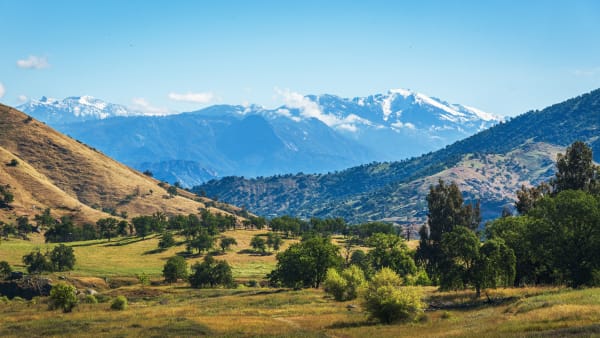
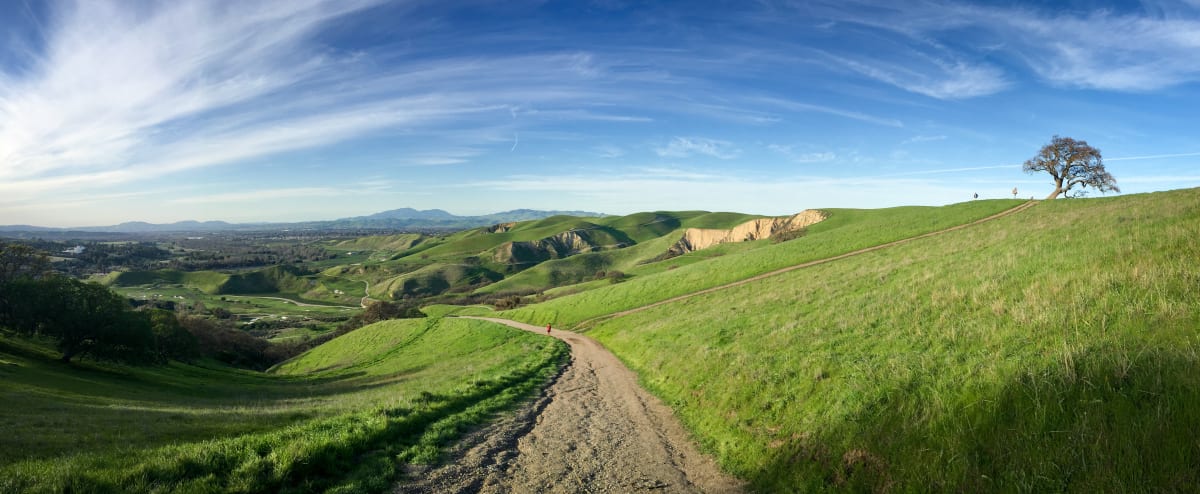
Walnut Creek's equestrian heritage is not a marketing invention — it is woven into the city's physical infrastructure and governance in ways that most modern suburbs abandoned decades ago. The area's ranching roots stretch back to the Spanish land grant era, and horse culture persisted through the agricultural period of the late 1800s and early 1900s when the Ygnacio and Tice valleys were working cattle and grain land. As postwar suburbanization transformed the East Bay, most communities paved over their agricultural character. Walnut Creek did not — at least not entirely. The city made deliberate, sustained decisions to preserve equestrian access as the population grew. Heather Farm Park, a 102-acre municipal park near the center of the city, includes a publicly accessible equestrian arena — an almost unheard-of amenity in a city of this density and income level. The Contra Costa Canal Trail, which runs through Walnut Creek, accommodates equestrian use. And critically, the city's trail network connects directly to the regional open space system managed by the East Bay Regional Park District (EBRPD) and the Mount Diablo State Park system. This is not a community where you trailer to trailheads. This is a community where riders saddle up in their backyard and ride out their back gate onto trails that extend, without interruption, into some of the most spectacular open space in the Bay Area. That physical connectivity — the ability to step from a residential neighborhood onto a trail that leads to Shell Ridge Open Space, Borges Ranch, Briones Regional Park, or the slopes of Mount Diablo — is the single most important factor in Walnut Creek's equestrian identity. Without it, the horse community would have faded as property values climbed. With it, the horse community has not just survived — it has deepened.
Shell Ridge, Briones, and Mount Diablo: Nearly 1,000 Miles of Connected Trails
The trail system accessible from Walnut Creek is extraordinary by any standard, but it is almost incomprehensible by the standards of a major metro area. Shell Ridge Open Space, managed by the City of Walnut Creek, offers 31 miles of trails immediately adjacent to the city's residential neighborhoods. Many of the equestrian properties in Walnut Creek's horse-zoned areas have direct back-gate or side-gate access to Shell Ridge trails — meaning the ride begins at your property line. From Shell Ridge, riders can connect north into Briones Regional Park, a 6,255-acre preserve with over 60 miles of trails through rolling grassland hills, oak woodlands, and seasonal creek valleys. Briones is one of the East Bay's premier riding destinations, and the fact that it is accessible on horseback from residential neighborhoods in Walnut Creek — without ever loading a trailer — is remarkable. To the east, the trail system connects to Mount Diablo State Park, which encompasses nearly 20,000 acres and over 100 miles of trails climbing to the 3,849-foot summit. The riding in Diablo ranges from gentle fire roads through grassland to challenging single-track through chaparral and oak forest, with panoramic views that extend to the Sierra Nevada on clear days. The EBRPD system adds additional mileage through Las Trampas Regional Wilderness, Castle Rock Regional Recreation Area, and the Lime Ridge Open Space — all accessible through interconnected trail corridors. When riders in Walnut Creek say they have access to nearly 1,000 miles of trails, they are referencing the combined trail network of the EBRPD system, Mount Diablo State Park, and the various open space preserves that connect through Contra Costa County. The practical riding radius — the trails you can reach on horseback from a Walnut Creek equestrian property without trailering — is measured in hundreds of miles. That is not an exaggeration. It is the geographic reality that sustains the community.
The Equestrian Property Spectrum: From Backyard Horse Keeping to Commercial Operations
Walnut Creek's equestrian real estate market spans a remarkably wide spectrum, and understanding the property types is essential to understanding the financing landscape. At one end: the residential horse property. These are typically single-family homes on parcels ranging from one-half acre to five acres in the city's equestrian-zoned neighborhoods — areas like the Homestead Valley, the Reliez Valley corridor, and portions of the Ygnacio Valley where zoning permits horse keeping. The improvements are residential in character: a home, a small barn or run-in shelter, perhaps a round pen or small riding area, fenced turnout, and — critically — trail access. These properties are purchased and financed as primary residences. The equestrian improvements are incidental to the residential use. Prices in 2026 range broadly, from roughly $1.5 million for older homes on smaller parcels to $4 million or more for updated homes on larger lots with quality equestrian infrastructure and direct trail access. The next tier: the hobby farm or small estate. These properties — often 3 to 10 acres — include more developed equestrian facilities: multi-stall barns, covered or enclosed arenas, irrigated pasture, dedicated hay storage, and sometimes secondary structures like caretaker's quarters or guest houses. The owner typically keeps their own horses and may board a small number of horses for friends or neighbors, but the property does not operate as a commercial enterprise. Hobby farm properties in Walnut Creek and the immediately surrounding communities (Pleasant Hill, Lafayette, Martinez, Clayton, Danville) range from roughly $2.5 million to $6 million or more depending on acreage, improvements, and location relative to the trail network. At the commercial end: boarding and training facilities. These are properties where the equestrian operation generates meaningful revenue — monthly board for 15 to 40+ horses, training fees, lesson programs, and sometimes event hosting. The facilities are built to commercial standards: large covered arenas with professional footing, multiple turnout paddocks, wash racks, tack rooms, office space, and the infrastructure to support a staffed operation. In the greater Walnut Creek area, these facilities may be structured as sole proprietorships, LLCs, or partnerships, and the real estate may be owned separately from the business. Commercial equestrian properties in the East Bay corridor range from roughly $3 million to $10 million or more, with income potential that supports both the real estate debt service and the operating business.
Financing the Residential Horse Property: Conventional and Jumbo Programs
The residential horse property — a primary residence on equestrian-zoned acreage with modest equestrian improvements — is the simplest to finance because it falls squarely within standard residential lending guidelines. In Walnut Creek's market, nearly every equestrian residential property exceeds the 2026 conforming loan limit of $832,750, placing these purchases in jumbo loan territory. Contra Costa County's high-cost conforming limit is higher than the baseline national limit, but even with that adjustment, the vast majority of horse properties in the $1.5M–$4M range require jumbo financing. Jumbo loans for equestrian properties work exactly like jumbo loans for any high-value residential property, with a few nuances. Lenders will appraise the property using comparable sales that include similar equestrian-zoned parcels with similar improvements — a standard suburban comp set will not work. The appraiser needs experience valuing horse properties, and the lender needs to accept an appraisal that accounts for equestrian infrastructure as part of the property value rather than treating it as an anomaly. Down payment requirements for jumbo purchases are typically 10%–20%, with the best rates available at 20% down or higher. Credit score requirements are generally 700+ for competitive pricing, and reserve requirements (liquid assets remaining after closing) are more substantial than conventional loans — typically 6 to 12 months of mortgage payments in verified reserves. For a $2.5 million equestrian property with 20% down, the loan amount is $2 million. At current jumbo rates in the mid-6% range, the monthly principal and interest payment is approximately $12,800. A buyer at this level needs documented income supporting a debt-to-income ratio at or below 43%, substantial reserves, and a strong credit profile. At Lumen Mortgage, we work with multiple jumbo investors who are comfortable with equestrian properties and understand how to value them. The key is working with a lender who will not be surprised by the appraisal — who expects to see a barn, an arena, and a pasture, and knows how to underwrite it.
Financing the Hobby Farm: Where Residential Meets Agricultural
The hobby farm occupies a financing gray zone that trips up buyers and lenders who are not experienced with equestrian real estate. The property looks residential — there is a home, and the owner lives there — but the acreage, the scale of equestrian improvements, and sometimes the presence of minor income (a few boarded horses, occasional lessons) push it toward agricultural classification. How lenders classify a hobby farm depends on several factors: acreage (properties over 10 acres are more likely to be classified as agricultural), the ratio of land value to improvement value (if the land is worth more than the structures, agricultural classification becomes more likely), income generation (any boarding or training revenue can trigger commercial classification), and zoning (properties on land zoned for agricultural use may require agricultural lending regardless of actual use). For hobby farms that remain within residential classification — typically under 10 acres, no commercial income, residential zoning — jumbo financing is available on the same terms described above. The appraisal is more complex, and the lender must be comfortable with the property type, but the loan structure is standard residential. For hobby farms that cross into agricultural territory, the financing shifts to portfolio or agricultural lending. Agricultural loans are originated by farm credit lenders, portfolio banks, and specialized agricultural lending institutions. Terms differ from residential: down payments are typically 20%–30%, rates may carry a premium over residential, and amortization may be shorter (15–20 years rather than 30). The advantage of agricultural lending is flexibility — agricultural lenders understand acreage, outbuildings, water rights, and land value in ways that residential lenders do not, and they are far less likely to stumble on the appraisal. Lumen Mortgage offers both residential and agricultural lending programs, and our equestrian lending team evaluates each property individually to determine which classification and program produces the best outcome for the borrower. In many cases, the right answer is not obvious until we have reviewed the property details, the borrower's financial profile, and the intended use.
Financing the Commercial Equestrian Operation: DSCR, Agricultural, and Commercial Programs
Commercial equestrian properties — boarding barns, training facilities, lesson operations, and equestrian event venues — require commercial or agricultural financing, and the loan structure depends heavily on the income profile of the operation. For income-producing equestrian properties where the real estate generates rental income from boarders, a DSCR (Debt Service Coverage Ratio) loan is often the most efficient structure. DSCR loans qualify the property based on its income relative to its debt obligations, not on the borrower's personal income. This is ideal for equestrian operations where the facility has a stable roster of boarders paying monthly fees, because the lender underwrites the property's cash flow rather than the operator's tax returns. A boarding facility generating $25,000 per month in gross boarding income with a proposed debt service of $18,000 per month has a DSCR of approximately 1.39 — well above the 1.20 minimum most DSCR lenders require. The property qualifies on its own merits. For larger or more complex operations — facilities with training programs, lesson revenue, event hosting, and multiple income streams — traditional commercial lending or agricultural portfolio lending may be more appropriate. These programs involve more detailed underwriting, including review of the business's operating history, the operator's experience, and detailed financial projections. Down payments are typically 25%–35%, and the lender may require a personal guarantee in addition to the real estate collateral. For owner-operators who live on the property and run the equestrian business from it, a blended approach is sometimes possible: the residential portion financed with a jumbo mortgage and the commercial portion financed separately with a commercial or agricultural loan. This bifurcated structure is complex but can produce better overall terms than financing the entire property under a single commercial loan.
The Trail Access Premium: How Connectivity Drives Property Value
In most real estate markets, property value is driven by the house — its size, condition, finishes, and location relative to schools, shopping, and employment. In Walnut Creek's equestrian market, there is an additional value driver that non-equestrian buyers often underestimate: trail access. Properties with direct, back-gate access to the Shell Ridge or Briones trail systems command a measurable premium over equestrian-zoned properties that require trailering to reach riding areas. The premium varies, but experienced equestrian real estate agents in the East Bay estimate it at 10%–20% of property value — meaning a $3 million property with direct trail access might trade at $2.5M–$2.7M without it, all else being equal. This premium is rational from a use perspective. A rider who can saddle up and ride out their back gate rides more frequently, incurs no trailering costs, avoids the time and labor of hauling, and enjoys a fundamentally different relationship with the landscape than a rider who must load and drive to a staging area. For boarding operations, trail access is a competitive differentiator — boarders will pay higher monthly rates at facilities with direct trail access because the riding experience is superior. From a financing perspective, the trail access premium is captured in the appraisal through comparable sales analysis. Appraisers experienced in equestrian properties will select comps that reflect trail access status and make appropriate adjustments. This is another reason to work with a lender who understands equestrian real estate — the value of trail access must be properly documented in the appraisal for the loan to reflect the property's true market value.
Walnut Creek's Equestrian Culture: More Than Real Estate
What sustains Walnut Creek as a horse community is not just the trails or the zoning — it is the social and organizational infrastructure that makes equestrian life practical and rewarding within a suburban context. The Walnut Creek Trail Riders, one of the area's longstanding equestrian organizations, has advocated for trail preservation and equestrian access for decades. Their work — alongside the efforts of other East Bay equestrian groups — is directly responsible for the trail connectivity that exists today. Without organized advocacy, the trails would have been lost to development long ago. The Contra Costa County Horsemen's Association, local Pony Club chapters, 4-H equestrian programs, and multiple riding clubs provide a social network that integrates riders across disciplines — western, English, dressage, jumping, trail, and endurance. For families with children in the equestrian community, this network provides mentorship, competition opportunities, and a peer group that is increasingly rare in suburban environments. Local feed stores, farriers, equine veterinarians, and tack shops serve the community, and their continued presence is both a reflection of and a support for the equestrian economy. When a community has enough horse owners to sustain a local feed store, it has critical mass — and Walnut Creek has had that critical mass for over a century. For buyers considering Walnut Creek, this cultural infrastructure matters as much as the physical infrastructure. Moving to a horse property in a community without equestrian culture means isolation — you have a barn, but you ride alone. Moving to Walnut Creek means joining a community that rides together, advocates together, and has collectively maintained a way of life that most suburban cities abandoned a generation ago.
The Broader East Bay Equestrian Corridor: Beyond Walnut Creek
Walnut Creek is the anchor of the East Bay equestrian corridor, but the horse community extends into adjacent cities and unincorporated areas that offer different price points, larger acreages, and in some cases, more explicitly agricultural character. Pleasant Hill, immediately to the north, has equestrian-zoned pockets with good trail access and somewhat lower price points than central Walnut Creek. Lafayette, to the west, has its own well-established horse community — the Happy Valley and Burton Valley areas include equestrian properties with trail access to Briones and the Lafayette Reservoir trail system. Martinez, north of Walnut Creek, offers more affordable equestrian properties with access to Briones and the Carquinez Strait Regional Shoreline trails. The unincorporated areas around Clayton, at the base of Mount Diablo, provide larger parcels and more rural character while remaining within 15 minutes of Walnut Creek's urban amenities. Danville and Alamo, to the south along the Interstate 680 corridor, extend the equestrian community into the San Ramon Valley, with trail access to Las Trampas Regional Wilderness and the extensive East Bay Regional Park system. For buyers whose budget does not reach Walnut Creek's core equestrian neighborhoods, these surrounding communities offer genuine alternatives with many of the same trail-access advantages at more accessible price points. The financing considerations are identical — jumbo residential, hobby farm, or commercial, depending on property type and use — and Lumen Mortgage serves the entire East Bay corridor.
Preparing to Buy: What Equestrian Buyers in Walnut Creek Should Do First
Buying an equestrian property in Walnut Creek requires preparation that goes beyond a standard home purchase. The market is competitive, inventory is limited (there are only so many equestrian-zoned parcels in the city), and the best properties — those with direct trail access, quality improvements, and usable acreage — attract multiple offers and sell quickly. Step one is financing. Get pre-approved before you begin searching, and get pre-approved with a lender who understands equestrian properties. A generic pre-approval letter from a lender who has never financed a horse property is worth very little in a competitive offer situation — the listing agent and seller want to know that your lender can close on that specific type of property. At Lumen Mortgage, our equestrian pre-approvals are specific to the property types you are targeting, and we communicate directly with listing agents to confirm our capability and timeline. Step two is assembling the right team. You need a real estate agent who specializes in — or has deep experience with — equestrian properties in the East Bay. This is not a generalist's market. The agent needs to evaluate barn construction, arena footing, pasture condition, fencing, water systems, and trail access with the same rigor they evaluate kitchen finishes and school districts. They need to know which parcels have direct trail access and which require road crossings. They need to understand zoning overlays and the restrictions that come with equestrian-zoned land. Step three is understanding your total cost of ownership. Equestrian property ownership in the Bay Area includes property taxes (Contra Costa County's effective rate is approximately 1.1%–1.3% of assessed value), insurance (equestrian properties require specialized homeowner's policies that cover barns, arenas, and livestock-related liability), maintenance (fencing, footing, manure management, pasture care), and the direct costs of horse keeping (feed, farrier, veterinary, equipment). A realistic budget for maintaining an equestrian property in Walnut Creek — exclusive of the mortgage — runs $2,000–$5,000 per month depending on the number of horses, the scale of the facility, and whether you employ any staff. These costs should be factored into your purchasing decision alongside the mortgage payment.
Model Your Farm Loan
Agricultural Loan Calculator
Agricultural loans work differently from residential mortgages — larger required down payments, sometimes shorter amortization periods, and monthly carrying costs that need to work against seasonal income rather than a steady paycheck. Before you make an offer on farmland or a rural property, knowing your payment scenario shapes the entire negotiation.
The ag loan calculator lets you model purchase price against the 25–35% down payments typical of farm lending, compare 20-, 25-, and 30-year amortization schedules, and see how rate variations move your monthly carrying cost. For a cash-flowing operation, that monthly number is as important as the land price itself.
Down payment scenarios
Model your monthly payment at 25%, 30%, and 35% down — the range most ag lenders require on farm purchases.
Amortization comparison
See how 20-yr vs. 25-yr vs. 30-yr amortization changes your monthly payment and total interest paid over time.
Rate sensitivity
Small rate differences compound significantly over long amortizations on large balances. See the real magnitude.
Free · No login · No credit pull required
Realtor Referral
Need a realtor for East Bay equestrian communities?
Walnut Creek and the surrounding equestrian neighborhoods (Lafayette, Alamo, Diablo) reward agents who understand stable agreements, HOA equestrian covenants, and pasture vs. arena property layouts. We can introduce you to East Bay agents who actually know horse properties — no public directory, just a personal email handoff.
No directory. No paid placements. No RESPA-restricted referral fees. We've worked alongside these pros on real Oregon and California deals — we'll make a personal email introduction so you can interview them yourself.
Or email us directly:
Financing Equestrian Property?
Specialized lending for horse farms, arenas, and equestrian estates. We understand acreage, outbuildings, and rural appraisals.
Bottom Line
Walnut Creek is rare because it manages to be both a prosperous suburban city and a genuine horse community — with a century of history, public arenas in a city park, and back-gate access to nearly 1,000 miles of trails. That combination is almost impossible to find anywhere else in a major metro area. For equestrian buyers, the property types span from residential horse-keeping parcels to multi-million-dollar commercial boarding and training facilities, and each requires a financing approach tailored to its classification, income profile, and value. Whether you are purchasing a residential horse property with jumbo financing, navigating the hobby farm gray zone between residential and agricultural lending, or structuring a DSCR or commercial loan for an income-producing equestrian operation, the key is working with a lender who understands how equestrian properties are valued, classified, and underwritten. At Lumen Mortgage, equestrian property lending is one of our areas of genuine expertise — not a sideline, but a core practice built on deep experience with every property type in this market. If you are considering buying, selling, or refinancing an equestrian property in Walnut Creek or the broader East Bay corridor, call us at 503-966-9255 or email info@lumenmortgage.com to start the conversation. We will help you navigate the financing with the same care and knowledge that the Walnut Creek equestrian community brings to everything it does.