
Multifamily DSCR Loans for 5–10 Units in Oregon & California
Multifamily DSCR Loans for 5–10 Units — Qualify on the Property's Income, Not Yours
No tax returns, no W-2s, no personal income documentation. Our DSCR program for 5–10 unit properties is underwritten on the rental income the property generates — verified with rent rolls, current leases, and recent rental receipts, not tax returns.
5–10 Units
Property Size
$3,000,000
Max Loan Amount
1.1x
Min. DSCR
None Required
Income Docs
Reviewed by David Blackmon
Mortgage Advisor · Portland, OR · NMLS #1017565 · Updated
What is a 5–10 unit DSCR loan?
A 5–10 unit DSCR loan finances small multifamily investment property based on the property's rental income — its debt service coverage ratio — instead of your personal tax returns. Lumen Mortgage offers it across Oregon and California with qualifying ratios as low as 1.1x.
Best for: Experienced investors buying or refinancing a 5–10 unit property who want to qualify on rental income, not tax returns.
Program at a Glance
5–10 Unit DSCR Loan Parameters
| Property type | 5–10 unit, non-owner-occupied investment (min 500 sq ft/unit; rural up to 2 acres) |
|---|---|
| Maximum loan amount | $3,000,000 |
| LTV by transaction | Purchase up to 75% · Rate & term up to 70% · Cash-out up to 65% |
| Maximum cash-out | $500,000 (higher considered case-by-case with compensating factors) |
| Minimum DSCR | 1.1x (gross monthly rent ÷ monthly PITIA) |
| Minimum credit score | 680 |
| Entity requirement | Title held in an LLC; experienced investors only |
| Term options | 30-year fixed fully amortizing, or 40-year fixed (10 years interest-only, then 30 years amortizing) — same fixed rate, no balloon, no adjustable rate |
| Prepayment | Standard 3-year penalty; can be bought down, bought out entirely, or extended up to 5 years for better pricing |
| Income documentation | Rent roll, current leases, and 3-month rental receipts — no tax returns, W-2s, or pay stubs |
| Ongoing reporting | None — no quarterly or annual financial statements or covenant reporting |
| Deposit relationship | Not required — keep banking with your existing bank or credit union |
| Geography | Oregon and California |
5–10 Unit DSCR vs. Agency Small Balance vs. Bank Portfolio
| Feature | 5–10 Unit DSCR (Lumen) | Agency Small Balance | Bank Portfolio |
|---|---|---|---|
| Term | 30-yr fixed, or 40-yr (10 IO + 30 amortizing) | Typically 5, 7, or 10 years | Typically 5, 7, or 10 years |
| Balloon | None | Common | Common |
| Rate type | Fixed for the full term | Fixed period, then reset or hybrid ARM | Often adjustable or reset |
| Income docs | Rent roll & leases — no tax returns | Global cash flow; tax returns often required | Full financials & tax returns |
| Ongoing reporting | None | Periodic financials / rent rolls | Quarterly or annual financials |
| Deposit relationship | Not required | Not required | Often required |
| Prepayment | 3-yr standard; buy down, buy out, or extend up to 5 yrs for pricing | Step-down or yield maintenance | Varies by lender |
Agency small-balance and bank portfolio terms shown are typical industry structures for comparison and vary by lender, program, and borrower. Lumen program terms are summarized above and are subject to change.
Overview
Qualify a 5–10 Unit Property on Its Own Cash Flow
5–10 unit properties fall in the gap between residential and commercial lending. Most residential lenders stop at 4 units; most commercial lenders want a full underwriting package, a shorter term, and a balloon. A 5–10 unit DSCR loan sits in between — long-term financing qualified on the rent roll, with no personal income documentation and no balloon.
Traditional lenders require two years of tax returns, proof of W-2 income, and debt-to-income calculations that punish real estate investors for their write-offs. DSCR loans flip the model entirely — qualification is based on the Debt Service Coverage Ratio of the property itself, not the borrower's personal income.
This program is built for experienced investors financing 5–10 unit properties. Loan amounts run as high as $3,000,000, with purchase LTV up to 75%, rate-and-term refinance up to 70%, and cash-out refinance up to 65% — with as much as $500,000 in cash out. Qualification uses the property's rent roll, current lease agreements, and three months of rental receipts, verified against a Form 71A appraisal. No tax documentation is required.
That documentation approach makes it a strong fit for recently stabilized properties whose full income isn't yet reflected on the latest tax returns. Because every unit qualifies at the appraiser's market rent rather than a prior year's return, a property that has just reached stabilized occupancy can qualify on what its units are worth in today's rental market.
Who This Is For
Use the DSCR Calculator Below
Scroll down to model your Debt Service Coverage Ratio and monthly cash flow, and see how your 5–10 unit property qualifies against our 1.1x minimum — before you ever talk to a lender.
Key Features
What Makes This Program Work
No Tax Documentation
Qualify on the rent roll, current lease agreements, and three months of rental receipts — no tax returns, W-2s, or pay stubs.
Qualify From 1.1x DSCR
Underwritten on the property's Debt Service Coverage Ratio, with qualifying ratios as low as 1.1x on eligible 5–10 unit assets.
Close in an LLC
Title must be held in an LLC — liability protection and clean entity accounting for experienced multifamily investors.
30-Year Fixed or 40-Year Interest-Only
Choose a 30-year fully amortizing fixed rate, or a 40-year fixed with 10 years interest-only followed by 30 years amortizing — one fixed rate for the full term, no adjustable rate, no balloon.
Cash-Out Up to $500K
Pull as much as $500,000 in equity with a cash-out refinance at up to 65% LTV to fund your next acquisition or improvements.
Built for Recently Stabilized Assets
Ideal when income has just stabilized and isn't yet on your latest returns — a Form 71A appraisal sets market rent for every unit, leased or vacant.
No Ongoing Financial Reporting
Unlike small-balance agency loans and most bank programs, there are no quarterly or annual financial statements, rent-roll filings, or covenant reporting to maintain after closing.
No Deposit Relationship Required
Unlike most bank portfolio loans, there's no requirement to move operating accounts, reserves, or deposits — keep banking with your existing bank or credit union.
Interactive Tool
DSCR Calculator
Model your Debt Service Coverage Ratio and monthly cash flow. Our DSCR programs run from a 1.1x minimum on 5–10 unit properties down to 0.75x on 1–4 unit deals — see instantly where your property lands.
DSCR Calculator
Debt Service Coverage Ratio Estimator
Loan Details
Edit to reverse-calculate down payment %
Loan Term
Monthly Income & Expenses
Market rent/mo
Monthly
Hazard ins.
$0 if none
Your property generates strong income well above the debt obligation. Expect the best available rates and terms.
Monthly Cash Flow
+$6,702
Annual
+$80,430
| Year | Principal | Interest | Balance |
|---|---|---|---|
| 1 | $42,379 | $156,192 | $2,957,621 |
| 2 | $44,653 | $153,917 | $2,912,968 |
| 3 | $47,050 | $151,520 | $2,865,918 |
| 4 | $49,576 | $148,995 | $2,816,342 |
| 5 | $52,237 | $146,334 | $2,764,105 |
| 6 | $55,041 | $143,530 | $2,709,065 |
| 7 | $57,995 | $140,575 | $2,651,069 |
| 8 | $61,108 | $137,462 | $2,589,961 |
| 9 | $64,388 | $134,182 | $2,525,573 |
| 10 | $67,844 | $130,726 | $2,457,729 |
| 11 | $71,486 | $127,084 | $2,386,243 |
| 12 | $75,323 | $123,247 | $2,310,919 |
| 13 | $79,366 | $119,204 | $2,231,553 |
| 14 | $83,627 | $114,944 | $2,147,927 |
| 15 | $88,115 | $110,455 | $2,059,811 |
| 16 | $92,845 | $105,725 | $1,966,966 |
| 17 | $97,829 | $100,742 | $1,869,137 |
| 18 | $103,080 | $95,491 | $1,766,057 |
| 19 | $108,613 | $89,958 | $1,657,445 |
| 20 | $114,443 | $84,128 | $1,543,002 |
| 21 | $120,586 | $77,985 | $1,422,416 |
| 22 | $127,059 | $71,512 | $1,295,357 |
| 23 | $133,879 | $64,692 | $1,161,479 |
| 24 | $141,065 | $57,506 | $1,020,414 |
| 25 | $148,637 | $49,934 | $871,777 |
| 26 | $156,615 | $41,955 | $715,162 |
| 27 | $165,022 | $33,549 | $550,140 |
| 28 | $173,880 | $24,691 | $376,260 |
| 29 | $183,213 | $15,357 | $193,047 |
| 30 | $193,047 | $5,523 | Paid off |
| Total | $3,000,000 | $2,957,112 | paid off |
For illustrative purposes only — not a loan commitment. Contact a Lumen Mortgage specialist for a formal analysis. NMLS #1498678.
Worked Example
How a 5–10 Unit DSCR Deal Pencils: A Worked Example
Here's a representative cash-out refinance on a 10-unit building in the Portland metro, sized the way we actually underwrite these loans — on the property's rents, not your tax returns. The numbers below are illustrative only.
The Property
| Property type | 10-unit multifamily, Portland metro |
|---|---|
| Appraised value | $2,400,000 |
| Gross scheduled rents | $20,000/mo ($2,000 avg per unit) |
| Existing loan payoff | $900,000 |
| Borrower goal | Cash-out refinance to fund next acquisition |
The Payment Math
| Line item | Monthly |
|---|---|
| Gross scheduled rent | $20,000 |
| Principal & interest ($1,400,000, 7.375%, 30-yr fixed) | $9,669 |
| Property taxes | $2,000 |
| Insurance | $625 |
| Total PITIA | $12,294 |
How is DSCR calculated on 5–10 unit properties?
On this program, DSCR = gross monthly rent ÷ monthly PITIA (principal, interest, taxes, insurance, and any association dues). We qualify on gross scheduled rent — so ordinary vacancy and operating costs don't reduce your qualifying ratio.
The DSCR Result
| Loan amount | $1,400,000 ($500,000 cash-out — the program max — well within 65% LTV) |
|---|---|
| Rate / term | 7.375%, 30-year fixed (illustrative) |
| Gross monthly rent | $20,000 |
| Monthly PITIA | $12,294 |
| DSCR | $20,000 ÷ $12,294 = 1.63 ✓ clears the 1.1x minimum |
What the Borrower Walks Away With
- Cash-out proceeds: $1,400,000 − $900,000 payoff = $500,000 before closing costs — the program's cash-out maximum
- Escrow impounds waived by the lender
The rents sized this loan — no tax returns, no personal DTI, and the gross-rent-to-PITIA math above is exactly what the lender underwrites.
Hypothetical example for illustration only; not an offer or commitment to lend. Assumes a business-purpose loan at a 7.375% fixed interest rate on a 30-year fully amortizing loan, on a $1,400,000 loan amount. APR is 7.496%, assuming 1 discount point plus $2,500 in finance charges. Monthly principal and interest is $9,669.45 for all 30 years. Taxes and insurance are estimates and will make actual payments higher. Rates, terms, and eligibility depend on credit, property, and lender guidelines and are subject to change. Lumen Mortgage Corporation, NMLS #1498678 | David Blackmon, NMLS #1017565. Equal Housing Opportunity.
Purchase Example · Bay Area
Buying a 5–10 Unit Property in the Bay Area: A Purchase Example
Here's a representative purchase of a 7-unit apartment building in South Berkeley, near the UC Berkeley campus — the kind of small multifamily deal that trades around a 6.6% cap in the East Bay. The buyer is closing with two units vacant, which is allowed on this program. The numbers below are illustrative only.
The Property
| Property type | 7-unit apartment building, South Berkeley (Bay Area), CA |
|---|---|
| Purchase price | $4,350,000 |
| Going-in cap rate | ~6.6% (per listing) |
| Occupancy at closing | 5 of 7 units leased; 2 units vacant |
| Borrower goal | Purchase, non-owner-occupied investment |
Qualifying Rent (With Two Vacant Units)
| Line item | Monthly |
|---|---|
| Market rent, 5 occupied units | $29,700 |
| Market rent, 2 vacant units (≈ $39,300 total market) | $9,600 |
| Less: vacant-unit haircut (vacant counted at 75% of market) | –$2,400 |
| Qualifying gross monthly rent | $36,900 |
Can I buy a 5–10 unit property with vacant units?
Yes — on a purchase, up to two units may be vacant at closing. Vacant units are counted at 75% of their market rent (established by the appraisal), so they still contribute to qualifying income. Rate-and-term and cash-out refinances require all units to be occupied.
Loan Sizing & DSCR
| Purchase price | $4,350,000 |
|---|---|
| Maximum loan (lesser of 75% LTV or the $3M program cap) | $3,000,000 |
| Down payment | $1,350,000 (~31%) |
| Rate / term | 7.375%, 30-year fixed (illustrative) |
| Monthly PITIA (P&I $20,721 + taxes $4,530 + insurance $1,000) | $26,250 |
| Qualifying gross monthly rent | $36,900 |
| DSCR | $36,900 ÷ $26,250 = 1.41 ✓ clears the 1.1x minimum |
Interest-Only vs. 30-Year Fixed
| Line item | 30-yr fixed · 7.375% | 40-yr fixed, 10 yrs interest-only · 7.375% |
|---|---|---|
| Monthly loan payment, years 1–10 | $20,721 (P&I) | $18,438 (interest only) |
| Monthly PITIA | $26,250 | $23,968 |
| Monthly cash flow after PITIA | $10,650 | $12,932 |
| Monthly loan payment, year 11 on | $20,721 (P&I) | $20,721 (P&I, 30 yrs remaining) |
| DSCR after year 10 at today's rents | 1.41 | 1.41 |
| DSCR, years 1–10 | 1.41 | 1.54 ✓ |
How does an interest-only option improve DSCR?
The interest-only option carries the same fixed rate as the amortizing loan — here 7.375% — so the lower payment during the 10-year interest-only period comes at no rate premium. Because DSCR = gross rent ÷ PITIA, the smaller payment raises the ratio: in this example, from 1.41 to 1.54, while adding roughly $2,300/mo of cash flow. The trade-off is that the balance doesn't amortize during the interest-only period. In year 11 the payment rises to $20,721 in principal and interest over the remaining 30 years, the same as the 30-year fixed payment, so the DSCR at today's rents returns to 1.41.
Two vacant units still counted toward qualifying, the rents carried the loan at a 1.41 DSCR, and the $3M program cap — not the 75% LTV — set the down payment. Choosing the interest-only option lifts that DSCR to 1.54 and adds roughly $2,300/mo of cash flow at the same 7.375% rate — no tax returns, no personal DTI.
Hypothetical example for illustration only; not an offer or commitment to lend. Property characteristics are drawn from a public listing and are used for illustration only; this is not a solicitation for that property. Assumes a business-purpose loan at a 7.375% fixed interest rate on a $3,000,000 loan amount, assuming 1 discount point plus $2,500 in finance charges. 30-year fixed: APR is 7.486%, with monthly principal and interest of $20,720.25 for all 30 years. 40-year fixed with 10 years interest-only, followed by 30 years of principal and interest: APR is 7.468%. Payments shown for years 1–10 are interest only, $18,437.50. Beginning in year 11, principal and interest payments rise to $20,720.25. Taxes and insurance are estimates and will make actual payments higher. Rates, terms, and eligibility depend on credit, property, and lender guidelines and are subject to change. Lumen Mortgage Corporation, NMLS #1498678 | David Blackmon, NMLS #1017565. Loans made or arranged pursuant to a California Financing Law license, DFPI license 60DBO-102157. Equal Housing Opportunity.
Rent Rules
Rent Rules That Affect 5–10 Unit DSCR Loans in Oregon and California
Most 5–10 unit buildings are old enough to fall under a statewide rent cap, and many California buildings are also covered by a stricter local ordinance. On this program the rules don't change the qualifying rent: every occupied unit counts at the appraiser's market rent, even if the tenant pays less. They do decide what the building actually collects and how fast below-market rents can catch up.
Oregon
- The statewide cap is 7% plus CPI, never more than 10%. It's 9.5% for 2026 and 10% for 2027, and it applies only to buildings 15 years or older. See our guide to Oregon rent stabilization for apartment investors.
- Portland adds relocation assistance. Inside city limits, a rent increase of 10% or more within 12 months, or a no-cause termination, requires the landlord to pay the tenant $2,900 to $4,500 depending on unit size. In practice, Portland landlords keep annual increases under 10%.
- No-cause terminations are limited after the first year of tenancy. Plan rent growth around natural turnover, not across-the-board resets. More detail is on our Oregon DSCR loans page.
California
- AB 1482 caps increases at 5% plus CPI, never more than 10%. It covers units at least 15 years old. For increases taking effect August 1, 2026 through July 31, 2027, the cap in the Los Angeles area is 8.7%. After 12 months of tenancy, just-cause rules limit terminations.
- Berkeley is much stricter than the state cap. Most older buildings are fully covered by Berkeley's Rent Ordinance. The Annual General Adjustment is 65% of Bay Area CPI, capped at 5%, and it's 2.5% for 2027. In the South Berkeley example above, the five occupied units qualify at market rent, but any tenant paying less can only be raised by that adjustment each year.
- Oakland, San Francisco, and Los Angeles have their own ordinances. Each covers many older buildings with annual allowances well below AB 1482. The Los Angeles Rent Stabilization Ordinance generally applies to buildings first built on or before October 1, 1978.
- Vacant units can generally be leased at market. Under state law (Costa-Hawkins), a landlord can usually set the starting rent on a vacated unit, even in a locally rent-controlled building. That's why the Berkeley example counts its two vacant units at market rent, less the 75% vacancy haircut. More detail is on our California DSCR loans page.
The loan qualifies on market rent, but your cash flow runs on in-place rent. Budget below-market units at what tenants actually pay, model their growth at the local allowance rather than the state cap, and treat vacancies and new units as the main source of upside.
General information only, not legal advice. Rent rules change often and vary by city and building; confirm current rules with the local rent board or an attorney before you underwrite a deal.
ADUs and Unit Count
When ADUs Push a Property Past Four Units
Adding ADUs to a small multifamily property can change which loan it qualifies for. Up to four units is residential DSCR lending. Once the unit count reaches five, the property moves to this 5–10 unit program, with different pricing, a 1.1x minimum DSCR, and a Form 71A commercial-style appraisal. Plan the build-out with the permanent loan in mind.
- In California, a fourplex can add up to four detached ADUs. Under state ADU law as amended by SB 1211, a lot with existing multifamily housing can add detached ADUs up to the number of existing units, to a maximum of eight. It can also convert non-livable space in the existing building into at least one more ADU. Local standards still govern size, height, and setbacks.
- A duplex or triplex with ADUs can cross the line too. A triplex with two detached ADUs is a five-unit property. Our California infill duplex-plus-ADU guide walks through a worked example of a property that stays at three units.
- In Oregon, ADU and middle housing rules are set city by city within state minimums. Portland's rules for houses and duplexes with ADUs are covered in our Portland ADU DSCR guide.
- Each unit has to meet program minimums. Units must be at least 500 square feet, permitted, and finaled. The program tops out at 10 units, all units must be occupied on a refinance, and a purchase can close with no more than two vacant.
- New ADUs carry less rent risk. They're exempt from AB 1482 for their first 15 years, and Costa-Hawkins generally exempts newer construction from local rent ceilings. On an older rent-controlled building, new ADU rents can be the fastest-growing part of the rent roll.
If a build-out will take a property to five or more units, talk to us before you design it. The unit count, unit sizes, and lease-up timing all decide which loan the finished property fits.
Requirements
General Qualifications
Ready to See If You Qualify?
Every deal is unique. Give us a call or submit a quote request and we'll review your scenario, identify the right program, and walk you through your options — at no cost and with no obligation.
Licensed in Oregon & California · NMLS #1498678
Related Programs
Residential Investor Loans
Duplexes, triplexes, and fourplexes are financed as residential investment property.
Bridge Financing
Short-term capital for acquisitions and value-add projects.
DSCR Loans Oregon
How DSCR financing works for Oregon investors — markets, ratios, and rent-based qualifying.
DSCR Loans California
DSCR financing across California — Bay Area, Sacramento, LA, and beyond.
FAQ
Common Questions
From the Blog
Further Reading
 Investment
DSCR Loans Explained: How Real Estate Investors Qualify Without Tax Returns
If you're a real estate investor with strong rental income but complex taxes, a DSCR loan might be your best financing option. Here's exactly how they work and who they're designed for.
 Multifamily
Value-Add & Rehab Loans for Multifamily Apartments: The Complete Financing Guide for Investors
Buying a tired apartment building, forcing appreciation through strategic renovations, and refinancing at a higher value is one of the most proven wealth-building strategies in real estate — but the financing is more complex than a standard rental loan. Here's how value-add multifamily deals actually get funded.
 Investment
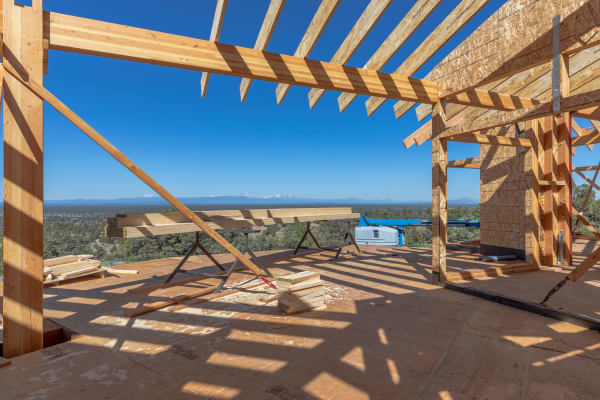
Spec Construction Loans in Oregon & California: Strategy, Qualification, and the Profit Calculus in 2026
Building on speculation is one of the highest-leverage plays in residential real estate — and one of the most misunderstood. Here is a ground-level look at how spec construction loans work, what lenders actually underwrite, and why the Oregon and California markets still reward disciplined builders.
What Our Clients Say
Five-Star Reviews from Real Borrowers
All reviews verified on Google
Ready to Finance Your Next Deal?
Our multifamily specialists respond within 1 business day with a custom term sheet tailored to your property and investment strategy.