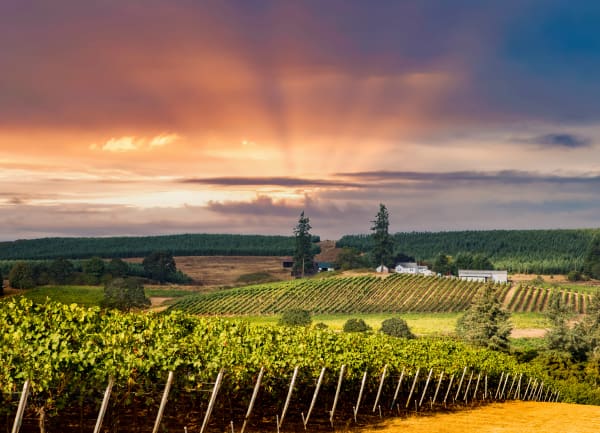
In agricultural real estate, the best deals are the ones that never make it to the open market. When a neighboring property comes available — ground you know intimately, ground that shares your fence line, your irrigation ditch, your road access — the window to act is narrow and the advantage of moving first is enormous. This is the story of a Sheridan, Oregon farmer who owned his property free and clear, learned his neighbor was about to list the adjacent parcel with a realtor, and used an agricultural cash-out refinance to put $1,000,000 in his hands fast enough to make a direct offer and close the acquisition before a single listing photo was taken. The loan was structured as a 30-year fixed term with a flexible annual payment option — a structure specifically designed for agricultural borrowers whose income arrives in seasonal lump sums rather than biweekly paychecks. No variable rate uncertainty. No monthly payment grind that ignores the way farm cash flow actually works. Just a clean, fixed obligation aligned with the rhythm of the operation. Here’s how it came together.
The Situation: Free-and-Clear Land, a Neighbor Ready to Sell, and a Ticking Clock
The borrower — a multi-generational farmer in Sheridan, Oregon, in the heart of Yamhill County — owned his primary farm property outright. No mortgage. No lien. No encumbrance of any kind. The land had been in his family for decades, and the equity sitting in that ground represented the accumulated value of generations of stewardship, improvement, and appreciation. The property next door — adjacent acreage that shared a common boundary, similar soil classification, and compatible agricultural use — was owned by a neighbor who had decided to sell. The neighbor had already contacted a listing agent and was preparing to bring the property to market. In Yamhill County, where productive agricultural land routinely draws competitive interest from both farming operators and lifestyle buyers, a listed property attracts multiple offers quickly. The farmer knew that once the property hit the MLS, the price would be bid up, the transaction would become complicated by competing contingencies and financing timelines, and the straightforward neighbor-to-neighbor deal that was possible today would evaporate. He needed capital — and he needed it before the listing went live.
Why a Cash-Out Refinance Was the Right Tool
The farmer’s situation is more common than most people outside agriculture realize. He had substantial wealth — locked in the land he already owned — but limited liquid capital available to make a seven-figure purchase. Selling a portion of his existing farm to fund the acquisition would have been counterproductive: giving up productive ground to acquire new ground is a lateral move at best. A traditional purchase loan on the neighbor’s property was an option, but it would have required a full underwriting cycle on the new parcel — including a new agricultural appraisal, a title search, environmental review, and potentially months of processing. That timeline did not match the urgency of the opportunity. An agricultural cash-out refinance on his existing, free-and-clear property was the cleanest path. The lender places a first mortgage on the borrower’s owned property — in this case, a property with zero existing debt and strong appraised value — and advances the loan proceeds directly to the borrower. The borrower then uses those proceeds however he chooses. In this case, the $1,000,000 in loan proceeds went directly toward purchasing the neighbor’s adjacent parcel as a cash buyer. No purchase loan contingency. No lender approval letter on the acquisition side. No financing clause in the purchase agreement for the seller to worry about. The farmer showed up at the neighbor’s kitchen table with the ability to close quickly, cleanly, and with certainty — exactly the kind of offer a seller prefers over waiting for the open market.
The Loan: $1,000,000, 30-Year Fixed, Annual Payment Option
The loan was structured as a $1,000,000 first mortgage against the borrower’s existing farm property. The term was 30 years at a fixed interest rate — meaning the rate set at closing will not change for the life of the loan, regardless of what happens with Federal Reserve policy, inflation, or credit markets. This is rate certainty for three decades. But the structural feature that made this loan particularly well-suited to this borrower — and to agricultural borrowers generally — was the flexible annual payment option. Rather than requiring twelve monthly mortgage payments throughout the year, the annual payment structure allows the borrower to make a single annual payment, timed to align with the operation’s primary income event. For a row crop farmer, that might be after harvest and commodity sales in the fall. For a livestock producer, it might follow the annual cattle sale. For a Yamhill County operation with diversified agricultural income, it aligns with whenever the bulk of annual revenue is realized. This is not a gimmick or a deferral. It is a recognition that agricultural income does not arrive in equal monthly installments the way a W-2 salary does. A farm might generate 60–80% of its annual revenue in a two-month window. Requiring monthly mortgage payments throughout the year forces the farmer to hold cash reserves or maintain a separate operating line just to make debt service payments during months when the farm is spending money, not earning it. The annual payment structure eliminates that friction. You earn your income, you make your payment, and the rest of the year your cash flow belongs to your operation — not your mortgage servicer.
Moving Before the Listing: Why Speed Mattered
In residential real estate, a property that sits on the market for 30 or 60 days is normal. In agricultural real estate in the Willamette Valley, desirable parcels — especially parcels with productive soil, water access, and good road frontage — do not sit. They generate interest from multiple buyer categories: active farming operators looking to expand, lifestyle and hobby farm buyers from Portland and Salem with cash from urban home sales, vineyard and wine industry investors looking for plantable acreage, and institutional investors aggregating agricultural portfolios. Once the neighbor’s property was listed with a realtor, the farmer would have been competing against all of these buyer types — some of whom would have been cash buyers themselves, some of whom would have waived contingencies, and some of whom would have offered above asking price to secure the property. By approaching his neighbor directly, before the listing agreement was signed, the farmer was able to negotiate a fair price in a private transaction without the pressure, competition, and cost of an open-market bidding process. The neighbor benefited too: no realtor commission (typically 5–6% of the sale price, which on a seven-figure property is $50,000–$60,000), no staging or showing process, no uncertainty about buyer financing, and a clean closing with a buyer he already knew and trusted. The cash-out refinance was the engine that made this possible. Without the ability to place a mortgage on his existing property and access $1,000,000 in proceeds quickly, the farmer would have had to wait, compete on the open market, and likely pay more — if he won the property at all.
The Appraisal and Underwriting Process
Because the cash-out refinance was secured by the borrower’s existing property — not the property being acquired — the underwriting focused on the farm he already owned. An agricultural appraisal was ordered on the borrower’s home parcel, conducted by an appraiser experienced in Yamhill County agricultural valuations. Agricultural appraisals are different from residential appraisals in important ways. The appraiser evaluates productive value based on soil classification, water rights, irrigation infrastructure, crop history, and comparable agricultural sales in the area — not just the dwelling or outbuildings on the property. In Yamhill County, where land values reflect the region’s position as one of Oregon’s premier agricultural areas — grass seed, wine grapes, hazelnuts, nursery stock, cattle, and diversified farming — a proper agricultural appraisal by a qualified appraiser captures the full productive and market value of the ground. Because the borrower owned the property free and clear with no existing debt, the loan-to-value ratio on a $1,000,000 cash-out was conservative relative to the property’s appraised value. This made underwriting straightforward: strong collateral, zero existing liens, demonstrated agricultural income, and a reasonable LTV. The borrower’s farm income — documented through tax returns and Schedule F — was underwritten with appropriate add-backs for depreciation, depletion, and other non-cash expenses that reduce taxable income without affecting actual cash flow available for debt service. This is a critical distinction in agricultural lending. A farm that shows modest net income on Schedule F after aggressive depreciation of equipment and improvements may have very strong actual cash flow — and a lender that understands agricultural underwriting will recognize and credit that reality.
What the Borrower Got: Two Adjacent Farms, One Fixed Payment, Full Operational Control
After closing, the borrower’s position was dramatically stronger than before. He now owned two adjacent parcels — his original free-and-clear property (now encumbered by a $1,000,000 first mortgage at a 30-year fixed rate) and the newly acquired neighbor’s property (purchased outright with the cash-out proceeds, owned free and clear with no lien). His total agricultural acreage increased substantially. His operational efficiency improved because the adjacent parcel eliminated boundary constraints, allowed more flexible crop rotation, provided additional pasture or production capacity, and consolidated management of land he could literally see from his existing buildings. His debt service was a single, predictable annual payment on the $1,000,000 mortgage — aligned with his farm’s income cycle and fixed for 30 years. And because the loan carries no prepayment penalty, if interest rates decline meaningfully in the years ahead, he can refinance into a lower rate without a fee standing in the way. The neighbor got a clean sale at a fair price, avoided realtor commissions, avoided the uncertainty and inconvenience of a public listing process, and closed on his own timeline with a buyer he trusted. Both parties walked away better off than they would have been if the property had gone to market.
Flexible Annual Payments: Why This Structure Exists for Agriculture
The annual payment option deserves additional explanation because it is one of the least understood — and most valuable — structural features available in agricultural lending. Most mortgage products are designed around monthly payments because most borrowers earn monthly or biweekly income. Salaried employees, hourly workers, and most small business owners receive income on a regular cadence throughout the year, and monthly mortgage payments align naturally with that rhythm. Agricultural income does not work this way. A wheat farmer may sell the majority of the year’s crop in a six-week window after harvest. A cattle rancher may sell calves once or twice a year. A hazelnut grower receives payment from the processor after the fall harvest. A grass seed operation in the Willamette Valley delivers its crop in late summer and receives payment on a schedule that varies by processor and contract terms. In all of these cases, requiring twelve equal monthly mortgage payments throughout the year creates an artificial cash flow burden during months when the farm is investing in inputs, labor, and operations — not generating revenue. The annual payment option solves this by allowing the borrower to make one payment per year, timed to the operation’s primary income event. The payment covers a full year’s worth of principal and interest on the fixed-rate loan. The borrower knows the exact dollar amount at the start of each year, can plan for it as part of the operation’s annual budget, and does not need to maintain a separate reserve account or operating line just to make monthly mortgage payments during lean months. This is not an interest-only structure and it is not a deferral. The loan amortizes fully over 30 years. The annual payment is simply the structural delivery mechanism — one that respects the way agricultural businesses actually generate and deploy cash.
Lessons for Other Farm Owners: How to Position Yourself for the Next Opportunity
The Sheridan farmer’s story illustrates a broader principle that applies to every agricultural property owner sitting on significant equity: the value in your land is only useful if you can access it when the right opportunity appears. Adjacent properties do not come available on a schedule. Equipment failures, expansion opportunities, generational transitions, and market dislocations happen on their own timeline. If your equity is locked in the ground and you have no pre-existing plan to access it, you will miss opportunities — or you will be forced into suboptimal financing at exactly the moment when speed matters most. Here are the practical takeaways. First, know your equity position. Get an informal sense of what your property is worth in the current agricultural land market. Talk to your lender, your county assessor, and your neighbors who have sold recently. Know the number, even approximately, so you can evaluate financing options quickly when the need arises. Second, understand the cash-out refinance option before you need it. The time to learn how an ag cash-out works is not the week your neighbor tells you they’re listing their property. Call your ag lender, understand the underwriting requirements, and know what documentation you’ll need to move quickly. Third, maintain clean financial records. A borrower who can produce two years of tax returns, a current balance sheet, and a Schedule F with documented farm income is positioned to close in weeks rather than months. The administrative work you do year-round is what gives you speed when it matters. Fourth, build a relationship with an agricultural lender who understands your operation — not a bank that treats your farm loan like a commercial credit facility with annual covenant reviews and quarterly financial packages. When you need to move fast, you want a lender who already knows your story.
Model Your Farm Loan
Agricultural Loan Calculator
Agricultural loans work differently from residential mortgages — larger required down payments, sometimes shorter amortization periods, and monthly carrying costs that need to work against seasonal income rather than a steady paycheck. Before you make an offer on farmland or a rural property, knowing your payment scenario shapes the entire negotiation.
The ag loan calculator lets you model purchase price against the 25–35% down payments typical of farm lending, compare 20-, 25-, and 30-year amortization schedules, and see how rate variations move your monthly carrying cost. For a cash-flowing operation, that monthly number is as important as the land price itself.
Down payment scenarios
Model your monthly payment at 25%, 30%, and 35% down — the range most ag lenders require on farm purchases.
Amortization comparison
See how 20-yr vs. 25-yr vs. 30-yr amortization changes your monthly payment and total interest paid over time.
Rate sensitivity
Small rate differences compound significantly over long amortizations on large balances. See the real magnitude.
Free · No login · No credit pull required
CPA / Tax Pro Referral
Cash-out refi to buy ag land? Loop in a CPA first.
Pulling equity out of one farm to buy adjacent ag land has real tax implications — interest deductibility under §163, basis tracking across parcels, and how the new acreage gets characterized for Schedule F. We work with Willamette Valley CPAs who handle working farms day-to-day and can model the move before you close. Ask for a personal intro.
No directory. No paid placements. No RESPA-restricted referral fees. We've worked alongside these pros on real Oregon and California deals — we'll make a personal email introduction so you can interview them yourself.
Or email us directly:
Can you use a cash-out refinance on a farm to buy adjacent property?
Yes. If you own agricultural real estate with significant equity — especially free-and-clear land — you can place a first mortgage on your existing property and use the proceeds to purchase adjacent acreage as a cash buyer. A Sheridan, Oregon farmer took a $1,000,000 cash-out refinance against his free-and-clear farm, structured as a 30-year fixed term with flexible annual payments, and used the proceeds to buy his neighbor's adjacent parcel before it was listed with a realtor. The annual payment option aligns debt service with seasonal farm income rather than requiring monthly payments year-round.
Best for: Farmers and ranchers with substantial land equity who want to act quickly when adjacent or nearby property becomes available — without competing on the open market or waiting months for purchase loan underwriting.
Ag Cash-Out Refinance vs. Ag Purchase Loan vs. Ag Equity Line
Three ways to fund a farm expansion — which fits your situation?
| Cash-Out Refi | Purchase Loan | Equity Line | |
|---|---|---|---|
| Collateral | Existing property | Property being acquired | Existing property |
| Speed to Close | 3–5 weeks | 6–12 weeks | Pre-approved draws |
| Buyer Position | Cash buyer | Financed buyer | Cash buyer |
| Rate Structure | 30-yr fixed | 30-yr fixed | Variable (SOFR) |
| Payment Option | Annual or monthly | Annual or monthly | Semi-annual interest-only |
| Best For | One-time expansion | Planned purchase | Recurring capital needs |
$1,000,000
Loan Amount
$0 (free & clear)
Existing Debt
30-year fixed
Term
Annual
Payment Structure
None
Prepayment Penalty
Sheridan, OR
Location
Yamhill
County
Looking for Ag Financing?
Farm purchase, ranch, raw land, operating lines, and specialty crop loans — structured around how your operation actually works.
Bottom Line
Agricultural land in the Willamette Valley is not getting less expensive, and it is not getting more available. When the property next to yours comes up for sale — whether it’s a neighbor retiring, an estate settling, or an investor cashing out — the farmers who are prepared to act are the ones who get the deal. This Sheridan borrower was prepared. He had a free-and-clear property with substantial equity, he had clean financial records, and he had a lender who could structure a $1,000,000 cash-out refinance with a 30-year fixed term and flexible annual payments — a structure that respected his operation’s cash flow and gave him the capital to close before the property ever hit the market. If you own agricultural real estate in Oregon or California and you’re thinking about expansion, debt restructuring, or simply positioning yourself to move when the next opportunity appears, this is the kind of conversation we have every day. Call the Lumen ag lending team at 503-966-9255 or email info@lumenmortgage.com. We’ll look at your equity, your income, and your goals — and show you exactly what’s possible. No pressure. No obligation. Just honest numbers and a clear explanation of your options. Want to model the math first? Try our free Oregon farm loan calculator to estimate payments at typical ag down-payment and amortization terms. That’s how we work.