Is a HELOC or a cash-out refinance cheaper if you have a low-rate mortgage?
Start with the blended rate, but don't stop there. Our Portland borrower had a $256,000 first mortgage at 3.75% and needed $300,000. A HELOC at 7.50% (prime + 0.5%) gave a 5.77% blended rate, almost the same as a 5.875% 15-year cash-out refinance. But the HELOC was variable, interest-only for 10 years, and would have kept them paying for 25 to 30 years. The 15-year refinance costs about $282,000 in total interest versus $417,000 to $642,000 on the HELOC path, and they're debt-free in 15 years.
Best for: Homeowners with a low-rate first mortgage who need a large amount for renovations or debt consolidation and are deciding between a HELOC and a cash-out refinance
Almost every homeowner who locked a mortgage in 2020 or 2021 asks the same question when they need cash: how do I get it without giving up my low rate? A HELOC is usually the first answer, and often it's the right one. But not always. Here's a real example from November 2026 where the borrower came to us asking for a HELOC, we ran the blended rate calculator together, and they ended up choosing a 15-year cash-out refinance instead.
The Situation
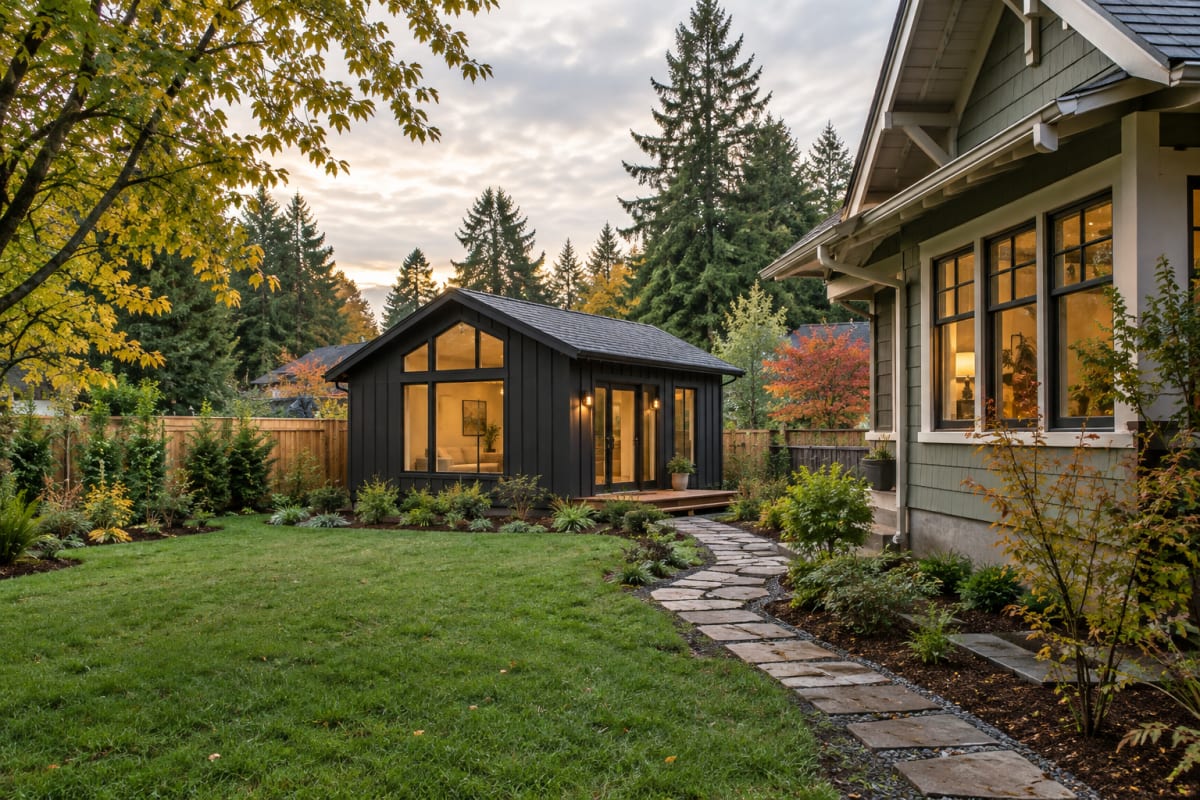
Our borrowers own a home in Portland (Multnomah County). In July 2021 they took a 30-year fixed mortgage at 3.75%. With about 24.7 years left, the balance was $256,000 and the principal and interest payment was about $1,327 a month. They needed $300,000: - $233,000 to finish an ADU build and a kitchen remodel that were already underway - $39,000 to pay off an auto loan at 6.9% on a 5-year term - $28,000 to pay off credit card debt across three cards at a blended 18.29%, which had built up during the renovation The HELOC they were comparing was priced at prime + 0.5%. With prime at 7.00% on November 23, 2026, that was 7.50%, variable, with a 10-year interest-only draw period.
Step 1: The Blended Rate Said It Was Close
The first test is the blended rate: the average rate across both loans, weighted by how much you owe on each. ($256,000 × 3.75% + $300,000 × 7.50%) ÷ $556,000 = 5.77% A cash-out refinance of the full $556,000 on a 15-year fixed was available at 5.875%. So on rate alone the HELOC was a hair cheaper, by about a tenth of a percent. That's where most comparisons stop, and it's why most people in this spot assume the HELOC is the obvious choice. You can run your own numbers with our blended rate calculator, including a side-by-side HELOC vs. cash-out comparison.
Step 2: What the Blended Rate Didn't Show
The blended rate is a snapshot. It doesn't show how long you'll be paying, how the payment changes, or what happens if rates move. For this borrower, four things mattered more than the 0.10% difference: - The HELOC rate is variable. It moves with prime. Every 1% change in prime moves the interest-only payment on $300,000 by $250 a month. - Interest-only doesn't pay anything down. During the 10-year draw period the $300,000 balance stays at $300,000. When the draw ends and the HELOC starts amortizing over 20 years, the payment jumps. - Keeping the first mortgage keeps its clock. The 3.75% loan still had 24.7 years left. Adding a 30-year HELOC on top meant 30 more years of payments. - The debt being paid off was expensive. Credit cards at 18.29% and an auto loan at 6.9% needed to go away permanently, not move to a variable line that could be drawn on again.
Side-by-Side: Same $556,000, Three Ways
Here's how the numbers compare, holding the HELOC at 7.50% for its full life. In reality the rate will move, up or down. Monthly figures are principal and interest only; the auto and card payments in the "before" column are estimates. The HELOC path has the lowest payment today. The 15-year refinance has the highest payment, but it costs $135,000 less in interest than paying the HELOC off over 20 years, and $360,000 less than a typical 10-year draw plus 20-year repayment. Even if the borrower had paid the HELOC off aggressively in 15 years, it would still have cost about $55,000 more in total interest, with 10 more years left on the first mortgage after that.
Same $556,000 of Debt, Three Ways
Portland (Multnomah County) borrower, November 2026: $256,000 first mortgage at 3.75% (24.7 years left) plus $300,000 for an ADU, kitchen remodel, auto loan and credit cards.
| Before | Keep 1st + $300K HELOC | 15-Year Cash-Out Refi | |
|---|---|---|---|
| Loans | 3.75% first + 6.9% auto + 18.29% cards | $256K at 3.75% + $300K at 7.50% (prime + 0.5%) | $556K at 5.875% fixed |
| Rate | — | 5.77% blended, part variable | 5.875% fixed (6.183% APR) |
| Monthly P&I | ~$2,804 | $3,202 during 10-yr draw, then $3,744 | $4,654 |
| Total interest | — | $416,800 (20-yr payoff) to $641,800 (10-yr draw + 20-yr repay) | $281,800 |
| Debt-free in | — | 25–30 years | 15 years (2041) |
| Renovation funded | No | Yes | Yes |
Why a 15-Year Loan Instead of a 30-Year
A cash-out refinance doesn't have to mean starting over on 30 years. That was the key decision here. The same $556,000 on a 30-year term at the same rate would have lowered the payment to roughly $3,300, but it would have more than doubled the total interest and pushed the finish line out to 2056. The borrowers were already more than five years into their mortgage and wanted to be done, not reset. A 15-year fixed at 5.875% (6.183% APR) kept them on track to own the home outright in 2041, with everything, including the ADU, the kitchen, the car and the credit cards, paid off on one fixed payment. The higher payment was the trade-off. Before the loan they were paying an estimated $2,804 a month across the mortgage, the auto loan and the cards. The new payment is $4,654. If you're considering the same move, check that payment against your budget before you choose a shorter term.
When a HELOC Is Still the Better Choice
This isn't an argument against HELOCs. A HELOC usually wins when: - The amount you need is small compared with your first mortgage, so the blended rate stays close to your low rate - You'll pay it back quickly, for example from a bonus, a home sale or a business payout - You want flexibility to draw only what you need, when you need it - Your first mortgage rate is much lower than today's rates, under 3% for example, and has many years left Our borrower needed more than their existing mortgage balance, wanted to retire high-rate debt permanently, and wanted a fixed end date. That combination is when a shorter cash-out refinance is worth pricing out.
How to Run This Comparison for Your Own Home
1. Find your blended rate. Enter your current mortgage and the HELOC you're considering in our blended rate calculator. 2. Compare payments now and later. Look at the HELOC payment during the draw period and after it ends, not just today's payment. 3. Compare total interest and payoff date. Use the HELOC vs. cash-out comparison on the same page, and try a 15- or 20-year refinance term, not just 30. 4. Compare APRs, not just rates. A cash-out refinance has closing costs; a HELOC can have annual fees and a variable rate. 5. Ask for both quotes. We'll price the HELOC and the cash-out refinance side by side for your numbers. Contact us or call 503-966-9255.
Model Your Two-Loan Scenario
Blended Rate Calculator
Running two mortgages simultaneously is the central math of a bridge loan strategy. You have your existing loan on the departure property, the bridge itself, and soon a permanent mortgage on the new purchase. Before committing to that structure, it's worth knowing your true combined rate and combined monthly obligation — the full cost of the interim period reduced to one number.
The blended rate calculator converts multiple debts with different balances and rates into a single weighted average. Use it to compare the bridge loan approach against a HELOC draw, a delayed close, or a contingent offer — and decide honestly whether the flexibility premium is worth it for your specific situation.
Weighted average rate
See your true effective rate across two concurrent loans — the single number that captures the real cost of bridging.
Combined monthly payment
Add up your interim obligations to understand total cash flow impact during the bridge period.
Break-even comparison
Model the bridge loan cost versus the alternatives to find where the strategy stops making financial sense.
Free · No login · No credit pull required
Frequently Asked Questions
How do you calculate a blended rate for a HELOC and a first mortgage?
Why would a cash-out refinance beat a HELOC with a lower blended rate?
Do I have to start over on a 30-year loan if I do a cash-out refinance?
When is a HELOC the better choice?
Is Now the Right Time to Refinance?
We'll show you your break-even point, monthly savings, and lifetime interest reduction — so you can decide with real numbers.
Bottom Line
Our Portland borrowers came in asking for a HELOC to protect a 3.75% mortgage. The blended rate said the two options were almost identical: 5.77% versus 5.875%. The full picture said otherwise. A 15-year cash-out refinance paid off their car and credit cards, finished their ADU and kitchen, and will save them $135,000 or more in interest while making them debt-free in 15 years. If you're weighing a HELOC against a cash-out refinance, start with the blended rate calculator, then let us run both options for your home in Oregon or California.