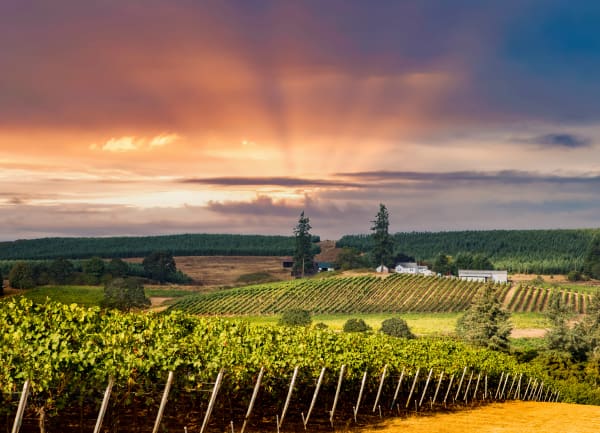
Oregon is one of the finest states in the country for horse people. From the lush pasturelands of the Willamette Valley to the wide-open high desert terrain around Sisters and Bend, from the rolling hills of the Umpqua Valley to the river-bottom acreage of the Rogue and Illinois valleys — Oregon offers an extraordinary range of environments suited to every discipline, every breed, and every equestrian lifestyle. But financing a horse property is a different animal than financing a conventional home. Lenders need to understand what they're appraising, how income from boarding or lessons factors into qualification, and what makes equestrian improvements add — or subtract — value. With spring approaching and the Oregon show season gearing up, now is the ideal time to get your financing in order, plan property improvements, or prepare to buy or sell. Here's what you need to know.
How Lenders Classify Equestrian Properties
Equestrian properties don't fit neatly into a single lending category, and the classification significantly affects which programs you can access. A primary residence on acreage with a few horses and a small barn is typically financed as residential — standard conventional or jumbo underwriting applies, and the equestrian improvements are simply part of the property value. A property with income-generating components — a commercial boarding operation, a training facility, a lesson barn — is typically classified as agricultural or mixed-use, requiring a portfolio or agricultural lender. Properties zoned Exclusive Farm Use (EFU) in Oregon fall under agricultural lending guidelines regardless of their scale. The distinction matters because it determines your loan program, your rate, your down payment requirement, and which appraisers can legitimately value the property. Working with a lender experienced in equestrian properties — like the Lumen team — means you won't find out at the underwriting stage that your loan program doesn't fit your property type.
What Lenders Look at on a Horse Property Appraisal
Equestrian property appraisals require an appraiser with specific experience in rural and agricultural properties — not every licensed appraiser is qualified to value a 20-stall mare motel, a covered arena with GGT footing, or an irrigated hay field that supplements the feed costs of a boarding operation. What appraisers assess: the main residence and its condition; the quality, size, and condition of horse-specific improvements (barn construction, stall count, hay storage, tack rooms, wash racks, arena footings and cover); acreage, pasture quality, and carrying capacity; water access and rights — critical in Oregon's drier regions east of the Cascades; fencing type and condition; and proximity to riding trails, equestrian parks, or show venues. It's worth noting that not all equestrian improvements add dollar-for-dollar value in an appraisal — a $150,000 covered arena on a 5-acre property in a rural area may add $60,000–$80,000 in appraised value. Buyers and sellers should understand this dynamic before making major capital investments.
Boarding Income and How It Affects Your Loan
If your property generates boarding income — whether you run a full-service training and boarding facility or simply take in a handful of outside horses to help with costs — how that income is treated in underwriting varies considerably by lender and program. For conventional residential loans, rental income from a barn is generally not counted. For agricultural and portfolio lenders, verified boarding income (documented via a Schedule F, signed boarding contracts, or bank statements showing regular deposits) can be used to support your qualifying income or to demonstrate the property's viability as an operating entity. This distinction is significant: a property generating $8,000/month in boarding fees for 20 horses is a meaningful business, and the right lender will underwrite it as such. If you're running or planning to operate a boarding facility, bring your income documentation and boarding agreements to the first conversation — it shapes which programs apply.
Oregon's Equestrian Communities: Where the Horse Country Is
Oregon's horse properties are concentrated in several distinct regions, each with its own character and price range. The Willamette Valley — particularly the south valley around Sherwood, Newberg, Dayton, Amity, and the Chehalem Mountains — is Oregon's most established horse country, with well-developed infrastructure, proximity to Portland, and a long history of dressage, hunters, jumpers, and western disciplines. Prices for quality equestrian properties in this corridor have risen significantly; 10–20 acres with a quality barn and an arena typically trades in the $1.2M–$2.5M range. Central Oregon around Sisters, Redmond, and Powell Butte is a premier destination for western disciplines, trail riding, and high-desert ranchland. The Sisters area has a well-organized equestrian community with access to hundreds of miles of national forest trails. The Rogue Valley around Jacksonville, Medford, and Grants Pass offers a warmer climate, a longer outdoor riding season, and more affordable acreage — attractive for buyers who want more property for their budget. The Columbia Gorge and Hood River area draws endurance riders and trail enthusiasts, with access to spectacular riding terrain.
Spring in Oregon: Planning Season for Equestrian Properties
Late February and March mark the beginning of Oregon's equestrian planning season. The show circuit wakes up: the Willamette Valley Spring Classic, the Oregon Dressage Society's early-season schooling shows, and numerous local 4-H and open shows begin filling the calendar from March through May. Breeding season is underway, and the energy on horse properties shifts toward the outdoor months ahead. For property owners, early spring is the critical window for infrastructure decisions: arena footing repairs or replacements are best completed before the spring rains give way to dry summer ground; pasture management — overseeding, aeration, fertilizing — needs to happen in March and April to establish grass before the summer dry season; fence line inspections and post replacements are easier in mild late-winter conditions; and barn maintenance is best tackled before the busiest horse-keeping months arrive. For buyers and sellers, spring is historically the most active period for equestrian property listings in Oregon. Properties listed in March–May consistently attract more buyers and stronger offers — because buyers want to be settled before summer show season, and horse properties simply show better in the green.
Getting Pre-Approved: Why Equestrian Buyers Need to Go First
Equestrian properties move quickly when they're priced right — a 15-acre property in Newberg with a quality barn and a covered arena will have serious interest within days of listing. Buyers who are not pre-approved lose deals to buyers who are, and in the equestrian space this is especially painful because the right property combination is rare. Getting pre-approved for a horse property is more nuanced than a standard home pre-approval because the lender needs to identify which loan program applies to your specific property type before issuing a commitment. A 10-acre hobby farm with a small barn and a few stalls is financed differently than a 40-acre boarding facility with 25 stalls and arena income. At Lumen, we review your target property profile — acreage, zoning, income-generating components, price range — alongside your financial picture before we issue a pre-approval. That way, when you find a property you love, you can move immediately with confidence that your financing is already structured for that property type.
Model Your Farm Loan
Agricultural Loan Calculator
Agricultural loans work differently from residential mortgages — larger required down payments, sometimes shorter amortization periods, and monthly carrying costs that need to work against seasonal income rather than a steady paycheck. Before you make an offer on farmland or a rural property, knowing your payment scenario shapes the entire negotiation.
The ag loan calculator lets you model purchase price against the 25–35% down payments typical of farm lending, compare 20-, 25-, and 30-year amortization schedules, and see how rate variations move your monthly carrying cost. For a cash-flowing operation, that monthly number is as important as the land price itself.
Down payment scenarios
Model your monthly payment at 25%, 30%, and 35% down — the range most ag lenders require on farm purchases.
Amortization comparison
See how 20-yr vs. 25-yr vs. 30-yr amortization changes your monthly payment and total interest paid over time.
Rate sensitivity
Small rate differences compound significantly over long amortizations on large balances. See the real magnitude.
Free · No login · No credit pull required
Looking for Ag Financing?
Farm purchase, ranch, raw land, operating lines, and specialty crop loans — structured around how your operation actually works.
Bottom Line
Oregon's equestrian real estate market rewards buyers and owners who understand the financing landscape. The right loan program, the right appraiser, and the right lender make the difference between a smooth transaction and a frustrating one — and at the price points that quality equestrian properties command, the stakes are real. Whether you're buying your first horse property, expanding an existing operation, or refinancing to fund improvements before show season, the Lumen team has the expertise to navigate it with you. Call us at 503-966-9255 or email info@lumenmortgage.com. Spring is here — let's get your financing in order.