How Do Agricultural Loans Work in the Sierra Foothills (Placer, Nevada & El Dorado Counties)?
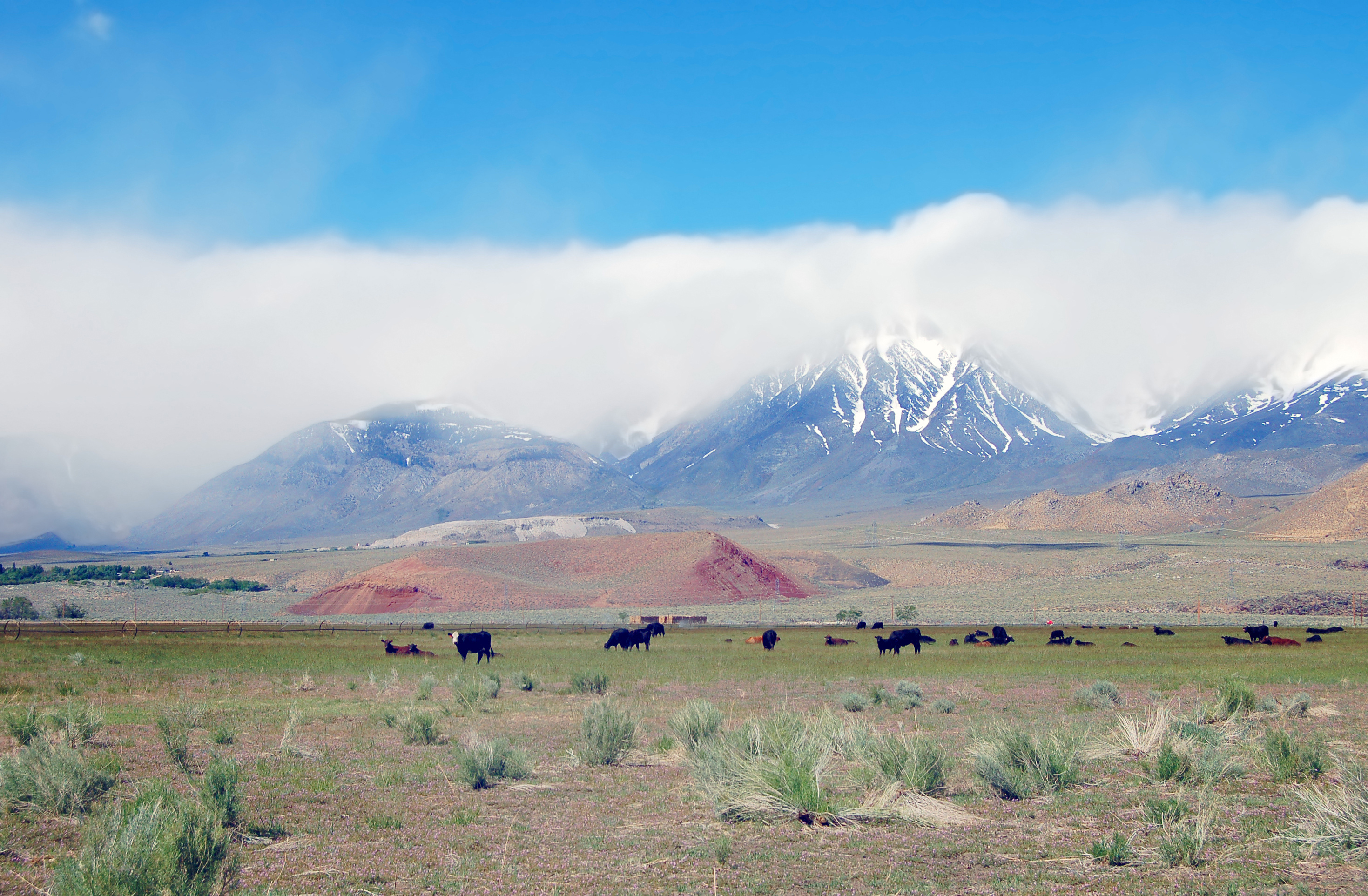
The California Sierra Foothills — anchored by Placer, Nevada, and El Dorado counties — is one of the densest concentrations of working ag land within commuting distance of a major metro in the western United States. Financing it correctly means matching the property to one of three products: Conforming Conventional below the local loan limit ($832,750 in all three counties for 2026, but rarely sufficient for a working ag estate), our Hobby Farm Loans portfolio jumbo at up to 80% LTV to $2,000,000 and loans to $5,000,000 (the right fit for buyers on equestrian, vineyard, orchard, and small-cattle properties), and our true Ag loan options at up to 70% LTV (the right fit for commercial-scale wine, cattle, orchard, or multi-residence ranches, investor-buyers, and properties with material event/venue revenue). Williamson Act contracts, AE/AG/FR zoning overlays, NID/PCWA/EID water rights, and Cal Fire SRA defensible-space requirements all materially shape which product underwrites the deal.
Key Facts
The Sierra Foothills at a Glance — Why Ag Density Matters to Lending
The Sierra Foothills AVA spans more than 5 million acres across eight California counties, but the financing core is the I-80 / Highway 49 corridor through Placer, Nevada, and El Dorado. All three counties share the same structural traits: elevations between 1,000 and 3,000 feet, Mediterranean climate with cold winter nights that suit Zinfandel, Syrah, Barbera, and apple/pear orchards, parcels routinely 5–80 acres, and a working-ag economy that is materially larger than national jumbo programs assume. Placer's PlacerGROWN initiative, Nevada County's Sierra Vintners and ag-tourism push, and El Dorado's Apple Hill Growers Association (50+ farms) and El Dorado Winery Association together represent hundreds of working operations — most on AE, AG, FR, or RA-zoned acreage that disqualifies a standard residential jumbo. The buyers commuting from Sacramento, the Bay Area, and Reno underwrite real income but acquire properties that residential underwriters cannot value correctly without local product fit.
How the Three Counties Differ for Lending
Placer County (Auburn, Lincoln, Loomis, Newcastle, Penryn) skews equestrian and ranchette: Lincoln and Loomis carry exceptional concentrations of horse properties between 5 and 40 acres, with PCWA water and AE-20 / AE-40 / RA-2.3 / RA-4.6 zoning. Nevada County (Grass Valley, Nevada City, Penn Valley, Rough and Ready) has California's densest small-vineyard cluster outside Napa/Sonoma, plus working cattle ranches in the AG-160 / AG-80 tiers and a heavy ag-tourism overlay (event permits, tasting rooms, agritourism use permits). El Dorado County (Placerville, Camino, Pollock Pines, Coloma) is split between the Apple Hill orchard belt at 2,500–3,000 feet (apples, pears, Christmas trees, lavender, hard cider) and the El Dorado AVA wine region, with EID irrigation and a separate sub-AVA designation that some appraisers fail to credit. The three-product framework applies in all three counties, but the typical anchor product shifts: Hobby Farm Loans dominates Placer equestrian; the RHL-vs-Ag decision is most live in Nevada vineyards; true Ag is most often the answer for El Dorado commercial orchards and Nevada multi-residence cattle operations.
Williamson Act Contracts and What They Do to Your Loan
The California Land Conservation Act of 1965 — universally called the Williamson Act — lets owners of qualifying ag land enter a 10-year rolling contract restricting use to agriculture or open space in exchange for a property-tax assessment based on ag-use value rather than market value. The contract auto-renews each year unless the owner files a non-renewal, which then takes 9 more years to fully phase out. Roughly 16 million acres statewide are under contract; Placer, Nevada, and El Dorado all participate. From a lending standpoint, three things matter: (1) the contract transfers with the property and binds the new owner; (2) the materially lower property-tax assessment improves DTI math meaningfully — sometimes the difference between qualifying and not on a $2M+ purchase; (3) standard residential jumbo programs occasionally flag Williamson Act contracts as a use restriction and decline. Both Hobby Farm Loans and our Ag loan options underwrite Williamson Act parcels normally and credit the lower tax basis in the qualifying ratios.
AG, AE, FR, and RA Zoning — and the Ranchette-Split Trap
Placer and Nevada both run a layered ag/forestry/rural-residential zoning system. Placer's AE (Exclusive Agriculture) tiers run AE-20 / AE-40 / AE-80 / AE-160 by minimum parcel size; F (Forestry) and RA (Residential-Agricultural) tiers fill in the smaller-parcel and timberland slots. Nevada uses AG-160 / AG-80 / AG-40 / AG-20, FR (Forest) tiers down to FR-5, and RA-1.5 / RA-3 / RA-5. El Dorado is broadly similar with PA (Planned Agricultural) and SA (Select Agricultural) overlays. The trap: many residential jumbo programs declare AE, AG, and the larger FR tiers ineligible outright, regardless of the residence quality. The ranchette-split issue compounds it — a 40-acre AE-20 parcel can theoretically be split into two 20-acre parcels, and underwriters sometimes treat that latent split as evidence the property is being valued as raw land rather than a residence. Both Hobby Farm Loans (Hobby Farm and Bare Land tiers) and our Ag loan options are built for these zoning overlays. Standard residential jumbo programs typically are not.
NID, PCWA, and EID — Local Water and Why It Drives Appraisal
Three irrigation districts essentially define what is fundable on a Sierra Foothills working ag estate. Nevada Irrigation District (NID) serves western Nevada County and parts of northern Placer with raw and treated water from the Yuba and Bear river systems — irrigation flows are ditch-delivered and transferable with the parcel. Placer County Water Agency (PCWA) covers most of central and eastern Placer with a similar mixed treated/raw model. El Dorado Irrigation District (EID) serves western El Dorado County out of the Sly Park / Jenkinson Lake system. Three lending consequences: (1) appraisers without local experience routinely fail to credit the irrigation right separately from raw land, undervaluing the property by $50K–$300K; (2) properties without NID/PCWA/EID service rely on private well + septic, which Cal Fire and FAIR Plan insurance both treat differently and which appraisers must document; (3) on a multi-parcel estate, the irrigation right may attach to specific APNs only — the appraisal must explicitly value the water-served acreage at vineyard/orchard/pasture comp rates rather than averaging it down. Both Hobby Farm Loans and our Ag loan options use appraiser panels familiar with all three districts.
Cal Fire State Responsibility Area and the Insurance Reality
Nearly every rural parcel in Placer, Nevada, and El Dorado falls within the Cal Fire State Responsibility Area (SRA). SRA designation triggers (1) Public Resources Code 4291 defensible-space requirements (100 feet around structures), (2) Cal Fire-mandated building standards in Wildland-Urban Interface zones, and (3) carrier withdrawal from the standard homeowners market. Most buyers in this corridor end up on a wrap of California FAIR Plan (fire-only) plus a difference-in-conditions policy from a carrier like Foremost or Stillwater — premiums of $4,000–$15,000+ annually depending on acreage, structures, and clearance. The DTI implication is real: a residential jumbo program calculating insurance at $2,500/year per its national assumption will under-estimate the buyer's true housing payment by hundreds of dollars per month and either approve too aggressively or, more often, decline once the actual quote comes in. Our pricing on Hobby Farm Loans and Ag programs uses the actual SRA-zone premium quote.
The Three-Product Framework, Localized
Conforming Conventional caps at $832,750 in all three counties for 2026. That covers entry-level rural-residential acquisitions and occasionally a layered piece on a larger transaction, but rarely the full need on a working ag estate. Our Hobby Farm Loans goes to $5,000,000, at 80% LTV (20% down) up to $2,000,000 with max LTV stepping down above that. It has three internal tiers: Rural Resident (residence-first on smaller acreage, no working ag required), Hobby Farm (ag income allowed but not counted toward qualifying, no acreage limit), and Bare Land (raw or developing acreage). All three Hobby Farm Loans tiers credit AE/AG/FR zoning, multi-parcel ownership, working barns/arenas/trellising, and NID/PCWA/EID water rights at full value — and underwrite the residence as the primary asset. Our true Ag loan options go up to $25,000,000 at up to 70% LTV and underwrite the operating asset (vineyard, orchard, cattle operation, multi-residence ranch) holistically, including operational components and use-permit revenue. We keep all of this in-house.
Decision Tree by Buyer Profile
Walk these in order. (1) Equestrian buyer on Placer or Nevada County 5–20 acres, owner-occupant, residence-first with a barn/arena? Hobby Farm Loans — see our Lincoln/Placer County 19-acre case study below. (2) Vineyard buyer on a Grass Valley or Auburn 20–40 acre Sierra Foothills AVA estate, owner-occupant, hobby- to mid-scale wine production? Hobby Farm Loans at 70% LTV (the 20+ acre cap). Commercial wine production with a bonded winery, custom crush, or material event/venue revenue? Our true Ag loan options at 70% LTV. See our Grass Valley/Nevada County 30-acre vineyard case study below. (3) Multi-residence cattle or equestrian ranch over 60 acres, multiple APNs, dual income streams (cattle + horse boarding/training)? Hobby Farm Loans can reach the same 70% LTV, but it doesn't count ag income toward qualifying — true Ag is the primary product. See our Bear Hollow Road 80-acre commercial ranch case study below. (4) Apple Hill orchard buyer in El Dorado, commercial cider or wholesale fruit operation? True Ag underwriting with Schedule F treatment of orchard income. (5) Investor-buyer renting any of the above to an operator? Hobby Farm Loans is residence-first and won't underwrite this profile — true Ag is the answer.
Three Worked Case Studies in This Corridor
Three live financing scenarios bracket the product framework across the tri-county region. The Lincoln/Placer County equestrian estate case study walks a $1.5M, 19-acre property side-by-side across Conforming Conventional, standard residential jumbo, Hobby Farm Loans, and our true Ag option — and demonstrates why Hobby Farm Loans is the primary fit for owner-occupant equestrian buyers in this loan-size band. The Grass Valley/Nevada County vineyard estate case study walks a $2.29M, 30-acre, multi-parcel working vineyard and shows the live decision between Hobby Farm Loans (owner-occupant, hobby-farm wine production) and a true Ag loan (commercial scale or material event/venue revenue). The Bear Hollow Road commercial ranch case study walks a $3.95M, 80-acre, two-APN, three-to-four-residence equestrian-and-cattle ranch and demonstrates why a true Ag loan at 70% LTV is the primary product: Hobby Farm Loans can reach the same leverage, but it doesn't count the ranch's cattle and boarding income toward qualifying, and multiple residences, parcels and operating lines fit Ag underwriting. All three case studies are linked below — they are the corridor-specific worked-math companions to this pillar.
Sierra Foothills Ag Property Loans — Three Products Side by Side
Structural comparison localized to Placer, Nevada, and El Dorado counties — covering loan cap, LTV, working-ag treatment, multi-parcel handling, water-rights credit, and Williamson Act / AE-AG zoning compatibility.
| Conforming Conventional | Hobby Farm Loans (Ours) | Our True Ag Loan Options | |
|---|---|---|---|
| Max Loan Amount (Placer/Nevada/El Dorado, 2026) | $832,750 | Up to $5,000,000 (80% LTV to $2M, steps down above) | Up to $25,000,000 |
| Max LTV | 97% LTV (program-dependent) | 80% to $2M; steps down above $2M and by acreage | Up to 70% LTV |
| AE / AG / FR Zoning | Often ineligible above small parcel sizes | Accepted across all three tiers | Built for AE/AG/FR overlays |
| Williamson Act Contract | May trigger overlay decline | Accepted; lower tax basis credited in DTI | Accepted; underwritten holistically |
| Working Ag (Vineyard/Orchard/Cattle) | Disqualifying on most overlays | Hobby Farm tier (ag income allowed but not counted toward qualifying, no acreage cap) | Built for commercial-scale operations |
| Multi-Parcel / Multi-Residence | Single parcel, single residence typical | All parcels, multiple residences in one loan | All parcels and residences in one loan |
| NID / PCWA / EID Water Rights | Limited credit | Full credit at appraised value | Full credit incl. operational use |
| Cal Fire SRA Insurance Premium | National assumption (under-estimates) | Uses actual SRA-zone quote | Uses actual SRA-zone quote |
| Owner-Occupied vs. Investor | Owner-occupied or 2nd home | Owner-occupied or 2nd home | Investor / commercial use allowed |
| Best For | Smaller acquisitions or layered piece | Owner-occupant equestrian, vineyard, orchard, ranchette buyers up to ~$2.5M purchase | Investor-owned ag, commercial wine/orchard/cattle, multi-residence ranches, $3M+ loan need |
CPA / Tax Pro Referral
Ag tax planning is a different sport.
Schedule F characterization, Section 179, conservation easements, capitalized vine/orchard establishment costs — ag CPAs save their clients more in a single tax year than they cost in five. We can introduce you to OR/CA ag-focused CPAs who handle vineyards, ranches, orchards, and hobby-farm operations.
No directory. No paid placements. No RESPA-restricted referral fees. We've worked alongside these pros on real Oregon and California deals — we'll make a personal email introduction so you can interview them yourself.
Or email us directly:
Licensed in Oregon & California · NMLS #1498678
From the Blog
Further Reading
 Agricultural
Financing an 80-Acre Equestrian and Cattle Ranch in Grass Valley, California: Why True Ag Lending Beats Hobby Farm Loans on a $3.95M Multi-Residence Income Property
A real-world walkthrough of how to finance a representative 80-acre legacy ranch in Grass Valley, Nevada County — three to four residences across two APNs, a 16-stall barn with office, a 6-stall mare motel, covered and outdoor arenas, a covered round pen, hot walker, cutting arena, cattle squeeze, irrigated cross-fenced pastures, two ponds, an orchard, and a 4-bay metal shop. At a $3.95M price point both Hobby Farm Loans and our Ag loan options can reach 70% LTV, but the property's commercial operations and multi-residence structure put it squarely in true Ag-loan territory. We compare what each product can actually fund: standard residential jumbo (functionally unworkable on multi-residence, multi-APN, dual-livestock-operation properties), Hobby Farm Loans at 70% LTV (same leverage, but it does not count ag income toward qualifying), and our in-house true Ag loan options at up to 70% LTV (the primary product on commercial-scale equestrian and cattle operations).
 Vineyard
Financing a 30-Acre Vineyard Estate in Grass Valley, California: Conventional vs. Hobby Farm Loans vs. Ag Loans on a $2.29M Nevada County Wine Property
A real-world walkthrough of how to finance a 30-acre established vineyard estate in Grass Valley, Nevada County — 18 acres of producing vines planted in 2002, a Craftsman home, a six-suite office building, a 1,500 sq ft barn, a separately-metered tent building generating rental income, a 20,000-gallon Gunite pool with studio pool house, NID irrigation water, and AG zoning across three parcels. We compare the three viable loan products on the same property: Conforming Conventional vs. standard residential Jumbo, our Hobby Farm Loans jumbo, and our true Ag loan options. The decision depends on whether the buyer is occupying the residence and farming at hobby scale, scaling commercial wine production under a use-permit-driven venue plan, or buying the property as an investment to rent out — each path leads to a different product.
 Equestrian
Financing a 19-Acre Equestrian Estate in Lincoln, California: Conventional vs. Hobby Farm Loans vs. Ag Loans on a $1.5M Sierra Foothills Horse Property
A real-world walkthrough of how to finance a 19.34-acre luxury equestrian estate in Lincoln, Placer County — five-stall barn, arena, round pen, NID-irrigated hay production, two wells, two septics, and barn-loft ADU potential. We compare the viable loan products on the same property: Conforming Conventional vs. standard residential Jumbo, our Hobby Farm Loans jumbo, and our true Ag loan options. The 'right' answer isn't the cheapest rate — it's the structure that respects the acreage, the hay income, the improvements, and the buyer's plans for the loft above the barn. Here's how Sierra Foothills equestrian buyers actually navigate the financing decision.