How do you finance a $1.5M equestrian estate on 19 acres in Placer County, California?
On a 19-acre Lincoln, CA equestrian estate with a 3-year-old five-stall barn, arena, round pen, hay production, and irrigation district water, the right loan depends on how the appraiser values the improvements and acreage above the residence — and on whether the hay income hits the buyer's tax return. Placer County's 2026 conforming loan limit is $832,750; above that, the buyer needs a jumbo product that actually allows ag use. Four products are realistic: (1) Conforming Conventional works under the loan limit and accepts modest ag use, but is unavailable at full leverage on a $1.5M purchase; (2) standard residential Jumbo reaches 80% LTV but caps acreage and excludes ag improvements from value; (3) **our Hobby Farm Loans jumbo** is built for exactly this property — 75% LTV on a 10–20 acre parcel, explicit acceptance of hobby-farm income (allowed but not counted toward qualifying) and equestrian outbuildings, and ag-savvy appraisers; and (4) our true Ag loan options underwrite the entire operating asset at up to 70% LTV — the right answer when the buyer is an investor who wants the property underwritten as an income-producing ag asset, or a commercial-scale producer operating well beyond hobby-farm levels. Hobby Farm Loans is the structural sweet spot for most owner-occupied equestrian buyers in Placer, Nevada, El Dorado, and Yuba counties.
Best for: California equestrian buyers in Placer, Nevada, El Dorado, and Yuba counties looking at 10–40 acre properties with real ag improvements (irrigated pasture, hay production, working barns) — the buyers most often miscategorized into the wrong loan product because their lender only offers one option.
Most lenders look at a 19-acre Sierra Foothills equestrian estate, see a $1.5M list price and a horse barn, and immediately reach for one tool: a Jumbo Conventional loan. That's how a lot of these properties end up undervalued in appraisal, capped at low LTV, and structured around a residential template that ignores half of what the buyer is actually paying for. A representative ~19-acre estate in Lincoln, California — a 3-year-old five-stall barn with a heated wash bay, a regulation-style arena and round pen, a 1-acre stocked pond, NID-irrigated hay ground producing 180 bales of orchard grass per cutting, two wells, two septics, and a renovated former dairy barn/shop — is exactly the kind of property where the loan choice matters more than the rate. Get the structure right and the appraisal honors the improvements, the LTV stretches, and the future ADU above the barn becomes upside. Get it wrong and the buyer finds out at closing that the lender 'didn't count' $400,000 of the property they thought they were buying. Here's the side-by-side analysis we run on Placer County equestrian estates like this one. For background on how lender philosophy shapes equestrian financing, see our how to finance a horse property learn page.
The Property Profile: A ~19-Acre Sierra Foothills Luxury Equestrian Estate
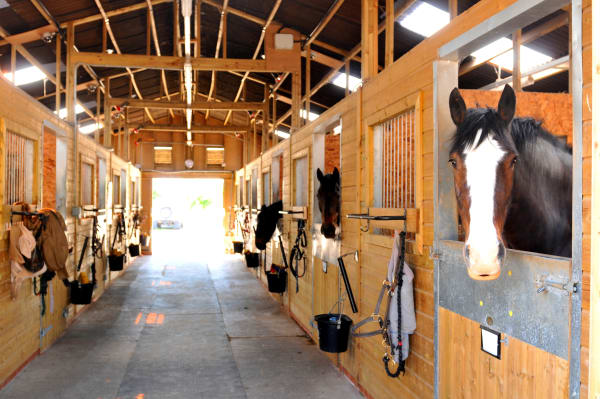
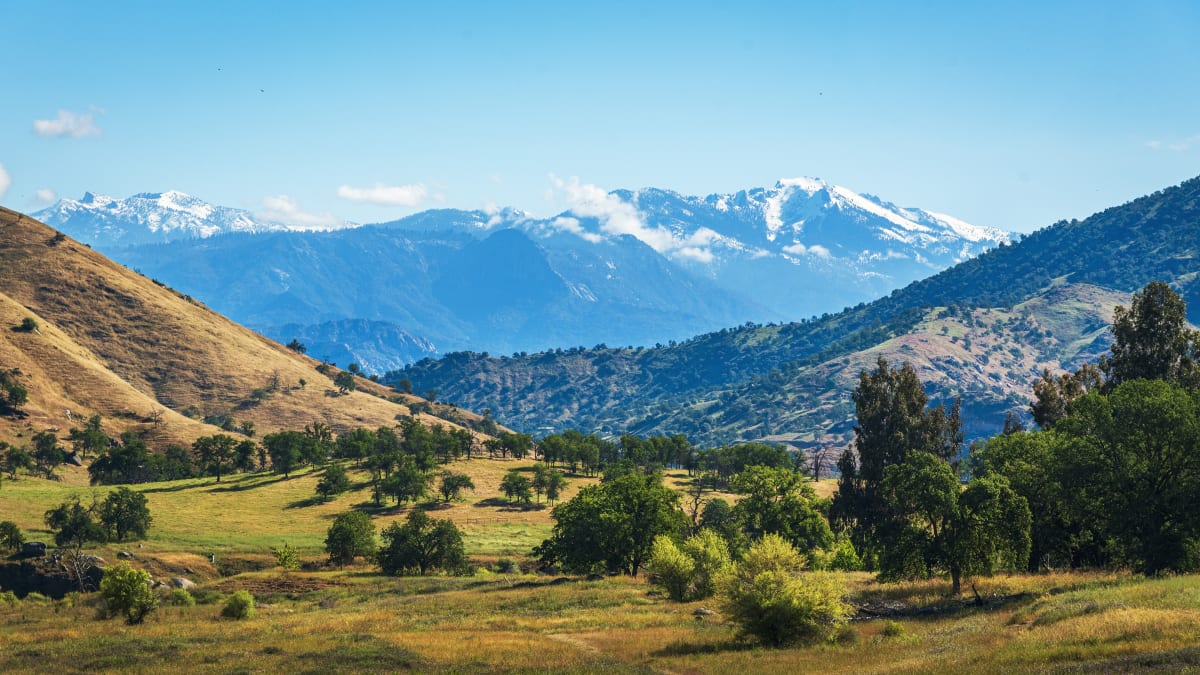
Lincoln sits in western Placer County, about 30 minutes north of Sacramento and 25 minutes west of Auburn — close enough to commute to SMF or downtown Sacramento, far enough to escape the valley heat and density. The larger-acreage corridors east and north of town are pockets of equestrian estates with rolling oak-savanna terrain, NID irrigation infrastructure, and the kind of equestrian-friendly zoning Placer County has protected since the 1990s. The composite estate we'll use throughout this analysis runs to roughly 19 acres with a ~2,200-square-foot residence (3 bed, 2 bath, 1980s construction, substantially upgraded — hardwood floors, new HVAC, owned solar, newer roof). The horse-property infrastructure is what separates it from a generic country house: a recently built barn with five stalls, tack room, heated wash bay, full water and power, trailer parking, and an unfinished loft above; a fully renovated former dairy barn/shop with reinforced cement foundation and an attached RV-capable carport; a working arena and round pen; two power poles with separate meters serving the residence and barn; two wells and two septic systems; and a holding tank backstopping the well system. The lower 10 acres are dedicated to irrigated hay production yielding approximately 180 bales of three-string orchard grass per cutting, served by 8 inches of Nevada Irrigation District water on a gravity-fed system with 6-inch filtration — meaning no pump, no electricity bill on the irrigation side. Plus a one-acre stocked freshwater pond. Representative list price: $1,500,000. Details have been generalized for privacy; the financing analysis below applies to any 10-25 acre Sierra Foothills equestrian estate in this price range.
Why Lincoln/Placer County Equestrian Estates Don't Fit Standard Jumbo Underwriting
A Placer County 2026 conforming loan limit is $832,750 — meaning any loan above that on a single-family residence is, by definition, a jumbo loan. On a $1.5M purchase with 25% down, the loan size is $1,125,000 — squarely jumbo. That's not the problem. The problem is that most jumbo lenders underwrite to a residential template designed for tract homes and luxury subdivisions, not for 19-acre working equestrian estates. Three issues come up repeatedly: (1) the appraiser is asked to use 'comparable sales' — but there are very few 19-acre estates with five-stall barns selling in any given quarter in Placer County, so the appraiser substitutes 5-acre and 10-acre comps and pro-rates, which systematically understates value; (2) most jumbo guidelines cap creditable acreage at 10 to 20 acres regardless of what the buyer is paying for, so the 'extra' acreage is excluded from the appraised value entirely; and (3) commercial-style improvements (the dairy barn/shop, the heated wash bay, the arena) are often categorized as 'special-purpose improvements' that the appraiser cannot give full value credit to under Fannie Mae / Freddie Mac standards. The buyer thinks they're buying $1.5M of property; the lender's appraisal comes back at $1.25M; the LTV math collapses; and the deal either restructures with more cash down or falls apart. None of this is the buyer's fault — it's the wrong loan product asking the wrong questions.
The Acreage Trap: Why 19 Acres Changes the Loan Math
The 19.34-acre count is the single most important number in the financing decision, and it sits in an awkward zone. Below 10 acres, virtually every Conventional jumbo lender will accept the property without acreage-related haircuts. Between 10 and 20 acres, lenders split: some will lend on the full acreage but at the same LTV, some will cap creditable acreage at 10 or 15, some will exclude any acreage above the 'home site' (typically defined as 5–10 acres including the residence and primary improvements). Above 20 acres, most Conventional jumbo programs trigger 'agricultural property' overlays — meaning lower LTVs (often 65–70% maximum), more conservative appraisal approaches, and in some cases outright ineligibility. At exactly 19.34 acres, this property is pricing in the friction zone: it's 'too big' for clean Conventional treatment, 'too small' to require true ag underwriting. That's the gap that Hybrid Ag/Residential products were designed to fill — and it's why a lender that only offers Conventional jumbo will struggle to do this deal at the full purchase price.
NID Water Rights, Hay Production, and the Schedule F Question
The 8 inches of Nevada Irrigation District water and the 180-bale-per-cutting hay yield change the underwriting conversation in two specific ways. First, NID water in Placer and Nevada counties is a transferable water right that adds material value to the property — appraisers familiar with Sierra Foothills ag properties will credit it; appraisers from Sacramento or Bay Area jumbo desks often won't because they don't know how to value it. The right lender pairs the deal with an appraiser who actually understands NID. Second, the hay production raises a Schedule F (farm income) vs. Schedule E (rental income) vs. 'no income' question on the buyer's tax returns. If the seller has been reporting the hay sales on Schedule F, that's a documented ag operation — which can either help (Hobby Farm Loans allows it, though it isn't counted toward qualifying, and our true Ag loan programs can count it as qualifying income) or hurt (some Conventional jumbo programs disqualify properties with active ag operations). If the buyer plans to continue hay production, the income can be used to qualify under ag programs but not under most Conv jumbo. If the buyer plans to lease the hay ground to a neighbor (very common in Placer County), it becomes Schedule E rental income, which Conv treats more flexibly. The question of how the buyer plans to operate the lower 10 acres should be settled before the loan application is submitted — the answer changes the product menu.
Scenario 1: Conforming Conventional vs. the Jumbo Cliff at $832,750
Placer County's 2026 conforming loan limit is $832,750. Anything at or below that line on a single-family residence runs through Fannie Mae / Freddie Mac conforming guidelines, and conforming Conventional is actually surprisingly accommodating on rural, ag-zoned, and equestrian-use properties: hobby-farm income is allowed, ag zoning is allowed, modest acreage is allowed, and outbuildings can be valued. The catch is the dollar limit. On a $1.5M purchase, even with $700K+ down, most equestrian buyers either don't have or don't want to commit that much cash — meaning the loan crosses the conforming ceiling and becomes a jumbo. And here's the asymmetry buyers don't see coming: while Conventional conforming tolerates acreage and ag use, most Conventional jumbo products do not. Standard residential jumbo overlays cap creditable acreage (often at 10–20 acres), exclude commercial-grade outbuildings from value, disqualify properties with active Schedule F ag operations, and lean on appraisers who don't know how to value NID water rights or hay ground. The buyer who could have used Conventional comfortably at $832,750 falls off a cliff at $832,751 and lands in a jumbo program that wasn't built for their property. Finding a jumbo lender who does allow agricultural use, equestrian improvements, and meaningful acreage is exponentially harder than finding a jumbo lender for a luxury home in Granite Bay — and that gap is exactly the product gap Scenario 2 is built to close.
Scenario 2: Our Hobby Farm Loans Program — Jumbo Ag/Equestrian Financing at 75% LTV
This is the product built for exactly the property profile this case study describes — and it's the jumbo loan that picks up where conforming Conventional leaves off. Our Hobby Farm Loans jumbo program is a portfolio loan specifically designed for residences on rural, ag-zoned, or equestrian acreage where standard residential jumbo refuses to engage. The headline structure for an estate like this one: 75% LTV on a primary residence. The program lends up to $5,000,000, with maximum LTV set by the lower of the loan-size tier (80% up to $2M on a primary, stepping down above that) and the acreage cap (80% under 10 acres, 75% at 10–20 acres, 70% at 20+ acres). On the $1.5M representative 19-acre property, the 10–20 acre cap sets the limit: a $1,125,000 loan at 75% LTV with $375,000 down. The product accepts three borrower profiles: Hobby Farm (ag income allowed but not counted toward qualifying, full residence + outbuildings + acreage with no acreage limit subject to credit review), Rural Resident (no ag income required, single-family primary or secondary residence in good condition, generally under 5 acres), and Bare Land (recreational/ag parcels with 20+ acres). The Lincoln estate fits squarely in the Hobby Farm bucket: the hay operation is exactly the kind of hobby-scale ag use the program allows, the residence is in good condition, and the outbuildings (5-stall barn, dairy barn/shop, arena, round pen) are exactly the kind of working improvements the program is built to value. Underwriting flexibility on the same product: 3/1, 5/1, and 7/1 ARMs or a 30-year fixed (40-year amortization available on primary residences), minimum 680 credit score, DTI up to 43% (or up to 45% on lower LTV tiers with compensating factors), self-employed buyers qualify on a tax-return analysis sheet plus 2 years of business history, cash-out is allowed as a rate/term or true cash-out (with documentation required only if cash-out exceeds the lesser of $250,000 or 1% of the loan amount), and the appraisal panel actually understands ag improvements and Sierra Foothills water rights. There is no equivalent product on the conforming Conventional side once the loan crosses $832,750, and there is no equivalent product on most residential-jumbo desks. This is the loan the property was built for.
Scenario 3: Our True Ag Loan Options at up to 70% LTV — Investors and Commercial-Scale Producers
For a narrower set of buyers, a true agricultural loan becomes the right answer — and this is a product set we offer directly, not something to source elsewhere. Our Ag loan options underwrite the entire property as a single operating asset: residence, improvements, ag infrastructure, hay production, water rights, and any commercial-scale equestrian, vineyard, or row-crop activity all rolled into one financed package. The structural trade-off is leverage. Where Hobby Farm Loans reaches 75% LTV on this 19-acre primary residence, true ag underwriting typically caps at 70% LTV, meaning a higher down-payment requirement on the same purchase price. So when does it actually win? Two profiles. First, the investor buyer — someone purchasing the property as an income-producing asset rather than a primary or secondary residence. Hobby Farm Loans does allow investment purchases, but at lower LTVs (65% at loan amounts up to $2M, further capped by acreage) and without counting ag income toward qualifying; when the buyer's plan is an income-producing operation (equestrian boarding facility, agritourism, or rental of the main home plus barn ADU) whose revenue needs to be underwritten, a true ag/investment ag loan becomes the cleaner structural fit. Second, the commercial-scale ag producer — a buyer whose intended use exceeds hobby-farm thresholds: scaling the hay operation beyond personal-cutting volumes, planting a working vineyard or orchard, building a commercial equestrian boarding/training operation, or acquiring the property specifically to expand an existing ag enterprise. Hobby-farm income (allowed under Hobby Farm Loans but not counted toward qualifying) is one thing; running an active ag P&L with multiple income streams, employees, and equipment is something else, and our true Ag loan options are built to underwrite that. For both profiles the lower LTV is offset by the ability to finance the property as the operating asset it actually is — including ag improvements, water rights, equipment, and operating lines under the same lender relationship — rather than forcing the deal through a residential template that wasn't designed for it.
Side-by-Side: LTV, Down Payment, and Appraisal Treatment Across the Three Products
Holding the purchase price constant at $1,500,000, here's how the three viable products stack up on the structural variables that actually decide whether the deal closes. Conforming Conventional ($832,750 loan limit in Placer County) is unavailable above the conforming ceiling — meaning on a $1.5M purchase, the buyer would need $667,250+ down to fit under the limit, which is rarely viable. Standard residential Jumbo typically reaches 80% LTV ($1,200,000 loan / $300,000 down) but caps creditable acreage, excludes commercial-style outbuildings, and frequently disqualifies properties with active ag operations — the appraisal commonly comes in 10–20% below purchase price on properties like this one. Our Hobby Farm Loans jumbo (Hybrid Ag/Residential) reaches 75% LTV on this 19-acre parcel under the 10–20 acre cap ($1,125,000 loan / $375,000 down), explicitly accepts ag zoning, hobby-farm income (allowed but not counted toward qualifying), and equestrian outbuildings, and uses appraisers who credit barns, arenas, water rights, and hay ground at full value. Our true Ag loan options typically reach up to 70% LTV ($1,050,000 loan / $450,000 down) and underwrite the property as a single operating asset including hay production, water rights, and equipment — the right structural fit for investors whose ag income needs to be underwritten or commercial-scale producers scaling past hobby-farm levels. A note on Bank Statement Jumbo: bank-statement income documentation can be valuable for self-employed buyers, but standard Bank Statement Jumbo programs do not lend on properties over 10 acres without exception — meaning a 19-acre Sierra Foothills equestrian estate falls categorically outside the box. Self-employed equestrian buyers route through Hobby Farm Loans' tax-return analysis sheet (or our Ag loan underwriting for commercial profiles), not through a Bank Statement product. The structural choice isn't 'cheapest loan' — it's 'which product respects the property's actual value drivers and matches the buyer's down-payment capacity.'
Four Loan Products on a $1.5M Placer County Equestrian Estate
Representative ~19-acre Lincoln/Placer County equestrian estate — 5-stall barn, arena, round pen, NID-irrigated hay ground, ADU loft potential. Comparison focuses on LTV, down payment, and appraisal treatment — the structural variables that decide whether the deal closes at the agreed price.
| Conforming Conventional | Standard Residential Jumbo | Hobby Farm Loans (Ours) | Our True Ag Loan Options | |
|---|---|---|---|---|
| Max Loan Amount | $832,750 (Placer 2026) | Up to ~$2M+ | Up to $5,000,000 (LTV steps down above $2M) | Up to $25,000,000 |
| Max LTV | 97% LTV (program-dependent) | Typically 80% LTV | 75% LTV (10–20 acre cap) | Up to 70% LTV |
| Down Payment on $1.5M | N/A — over conforming limit | $300,000 (20%) | $375,000 (25%) on a $1,125,000 loan | $450,000+ (30%+) |
| Acreage Allowed | Generally allowed | Capped at ~10–20 acres | No acreage limit (LTV capped by acreage) | No cap; ag-underwritten |
| Ag Zoning / Hobby-Farm Income | Allowed | Often disqualifies | Allowed (not counted toward qualifying) | Built for commercial-scale ag |
| Owner-Occupied vs. Investor | Owner-occupied or 2nd home | Owner-occupied or 2nd home | Primary, 2nd home, or investor (lower LTV) | Investor / rental use allowed |
| Outbuilding & Barn Value | Generally credited | Often 30–50% under-credited | Full value credit | Full value credit |
| NID / Water-Rights Credit | Appraiser-dependent | Often $0 | Recognized | Fully credited |
| Self-Employed Documentation | Tax returns required | Tax returns required | Tax-return analysis + 2 yrs business history | Holistic ag P&L review |
| Term Options | 15 / 30 yr fixed | 15 / 30 yr fixed | 3/1, 5/1, 7/1 ARM; 30-yr fixed; 40-yr amortization (primary) | Structured to operation |
| Min Credit Score | 620+ (program-dependent) | 700+ typical | 680+ | Underwritten holistically |
| Best For | Loan amounts ≤ $832,750 | Luxury homes without ag use | Owner-occupied equestrian / hobby-farm estates over conforming limit | Investors whose rental or ag income needs to be underwritten, or commercial-scale ag past hobby-farm levels |
How the Barn Loft ADU Potential Changes the Long-Term Equation
Placer County has one of California's most permissive ADU ordinances, allowing junior ADUs (JADUs), attached ADUs, and detached ADUs on most ag-zoned and rural-residential parcels — including conversions of existing structures like an unfinished loft above a newer horse barn. Adding an ADU to a property like the one profiled here has three financial effects worth modeling at the loan-application stage: (1) it can generate $2,000–$3,500/month in long-term-rental income or $4,000–$7,000/month as a short-term rental given the Lincoln/Auburn tourism corridor; (2) it materially increases the property's appraised value (typical Placer County appraisal lift on a 600–900 sq ft ADU: $150K–$300K); and (3) under Hobby Farm Loans and our true Ag loan programs, the ADU income can be used to qualify a future cash-out refinance to fund the buildout, the barn expansion, or a separate property acquisition. Buyers who finance the property under standard residential jumbo lock themselves into a residential template that may not accommodate the ADU strategy cleanly. Buyers who finance under Hobby Farm Loans or our Ag loan programs retain optionality. The barn loft ADU isn't just a cute feature — it's a multi-hundred-thousand-dollar long-term asset whose realization depends on the loan structure chosen at the original purchase.
Why Placer County and the Sierra Foothills Are an Underserved Lending Market
Most California ag and equestrian lending capacity is concentrated in two corridors: the Central Valley (Stanislaus, San Joaquin, Fresno, Tulare, Kern) and the North Bay wine country (Napa, Sonoma, Mendocino). Placer County and the broader Sierra Foothills — Nevada County, El Dorado County, Yuba County, Sutter County — sit in between, with a meaningful equestrian and ag economy but very few lenders who actually specialize in the region. The result for buyers: most loan officers handling Placer County equestrian estates are Sacramento residential jumbo specialists who 'try' to do the deal under Conv jumbo, get a low appraisal, and either restructure the deal or watch it die. The right lender for this market needs three things: (1) a Hobby Farm Loans-style hybrid jumbo product and in-house true Ag loan options in addition to Conv jumbo, so the right product can be matched to the property without sending the customer to a different lender; (2) ag-savvy appraisal panels for Placer, Nevada, El Dorado, and Yuba counties; and (3) familiarity with NID, PCWA (Placer County Water Agency), and other Sierra Foothills water-rights structures that valley-based appraisers don't understand. Lumen Mortgage is licensed in California and quotes Conventional, Hobby Farm Loans, and our true Ag loan options side-by-side on Placer County equestrian estates — exactly so the buyer sees the structural choice rather than getting railroaded into the only product their lender happens to sell.
Decision Tree: Which Loan Fits Which Buyer Profile
Use this six-step sequence on any Sierra Foothills equestrian estate financing decision: (1) Loan-size check — Does the loan fit under Placer County's $832,750 conforming limit? Conforming Conventional is surprisingly accommodating on rural and ag-zoned property and should be the first option considered. Above the conforming limit, Hobby Farm Loans jumbo becomes the ag/equestrian-friendly path. (2) Acreage and improvements check — Is the parcel under 5 acres with no ag use? Rural Resident tier of Hobby Farm Loans works. 5+ acres with working barns, arenas, or hay ground? Hobby Farm tier (no acreage limit; LTV capped at 80% under 10 acres, 75% at 10–20 acres, 70% at 20+ acres; ag income allowed but not counted toward qualifying). 20+ acres of bare land? Bare Land tier (with ag income). Buying as an investor whose ag income needs to count, or scaling commercial-grade ag well past hobby-farm levels? Our true Ag loan options become the right structural fit. (3) Income-documentation check — W-2 employee with strong income? Hobby Farm Loans full-doc works cleanly. Self-employed with aggressive tax-return optimization? Hobby Farm Loans' tax-return analysis sheet plus 2 years of business history is the path — bank-statement programs do not lend on properties over 10 acres, so they are not an option for the typical Sierra Foothills equestrian estate. (4) Ag operation check — Property has documented Schedule F hay or boarding income at hobby-farm scale? Hobby Farm Loans handles it cleanly. Commercial-scale ag operation with multiple income streams, employees, or equipment? Our Ag loan options underwrite the operating asset holistically. Standard residential jumbo will likely disqualify either profile. (5) Occupancy check — Buyer occupying the property as a primary or secondary residence? Hobby Farm Loans is the structural fit. Buyer renting the property out as an investment (long-term lease, boarding facility, agritourism, STR)? Hobby Farm Loans allows investment property at lower LTVs (65% at loan amounts up to $2M, further capped by acreage); our Ag loan options at up to 70% LTV are often the better path when the rental or ag income needs to be underwritten. (6) Down-payment / future-plans check — $375K available for 75% LTV on Hobby Farm Loans? Cash-efficient owner-occupied path. $450K+ available and an investment or commercial-ag plan? Our Ag loan options preserve operational optionality and unlock equipment- and operating-line financing under the same lender relationship. Walk those six in order and the right product usually picks itself.
Model Your Payment First
Mortgage Payment Calculator
A rate quote is abstract until it becomes a monthly number on your actual budget. Whether you're sizing up a purchase, comparing a 15-year against a 30-year, or stress-testing how a half-point rate difference affects your total interest paid — the mortgage calculator turns the conversation from theoretical to concrete.
Run multiple scenarios before you start shopping: vary the purchase price, down payment, and term to find the combination that works without stretching your budget. Knowing your ceiling going in means you can make faster decisions when the right property appears — and cleaner offers.
P&I by purchase price
See your principal + interest payment at any price point — instantly, before you start touring homes.
15-yr vs. 30-yr cost
Compare total interest paid across different loan terms. The lifetime savings spread is often eye-opening.
Rate sensitivity
Model how a 0.5% rate change moves your monthly payment and lifetime interest cost over the full term.
Free · No login · No credit pull required
Realtor Referral
Need a realtor who actually understands equestrian property?
Most agents don't know how acreage, ag zoning, water rights, and barn improvements affect financing — and a misread listing can cost you the deal. We work alongside a small bench of Placer County realtors who specialize in horse properties and rural acreage. Tell us what you're looking for and we'll personally introduce you so you can interview them.
No directory. No paid placements. No RESPA-restricted referral fees. We've worked alongside these pros on real Oregon and California deals — we'll make a personal email introduction so you can interview them yourself.
Or email us directly:
Frequently Asked Questions
What is the conforming loan limit in Placer County, California for 2026?
What is the maximum LTV on a jumbo loan for an equestrian estate in Placer County?
What are Hobby Farm Loans and how do they work for hobby farms and equestrian properties?
Can I get a jumbo loan that allows agricultural use or hobby-farm income in California?
How does acreage affect the maximum LTV on Hobby Farm Loans?
What credit score and DTI does the Hobby Farm Loans program require?
Why do most jumbo lenders undervalue Placer County horse properties?
Does Nevada Irrigation District (NID) water add value to a Placer County property?
Financing Equestrian Property?
Specialized lending for horse farms, arenas, and equestrian estates. We understand acreage, outbuildings, and rural appraisals.
Bottom Line
A 19-acre equestrian estate in Lincoln, California, isn't a residential transaction with a horse barn attached — it's a hybrid asset that needs a lender who can see the residence, the improvements, the acreage, the water rights, and the future ADU as a single financed package. A $1.5M list price on a property like this is honest if the appraisal is honest, and the appraisal is only honest if the loan product respects what the property actually is. The Placer County conforming loan limit of $832,750 makes Conventional unavailable on most of these purchases at full leverage, and standard residential jumbo isn't built for ag zoning, hobby-farm income, or equestrian improvements. That's exactly the gap our Hobby Farm Loans jumbo product fills — 75% LTV on a 19-acre primary residence (loans up to $5,000,000), explicit acceptance of ag use and hobby-farm income (allowed but not counted toward qualifying), and appraisers who credit barns, arenas, water rights, and hay ground at full value. For investors who need the property underwritten as an income-producing ag asset, or for commercial-scale producers operating well past hobby-farm levels, our true Ag loan options at up to 70% LTV become the structural fit — and we keep that work in-house rather than sending the customer to a different lender. Self-employed buyers qualify under Hobby Farm Loans' tax-return analysis sheet plus 2 years of business history — bank-statement programs do not lend on properties over 10 acres, so they are not part of the equestrian-estate product menu. The choice isn't about which loan is best in the abstract — it's about which loan fits this buyer, this property, and this set of future plans. If you're financing an equestrian estate or vineyard property anywhere in Placer, Nevada, El Dorado, or Yuba counties, that's the kind of analysis we walk through before any quote. For a parallel walkthrough on a working vineyard, see our Nevada County vineyard estate financing case study — same three-product framework on a $2.29M, 30-acre Grass Valley wine property. For the commercial-scale end of the framework — multi-residence, multi-APN, dual equestrian-and-cattle operation — see our 80-acre Nevada County legacy ranch case study on a $3.95M ranch where both programs reach 70% but our true Ag loan options become the primary product because the operation's income, residences, and APNs need ag underwriting. For the foundational primer on the products themselves, our how to finance a horse property learn page and agricultural loans learn page cover the underlying mechanics. For the regional Sierra Foothills tri-county overview covering Placer, Nevada, and El Dorado, see our Sierra Foothills agricultural loans pillar. For Lincoln, Roseville, Auburn and the rest of Placer County, see our Gold Country mortgage lender page.